
Last updated September 25, 2026
DIY vs Professional ADU: The Corona Homeowner’s Decision Guide
California Business and Professions Code Section 7044 lets Corona homeowners pull their own ADU permits as owner-builders. Most more guides & resources stop there. They don’t mention that same code section bars you from selling the property within five years without disclosing that owner-builder status to every prospective buyer, a disclosure that can derail financing and crater appraised value. In this guide, we’ll walk through what owner-builder status actually means under California law, which trades you must still hire out, what self-managing a Corona permit set requires, and the honest math on whether the time cost beats a design-build fixed price. We’ve designed, permitted, and built over 900 ADUs since 2015, every one with a written price before work started. Here’s what we’ve learned about the owner-builder path in Corona specifically.
Quick Answer
Owner-builder ADU construction in Corona is legally permitted under B&P Code 7044, but it triggers a five-year resale disclosure requirement, mandates licensed subcontractors for electrical, plumbing, and HVAC, and typically consumes 200-400 hours of permit management and coordination time. For most Corona homeowners, the savings evaporate once you value your time honestly and account for subcontractor premiums on small, one-off jobs. The owner-builder route makes sense only when you already hold a contractor’s license, own the property free and clear, and plan to hold the asset for ten-plus years; see our How to Hire a ADU Contractor in Corona: A Step-by-Step Guide for the alternative.
Table of Contents
- What Owner-Builder Status Actually Means in California
- The Five-Year Resale Rule and Your ADU’s Value
- What Self-Managing a Corona Permit Set Requires
- Real Cost Comparison: Owner-Builder vs. Design-Build
- The Specific Scenario Where Owner-Builder Makes Sense
- Three Project Characteristics That Make DIY Worse
- Common Mistakes to Avoid
- When to Call a Professional
- Frequently Asked Questions
 Before
 After
AfterWhat Owner-Builder Status Actually Means in California
California Business and Professions Code Section 7044 defines an owner-builder as someone who builds or improves their own property for their own occupancy or use, not as a business. The statute draws a sharp line between personal use and speculative construction. Here’s what that definition actually controls.
First, the exemption applies to the permit holder only. You cannot act as owner-builder for a property you do not personally own, and you cannot hold the permit on behalf of an LLC or trust unless you are the sole beneficial owner living on-site. Second, the statute limits how many structures you can build under this exemption: one per calendar year, and no more than two in any five-year period. For Corona homeowners considering both a main house renovation and an ADU, that limit matters.
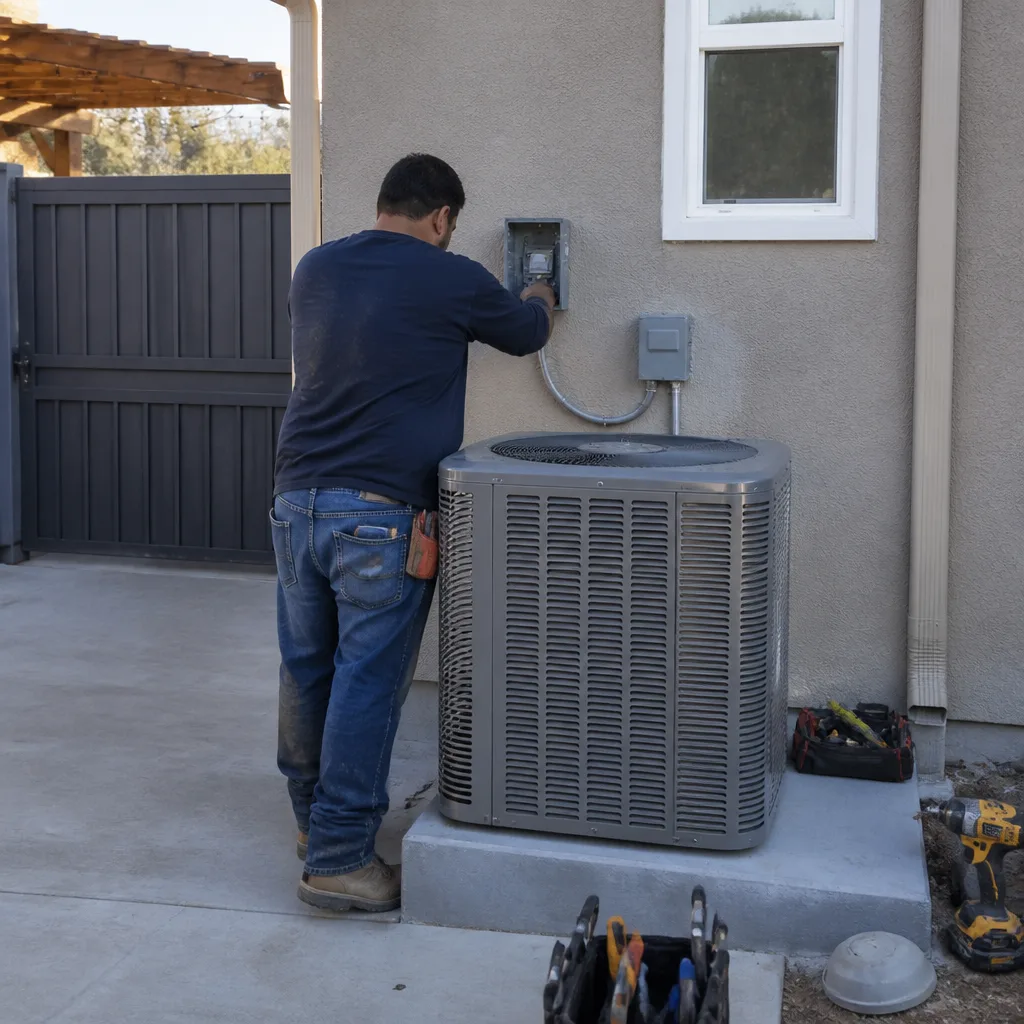
Third, and most critically, Section 7044 does not exempt you from subcontractor licensing requirements. The California Contractors State License Board (CSLB) has issued repeated clarifications that owner-builders must hire C-10 licensed electricians, C-36 licensed plumbers, and C-20 licensed HVAC contractors for all work in those trades. You cannot self-perform electrical panel upgrades, gas line extensions, or ducted mini-split installations. The owner-builder exemption covers only the general construction coordination, not the licensed trades.
What you can self-perform as an owner-builder: framing, drywall, flooring, painting, and finish carpentry, provided you pull the proper permits and schedule inspections. What you cannot: any work that requires a specialty license, any work on your neighbor’s property (including encroaching utility lines), or any structural modifications without engineered drawings stamped by a California-licensed civil or structural engineer.
In Corona, the Building & Safety Division enforces these requirements strictly. We’ve reviewed permit files where owner-builders attempted to self-certify electrical work; the city rejected the inspection and required full removal and re-installation by a C-10 contractor, with no grandfathering. The cost of that correction typically exceeds what a design-build firm would have charged for the original installation.
The Five-Year Resale Rule and Your ADU’s Value
Section 7044(b) contains a provision most online guides omit: if you obtain an owner-builder permit, you cannot sell the property within five years of final inspection without disclosing that owner-builder status to every prospective buyer. The disclosure must be in writing, and it must include the fact that no licensed contractor warranted the work.
This disclosure triggers three concrete problems for Corona homeowners.
Problem one: buyer financing. Conventional lenders, including Fannie Mae and Freddie Mac, flag owner-builder construction in their appraisal guidelines. The appraiser must note the owner-builder status and may require additional inspections or demand a contractor’s warranty as a loan condition. FHA and VA loans are even more restrictive; we’ve seen purchase agreements fall through when the buyer’s lender discovered undisclosed owner-builder work from three years prior.
Problem two: appraised value. An ADU adds value only if it can be rented or occupied. Appraisers apply a “quality of construction” adjustment, and owner-builder status typically receives a downward adjustment of 10-15% compared to permitted, contractor-built units. On a $150,000 ADU in Corona’s market, that’s $15,000-$22,500 in lost equity.
Problem three: insurance and liability transfer. California Civil Code Section 896 requires sellers to disclose known defects for ten years on new construction. Owner-builder status extends that liability exposure because there’s no contractor’s warranty to transfer. The buyer’s attorney, if problems emerge, has only one defendant: you.
The five-year clock starts at final inspection, not permit issuance. For a typical Corona ADU with design, permitting, and construction, that means 18-24 months of project time plus five years of hold time before a clean sale. If you’re building an ADU to unlock equity for a future move, owner-builder status may defeat the purpose entirely.
There is one narrow exception: if you hire a licensed contractor to perform all work, even under your owner-builder permit, some courts have held that the disclosure requirement does not apply. But this defeats the cost-saving rationale, and Corona’s Building & Safety Division will still code the permit as owner-builder in their records. The risk remains.
What Self-Managing a Corona Permit Set Requires
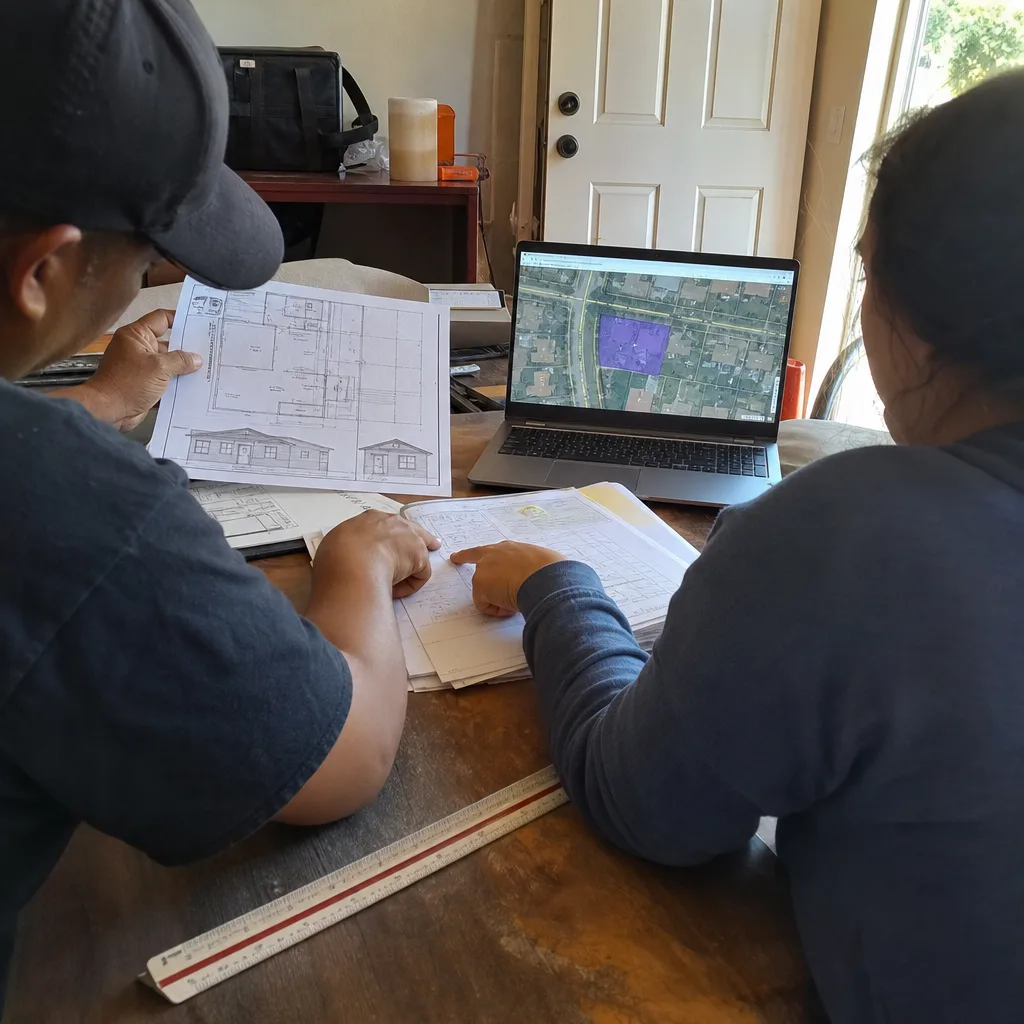
The City of Corona processes ADU permits through the Building & Safety Division with a 14-item completeness checklist. Owner-builders must submit every item personally; there is no design-build firm to catch omissions or revise drawings in response to plan-check comments. Here’s what that checklist actually contains.
- Site plan showing all existing and proposed structures, setbacks, and easements, drawn to scale by a licensed surveyor or architect.
- Floor plans for the ADU with all room dimensions, window and door sizes, and ceiling heights.
- Elevations on all four sides, showing materials, heights, and relationship to grade.
- Structural plans with load calculations, foundation details, and framing specifications, stamped by a California-licensed structural engineer.
- Title 24 Energy Compliance documentation, including the CF-1R and accompanying worksheets; Corona requires the 2022 Energy Code for permits filed after January 1, 2023.
- Green Building Standards Checklist (CALGreen) for all new construction; garage conversions have reduced requirements but still need documentation.
- Water heater bracing detail to Corona’s seismic standard.
- Smoke and carbon monoxide detector layout with manufacturer cut sheets.
- Electrical plan showing panel capacity, load calculations, and circuit layout; must be prepared or stamped by a C-10 contractor or electrical engineer.
- Plumbing plan with water supply, sewer connection, and gas line details; must be prepared or stamped by a C-36 contractor or plumbing engineer.
- HVAC plan with load calculations per Manual J and equipment specifications; must be prepared or stamped by a C-20 contractor or mechanical engineer.
- Fire separation details if the ADU attaches to or converts part of the main residence.
- Accessibility compliance statement for ground-floor units or those with step-free entrances.
- Utility connection diagram showing how sewer, water, gas, and electric will tie into existing services, with confirmation letters from each utility.
Each item generates its own submittal, review, and revision cycle. Corona’s plan checkers typically issue first-round comments within 10-15 business days; owner-builders without professional drafting support average 3-4 rounds of revisions. At 15 days per round, that’s 45-60 days of calendar time before permit issuance, assuming no errors.
Title 24 compliance deserves special attention. Corona sits in Climate Zone 10, which drives specific insulation, glazing, and HVAC efficiency requirements. The 2022 Energy Code added mandatory solar readiness for new detached ADUs and electric vehicle-capable parking for certain configurations. Owner-builders frequently submit Title 24 calculations prepared for the wrong climate zone or the previous code cycle; Corona rejects these outright and requires complete re-submission.
Structural calculations present another bottleneck. Corona’s geotechnical conditions vary significantly by neighborhood. The Dos Lagos area has expansive clay soils requiring deeper foundations; the Sierra Del Oro foothills have slope stability concerns; central Corona’s older neighborhoods may have undocumented fill. A structural engineer familiar with Corona’s submittal patterns will specify solutions that plan checkers recognize. An owner-builder hiring an engineer cold may receive technically adequate calculations that the city questions because the detailing doesn’t match local precedent.
The time investment is substantial. In our experience tracking comparable projects, owner-builders spend 200-400 hours on permit management alone: drafting coordination, engineer consultations, plan-check response, and inspection scheduling. At a conservative $50/hour valuation of your time, that’s $10,000-$20,000 before construction begins.
Real Cost Comparison: Owner-Builder vs. Design-Build
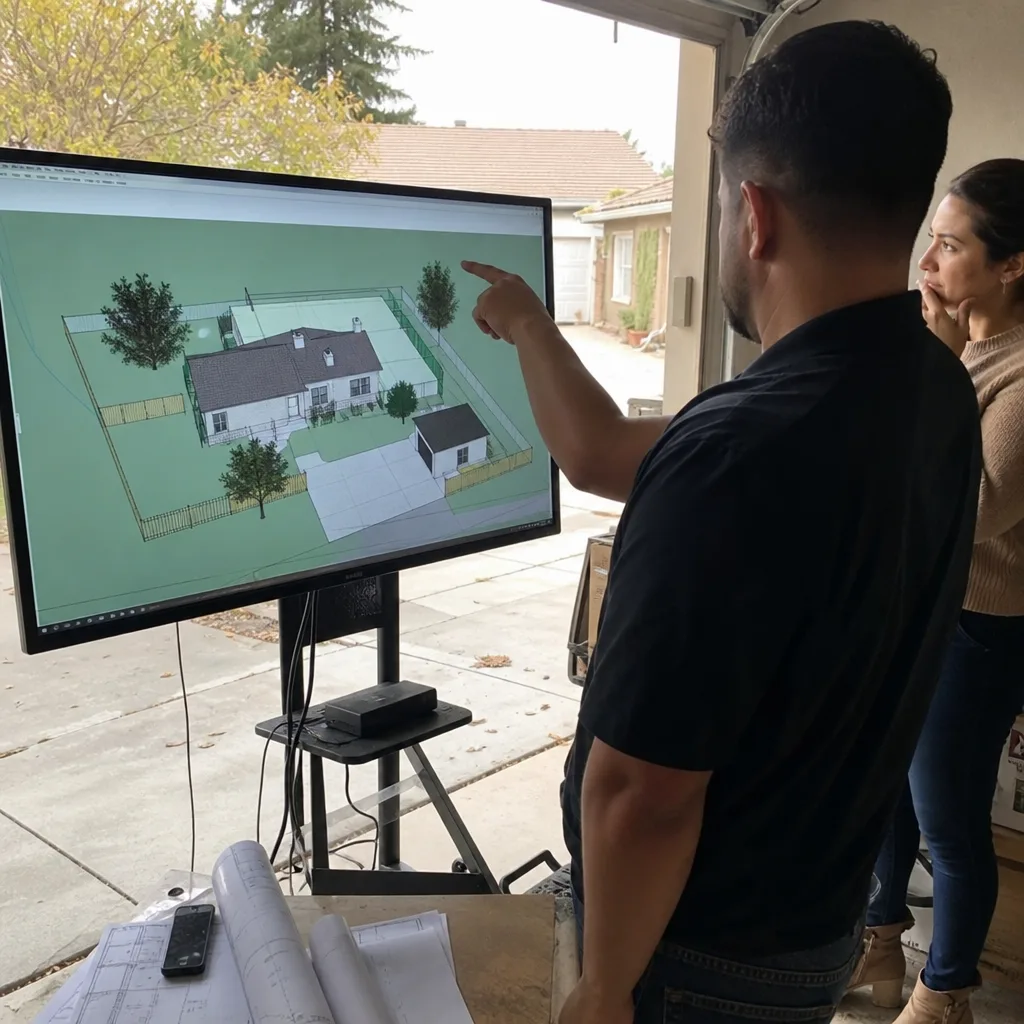
Most cost comparisons online compare material lists to turnkey bids, an apples-to-oranges error. For a detailed breakdown, see our ADU Cost Breakdown: The Corona Homeowner’s Reference for 2026. Here’s the honest accounting for a typical 500-square-foot garage conversion ADU in Corona, based on 2024 permit data and our project records.
| Cost Category | Owner-Builder Path | Design-Build Fixed Price |
|---|---|---|
| Architectural drawings & permit set | $4,500-$7,500 | Included in contract |
| Structural engineering (stamped) | $2,000-$3,500 | Included in contract |
| Title 24 & CALGreen documentation | $800-$1,500 | Included in contract |
| Permit fees (City of Corona) | $3,200-$4,800 | $3,200-$4,800 |
| Utility connection fees | $2,500-$5,000 | $2,500-$5,000 |
| Owner time: permit management (250 hrs @ $50/hr) | $12,500 | $0 |
| Owner time: construction coordination (300 hrs @ $50/hr) | $15,000 | $0 |
| Framing & general construction (self-performed labor only) | $8,000-$12,000 (materials) | $85,000-$125,000 (all trades, turnkey) |
| Electrical (C-10 subcontractor, small-job premium) | $8,500-$14,000 | |
| Plumbing (C-36 subcontractor, small-job premium) | $6,500-$10,500 | |
| HVAC (C-20 subcontractor, small-job premium) | $4,500-$7,500 | |
| Drywall, flooring, finishes (self-performed) | $6,000-$10,000 | Included |
| Subcontractor coordination & callback costs | $2,000-$5,000 | Included |
| Inspection failures & re-inspection fees | $500-$2,500 | Included |
| Total Project Cost | $76,500-$114,300 | $90,700-$134,800 |
The owner-builder “savings” of $14,200-$20,500 evaporates on closer inspection. First, the time valuation: most homeowners value their time above $50/hour, and the 550 total hours assumes no delays, no plan-check revisions, and no subcontractor no-shows. Second, the small-job premium: licensed trades charge 20-40% more for one-off residential work than for ongoing contractor relationships. A C-10 electrician who bills a design-build firm $85/hour may quote an owner-builder $120/hour for the same scope, because the firm provides repeat business and the owner-builder represents unknown risk.
Third, and most significantly, the owner-builder total excludes warranty value. Under Ellery ADU Studio Corona home, the Garage Conversion ADU in Corona includes our 365-Day Done Right Promise: if the finished ADU is not built to the permitted drawings, we make it right, in writing, before the project starts. Owner-builders self-warrant every nail. The cost of a single latent defect, discovered after occupancy, can exceed the entire apparent savings.
For New Detached ADU in Corona projects, the gap widens. Site work, foundation, and utility trenching require equipment and expertise that owner-builders rarely possess. We’ve coordinated prefab and modular systems from Mighty Buildings and Plant Prefab for Corona sites where factory precision eliminated field variables; owner-builders cannot access these supply chains at comparable pricing.
The Specific Scenario Where Owner-Builder Makes Sense
Despite the structural disadvantages, there is a narrow corridor where owner-builder ADU construction in Corona is financially rational. All three conditions must apply simultaneously.
Condition one: you hold an active California contractor’s license. Not a B-1 general building contractor specifically, though that helps. Any CSLB license gives you subcontractor relationships, pricing leverage, and inspection literacy that unlicensed homeowners lack. More importantly, it gives you errors-and-omissions insurance and a bond that transfers liability professionally.
Condition two: you own the property free and clear, with no near-term sale horizon. The five-year disclosure rule becomes irrelevant if you plan to hold for fifteen years. The equity loss on sale only matters if you sell. Corona’s rental market supports this: a permitted 500-square-foot ADU rents for $1,800-$2,400 monthly, making long-term hold attractive for cash-flow-focused investors.
Condition three: your time has zero opportunity cost, or you genuinely enjoy construction management. Retired contractors, semi-retired professionals with flexible schedules, or spouses coordinating a family build can absorb the 550-hour time investment without financial penalty. If you would otherwise spend those hours on recreation you value equally, the accounting changes.
Even with all three conditions met, we recommend owner-builders purchase a wrap-up liability policy and require certificates of insurance from every subcontractor. Corona’s civil courts see owner-builder disputes regularly; the absence of a general contractor’s umbrella coverage leaves personal assets exposed.
For homeowners who meet only one or two conditions, the math shifts decisively toward professional engagement. ADU Design & Permitting in Corona through a design-build studio eliminates the designer-builder coordination risk that consumes owner-builder hours. Under our one-contract model, the drawings, the permit set, and the construction are a single agreement at a single written price. Neither the designer nor the builder can point at the other when something is off.
Three Project Characteristics That Make DIY Worse
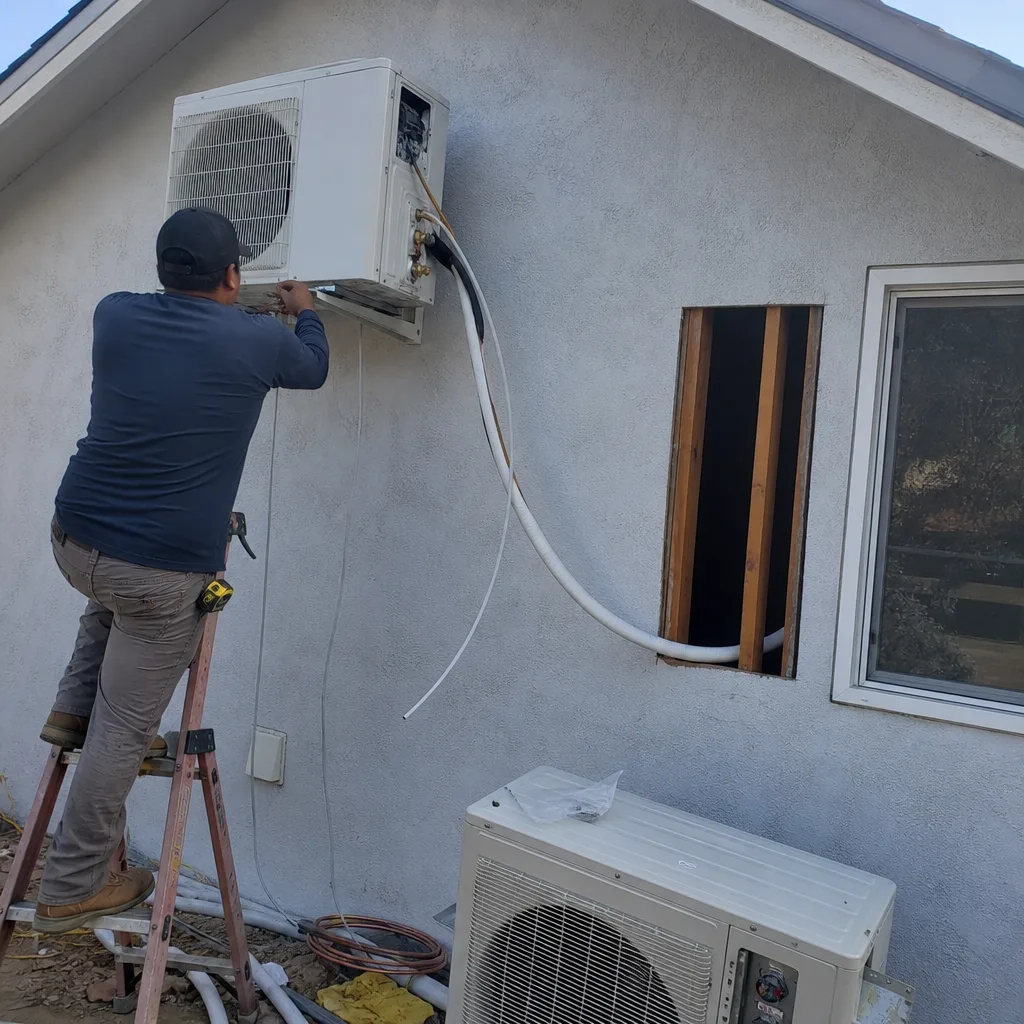
Certain Corona ADU configurations compound the owner-builder disadvantages. We flag these specifically because we’ve seen them generate cost overruns that eliminated any savings.
Characteristic one: properties in Corona’s hillside zones. The Sierra Del Oro, Cresta Verde, and Sycamore Creek areas trigger grading permits, geotechnical reports, and potential Hillside Development Ordinance compliance. Owner-builders frequently underestimate the engineering complexity; we’ve reviewed projects where a $3,000 grading permit ballooned into $15,000 of unanticipated retaining wall design because the owner-builder didn’t recognize the triggering conditions. Proper Seasonal ADU Care for Corona: Year-Round Homeowner’s Guide planning can help avoid such surprises.
Characteristic two: ADUs requiring utility main upgrades. Corona’s older central neighborhoods, including the original Grand Boulevard grid, often have 100-amp electrical services and 3/4-inch water mains. An ADU with electric HVAC, tankless water heating, and full kitchen loads may require service upgrades that trigger Southern California Edison or Corona Utilities coordination timelines of 8-12 weeks. Owner-builders without utility relationships often discover these requirements mid-project, after framing is complete and the dwelling is uninhabitable pending power.
Characteristic three: any project involving prefab or modular coordination. Factory-built units from Boxabl, Tuff Shed, or similar systems require crane permits, foundation precision within 1/4 inch, and utility stub-outs positioned before module delivery. The coordination sequence is unforgiving; a missed utility rough-in means crane re-mobilization at $2,500-$4,000 per occurrence. Design-build firms with prefab fluency sequence these dependencies in the contract documents. Owner-builders learn them through failure.
We’ve specified and coordinated modular systems from multiple manufacturers within our single-contract framework. The factory precision is genuine, but only if the site preparation matches the module tolerances. That match requires professional survey, professional grading, and professional utility layout. Owner-builders who believe prefab simplifies their role often discover it merely shifts complexity upstream, where mistakes are harder to correct.
Common Mistakes to Avoid
- Assuming the owner-builder exemption covers all trades. Corona enforces C-10, C-36, and C-20 licensing strictly. Self-performing electrical work without a license is a misdemeanor under B&P Code 7028, with penalties including jail time and a permanent bar from future owner-builder permits.
- Neglecting the five-year disclosure in financial planning. We’ve consulted with Corona homeowners who built owner-builder ADUs to fund retirement moves, then discovered the disclosure requirement prevented clean sales. The disclosure travels with the property deed; there’s no expiration workaround.
- Undervaluing permit management time. Online forums suggest “a few weekends” for permit paperwork. Our tracked data shows 200-400 hours for first-time owner-builders. At professional hourly rates, that time cost exceeds most design-build markups.
- Hiring subcontractors without verifying license and bond status. The CSLB website is free and public. Corona requires current license verification for all trade permits. Unlicensed subcontractors expose the owner-builder to stop-work orders and personal liability for worker injuries.
- Skipping structural engineering to save money. Corona’s 2022 building code adoption requires engineered drawings for all ADUs over 120 square feet. Owner-builders who submit hand-drawn plans receive automatic rejection and lose their place in the plan-check queue.
- Failing to coordinate utility timelines with construction schedules. SCE’s new service installation in Corona currently runs 10-14 weeks from application to meter set. Owner-builders who frame and roof before ordering service face extended carrying costs on uninhabitable structures.
- Ignoring the 365-day permit expiration. Corona permits expire if work doesn’t start within 180 days or if inspections aren’t requested within 180 days of the last approved inspection. Owner-builders juggling day jobs frequently let permits lapse, requiring full re-submittal at full fee.
When to Call a Professional
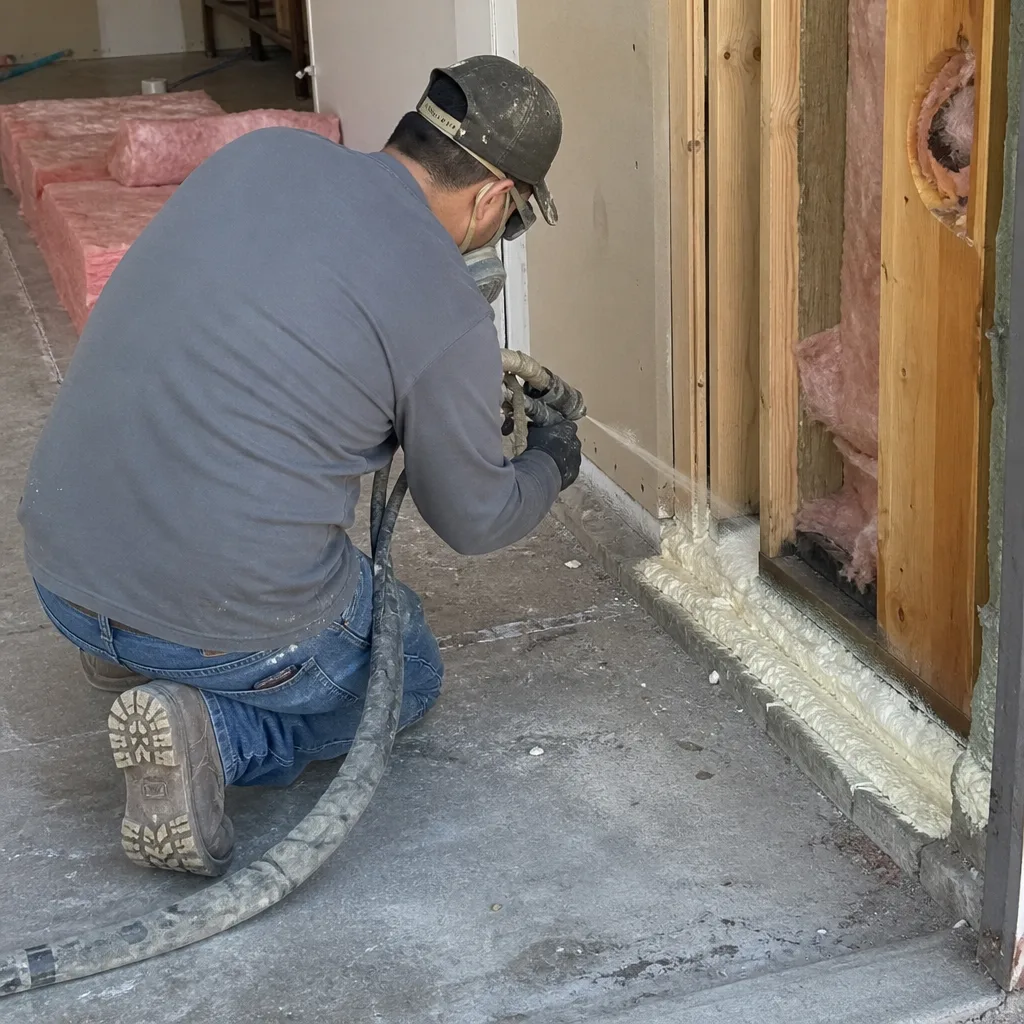
Call a design-build studio when any of these apply: you plan to sell within ten years, you cannot value your time below $75/hour, your property is in a hillside zone or requires utility upgrades, or you simply want a written price before work starts with no change orders after signing. Ellery ADU Studio Corona offers free estimates in Corona - call (951) 476-3715. We also provide a Free Second Opinion on any written estimate already in hand; bring us your owner-builder cost spreadsheet and we’ll identify the line items most likely to overrun.
Frequently Asked Questions
An owner-builder garage conversion ADU in Corona typically totals $76,500-$114,300 all-in, while a design-build fixed price runs $90,700-$134,800 for comparable scope. The apparent $14,000-$20,000 savings disappears when you value owner time at market rates and account for subcontractor premiums on small jobs. Call (951) 476-3715 for an exact quote on your specific property - estimates are free, and we provide a written price before any work begins under Haven Standard Clause 1.
No, not without written disclosure to every prospective buyer under B&P Code 7044(b). The disclosure must state that no licensed contractor performed the work, which typically triggers financing complications and a 10-15% appraised value reduction on the ADU component. If you plan to sell within five years of final inspection, hire a licensed contractor to preserve marketability.
None. California requires a C-10 licensed electrician for all electrical work on structures with more than one circuit, which includes every ADU. This includes panel upgrades, subpanel installation, outlet circuits, lighting, and low-voltage wiring. Owner-builders may perform demolition and rough carpentry only; energized systems require licensed installation and inspection.
Plan check alone averages 45-60 days for owner-builders, assuming 3-4 rounds of revisions at 10-15 business days per round. Design-build firms with established Corona submittal patterns typically achieve permit issuance in 20-30 days. Total project timeline from design start to certificate of occupancy runs 12-18 months for owner-builders versus 8-14 months for professional projects.
Under The Haven Standard, Clause 5 (No Surprises), the scope is locked at signing; no door-side upsells, no scope creep. Ellery ADU Studio provides a written price before any work starts on every project, per Clause 1. The only price changes permitted are owner-requested change orders, documented in writing with cost impact before execution. Call (951) 476-3715 to review how this applies to your project.
Yes. Corona requires structural calculations stamped by a California-licensed engineer for all ADUs over 120 square feet. Architectural drawings are required for all permit submittals; while Corona accepts owner-prepared drawings for very small projects, the 14-item completeness checklist effectively mandates professional drafting for any project with electrical, plumbing, or HVAC scope. Title 24 energy documentation also requires certified software and trained preparers.
The Bottom Line
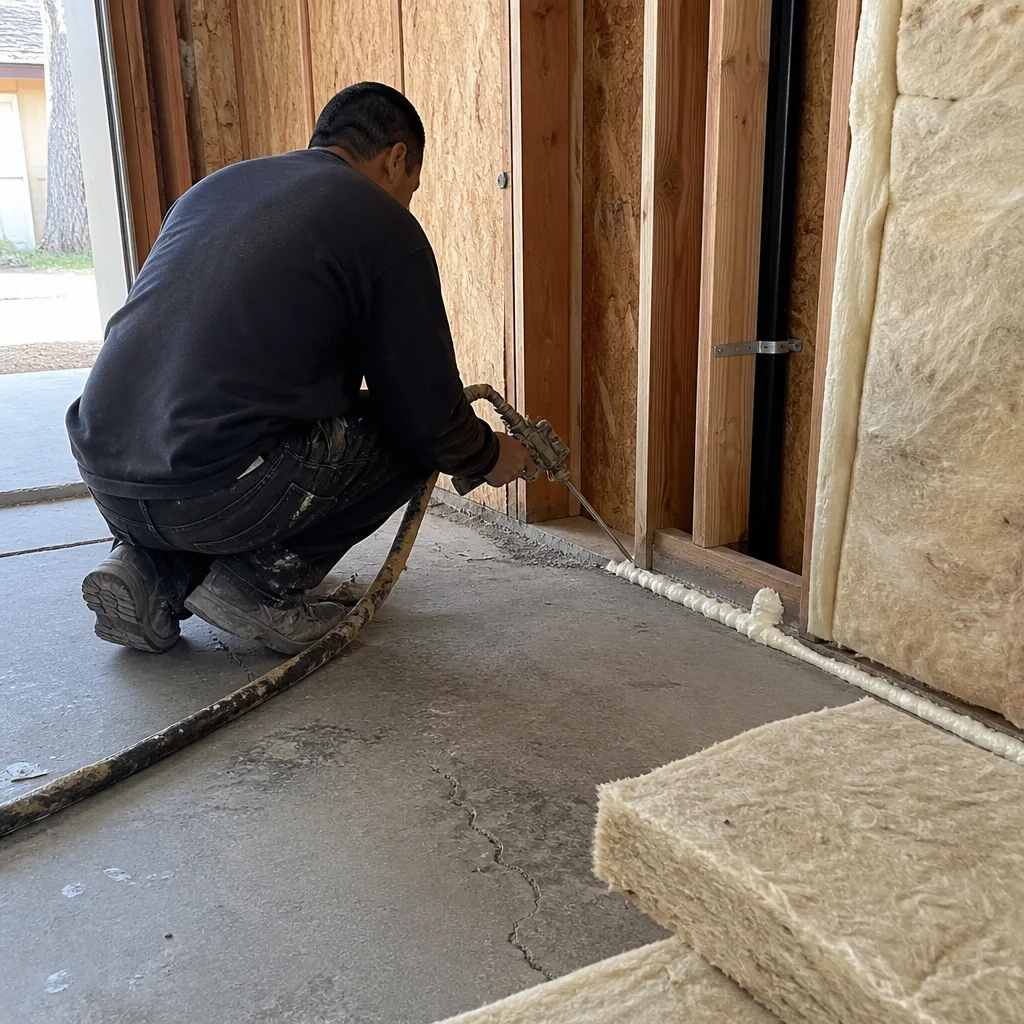
Owner-builder ADU construction in Corona is legally available but structurally disadvantaged for most homeowners. The five-year resale disclosure, mandatory licensed trades, and substantial time cost convert apparent savings into probable losses. The path makes sense only for licensed contractors holding long-term, planning to occupy or rent indefinitely, with time valued at or near zero. For everyone else, the design-build model provides price certainty, warranty protection, and preserved resale value that owner-builder status cannot match. The question isn’t whether you’re capable of self-managing an ADU project. It’s whether the savings, if any, justify the risks you’re assuming personally.
Written by Nadia Ellery, Owner at Ellery ADU Studio Corona, serving Corona since 2015.