
Last updated September 25, 2026
Seasonal ADU Care for Corona: Year-Round Homeowner’s Guide
An ADU roof that passed its final inspection in March can develop flashing failures by October if the Santa Ana wind season lifts uncured caulk at the parapet. That repair costs roughly $400 if caught in November and $6,000 if caught after the first significant rain. Corona sits at the western edge of the Inland Empire, where summer heat spikes above 105°F, wind gusts hit 60 mph, and the wet season compresses into a narrow window from December through March. This guide assigns concrete maintenance tasks to each season, with specific attention to the climate patterns that generic California ADU guides ignore.
Quick Answer
ADU maintenance in Corona follows a four-season rhythm: summer demands HVAC and attic ventilation checks for heat loads above 100°F; fall requires Santa Ana wind prep including roof flashing and defensible space clearance; winter focuses on drainage grading after first rain and water heater anode inspection; spring calls for stucco crack surveys and pre-season HVAC service before demand pricing begins. A documented maintenance log protects resale value and satisfies insurance underwriters.
Table of Contents
- Summer ADU Maintenance in Corona (June-September)
- Fall ADU Maintenance: Santa Ana Wind Prep (October-November)
- Winter ADU Maintenance in Corona (December-February)
- Spring ADU Maintenance: Post-Rain Recovery (March-May)
- The Maintenance Log Format That Protects Your Investment
- What Seasonal ADU Maintenance Costs in Corona
- Special Considerations for Prefab and Modular ADUs
- Common Mistakes to Avoid
- When to Call a Professional
- Frequently Asked Questions
 Before
 After
AfterSummer ADU Maintenance in Corona (June-September)
Corona’s summer heat is not a gradual warm-up. The city averages 14 days above 100°F annually, with July and August regularly pushing 105°F. For an ADU under 800 square feet, that heat load strains every system simultaneously.
HVAC Filter Replacement: More Often Than the Sticker Says
The standard recommendation on a mini-split filter is 30 to 90 days. In Corona, we replace filters every 21 to 30 days from June through September. The Inland Empire’s PM2.5 levels spike during wildfire season, and the Santa Ana corridor funnels particulate directly through the pass. A clogged filter forces the compressor to work harder, shortening lifespan and raising electricity bills by 15 to 25 percent.
We specify Mitsubishi, Daikin, and Fujitsu mini-splits in our ADU Design & Permitting in Corona work, and each has the same requirement: check the filter monthly, replace or clean when light no longer passes through. For clients with asthma or respiratory sensitivity, we add a MERV-13 inline filter at the return - it catches more particulate but demands even more frequent changes.
Mini-Split Refrigerant Pressure Check
Refrigerant pressure drops with temperature, but in Corona’s summer the opposite problem occurs: overpressure from extreme ambient heat. A system charged correctly in March can read high by August. The symptom is short-cycling - the unit turns on, runs three minutes, shuts off, repeats. This wears the compressor and never dehumidifies the space.
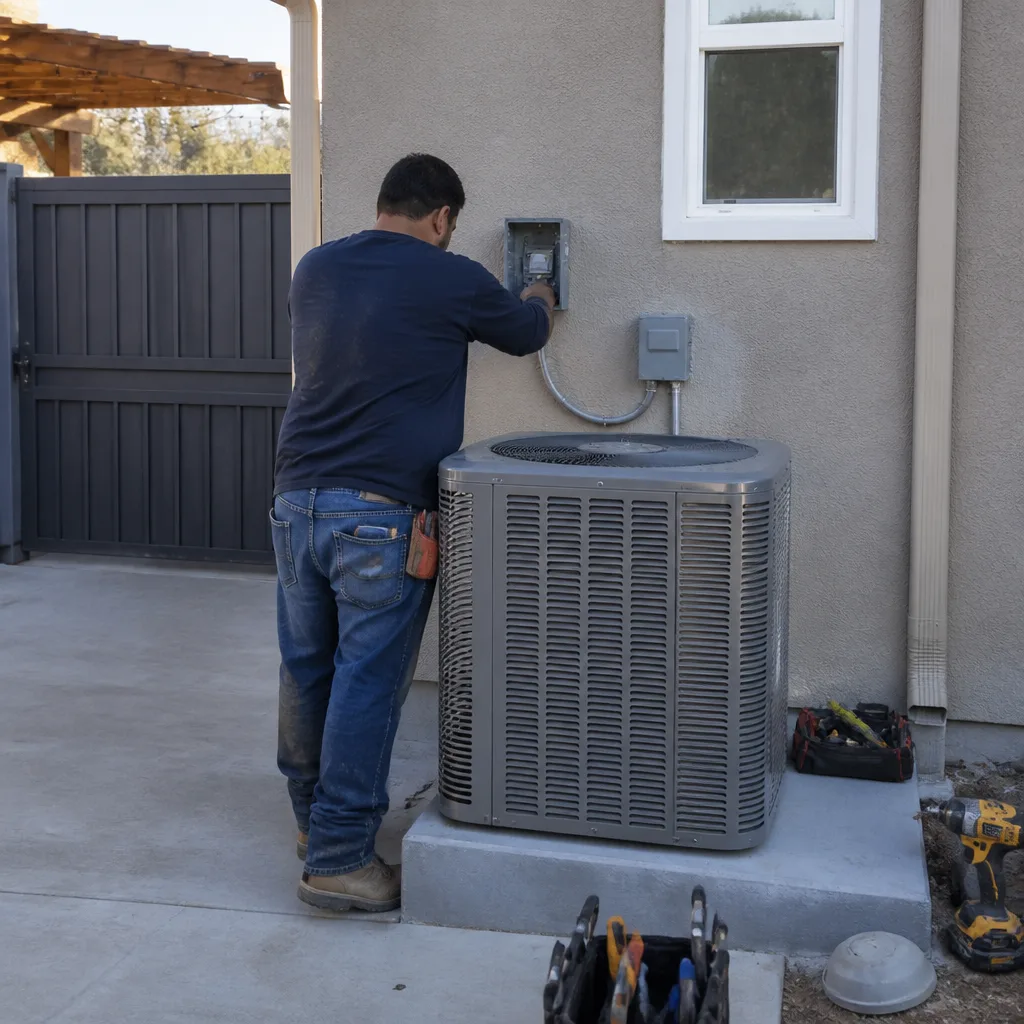
A licensed HVAC technician checks pressures against the manufacturer’s ambient temperature chart, not a generic rule. We include this check in our pre-handover documentation for every New Detached ADU in Corona, with the specific pressure readings written on the warranty card.
Attic Ventilation Confirmation
Corona’s summer attic temperatures reach 140°F to 160°F. Without adequate ventilation, that heat radiates through the ceiling assembly, making the mini-split fight a battle it cannot win. For ADUs with conditioned attics or vaulted ceilings, we verify soffit-to-ridge airflow. For flat-roof designs common in modern prefab units, we confirm that the parapet vents are unobstructed and that the roof membrane shows no blistering.
In the Sierra Del Oro and Dos Lagos areas, where newer ADU builds cluster, we’ve seen three cases in two years where landscapers piled mulch against soffit vents, choking airflow. The fix is free - pull the mulch back 18 inches - but the diagnostic visit costs $150 if you don’t catch it yourself.
Summer Task Checklist
- Replace or clean mini-split filters every 21-30 days
- Verify condensate line is flowing freely - algae growth accelerates in heat
- Check attic or roof cavity ventilation for blockages
- Inspect exterior paint and sealant on south- and west-facing walls for UV degradation
- Run the water heater on vacation mode if the ADU is unoccupied - sediment bakes in place at high temperatures
Fall ADU Maintenance: Santa Ana Wind Prep (October-November)
The Santa Ana wind season runs October through March, with peak intensity in November and December. In Corona, gusts reach 60 mph at the western foothills, and sustained winds of 25 to 35 mph are common. This is not a gentle autumn breeze. It is a structural test.
Roof Flashing Inspection
Flashing is the metal or membrane that seals where the roof meets a wall, pipe, or vent. In our Garage Conversion ADU in Corona work, the existing garage roof often has a parapet - a low wall around the roof edge - that was never designed for wind-driven rain. The caulk at the parapet coping (the cap on top) dries and shrinks over summer. The Santa Ana winds lift it, peel it back, and create a channel for water.
We inspect every conversion ADU before October 15. The check takes 20 minutes: walk the roof perimeter, probe caulk joints with a putty knife, look for lifted edges or cracks. Re-caulk with polyurethane sealant rated for 200 mph wind uplift. Cost if you do it yourself: $40 in materials. Cost if water enters and damages the ceiling: $4,000 to $8,000.
Vent Screen Integrity
Dryer vents, bathroom exhaust vents, and kitchen range hood vents all have screens or louvers that close when not in use. Wind forces them open, breaks the flapper hinges, or tears the mesh. A broken vent screen in November becomes a rodent entry point by January. In Corona’s hillside neighborhoods - Cresta Verde, Horsethief Canyon - roof rats are active year-round.
We replace broken flappers with spring-loaded models that resist wind, and we add 1/4-inch hardware cloth behind the screen where rodents are a known issue.
Exterior Caulk Around All Penetrations
Every hole in the wall is a failure point: hose bibs, electrical conduit, gas lines, cable entries. We walk the perimeter with a caulking gun and a flashlight, looking for gaps where the original caulk has separated from the siding. Stucco exteriors are especially prone - the caulk bead sits on a rough surface and never bonds as well as it does on smooth siding.
Defensible Space Clearance
Corona lies within the Very High Fire Hazard Severity Zone (VHFHSZ) along much of its eastern and northern boundaries. If your parcel is in this zone, state law requires 100 feet of defensible space. For ADU owners, this means:
- Clear dead vegetation within 30 feet of any structure
- Maintain vertical clearance of 6 feet from ground to lowest tree branch
- Remove leaves and debris from roof and gutters - Santa Ana winds will distribute them against the structure
- Move firewood and propane tanks to the outer 70 feet of the zone
The city of Corona Fire Department conducts free defensible space inspections. We recommend scheduling in October, before the wind season peaks.
Fall Task Checklist
- Walk the roof and parapet; re-caulk any lifted or cracked sealant
- Test all vent flappers and screens; replace broken components
- Caulk every exterior penetration point
- Confirm defensible space compliance if in VHFHSZ
- Clean gutters and roof valleys of accumulated debris
- Inspect and tighten outdoor electrical box covers
Winter ADU Maintenance in Corona (December-February)
Corona’s wet season is brief but intense. January averages 3.2 inches of rain, and February adds another 3.4. The rest of the year is nearly dry. This concentration means drainage systems get one chance to work, and if they fail, water has months to cause damage before the next inspection opportunity.
Drainage Grading Check After First Rain
The first significant rain of winter - typically the second or third week of December - is your diagnostic event. Walk the property during the storm or immediately after. Water should flow away from the ADU foundation on all sides. If it pools within 10 feet, you have a grading problem.
In the newer subdivisions south of the 91 Freeway, fill soil settles for three to five years after construction. We’ve seen ADU slabs that were properly graded at final inspection develop a negative slope toward the structure by year three. The correction is regrading with a 2 percent slope away from the foundation, typically $800 to $1,500 for a small ADU footprint. Left uncorrected, hydrostatic pressure cracks the slab and damages the moisture barrier.
Water Heater Anode Rod Inspection
Corona’s municipal water supply is moderately hard - 180 to 220 ppm calcium carbonate. Hard water accelerates anode rod consumption in tank water heaters. The anode rod is a sacrificial magnesium or aluminum rod that attracts corrosive elements, protecting the tank lining.
Check the anode rod every two years, or annually if the ADU has a tankless unit with a small buffer tank. A depleted rod allows the tank to rust from the inside. Replacement cost: $50 to $80 for the rod, 30 minutes labor. Tank replacement cost: $1,200 to $1,800.
Weatherstripping on ADU Entry Doors
Winter is when gaps matter. A 1/8-inch gap under an exterior door is equivalent to a 4-inch square hole in the wall. For a heated ADU, that drives heating costs up and creates condensation at the threshold, which rots the door frame.
We specify compression-style weatherstripping on all ADU doors, not the adhesive foam that degrades in heat. Check it by closing the door on a dollar bill - if you can pull the bill out without resistance, the seal is gone. Replace the sweep and the jamb weatherstripping as a set; they wear at different rates and replacing one without the other creates an uneven seal.
Winter Task Checklist
- Walk the property during or after the first significant rain; photograph any pooling
- Inspect water heater anode rod; replace if more than 50 percent depleted
- Test door weatherstripping with the dollar-bill method
- Run all faucets to full temperature; verify hot water arrives within 30 seconds
- Check exterior hose bibs for freeze damage - rare in Corona but possible in exposed locations above 1,500 feet elevation
Spring ADU Maintenance: Post-Rain Recovery (March-May)
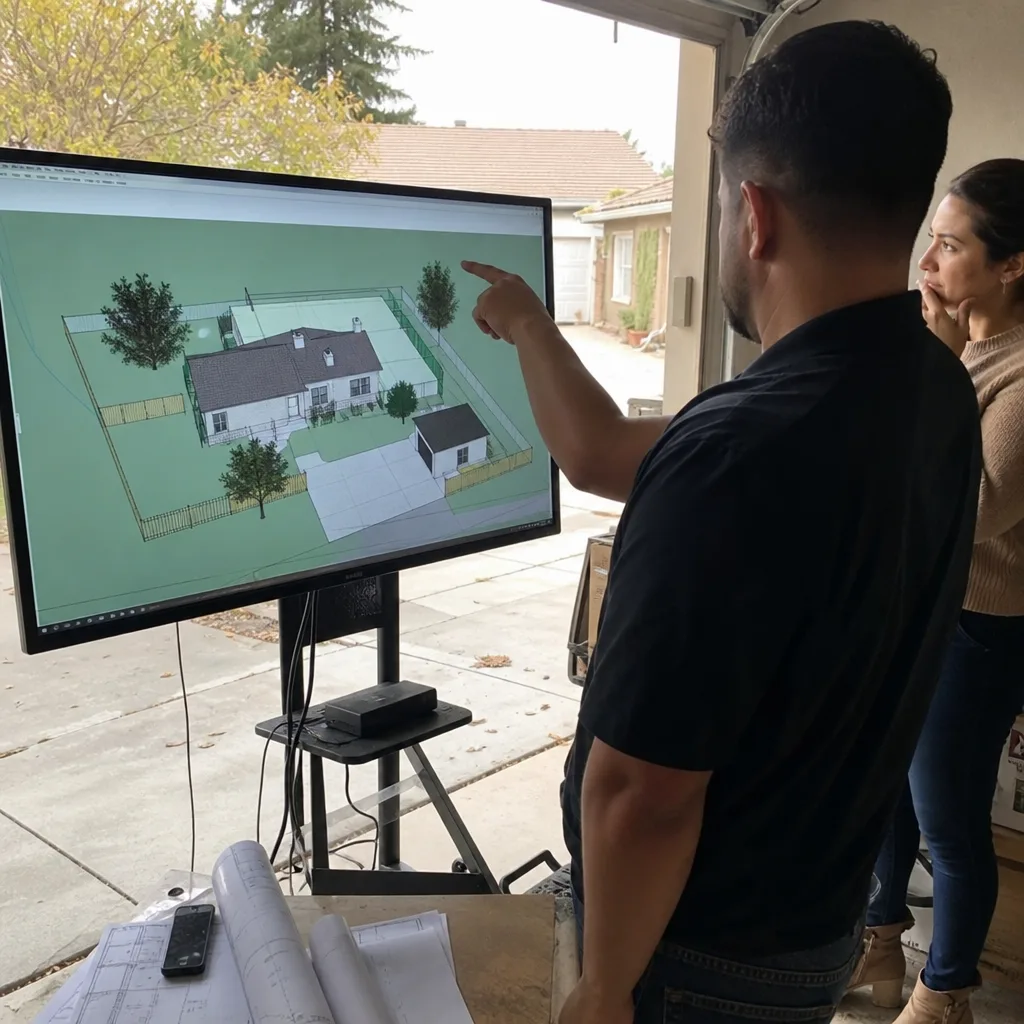
March in Corona is the pivot point. The last rains pass, temperatures climb from 70°F to 85°F, and the HVAC season begins. This is the window to repair what winter revealed and prepare for what summer will demand.
Post-Rain Stucco Crack Survey
Stucco cracks in two ways: hairline cracks from normal curing, and structural cracks from settlement or water intrusion. The distinction matters. Hairline cracks are cosmetic; structural cracks wider than 1/8 inch, or cracks that step in a stair pattern, indicate movement.
Walk the ADU exterior in March, after the last rain, with a flashlight held at a low angle to the wall. Raking light reveals cracks that overhead sun hides. Mark each crack with painter’s tape. Return after two weeks of dry weather. If the crack has widened, or if you find efflorescence - white powdery residue - at the crack face, water is moving through the wall assembly. This requires professional evaluation; it is not a DIY repair.
In Corona’s older neighborhoods near Grand Boulevard, some ADUs sit on expansive clay soils that swell in winter and shrink in summer. We’ve documented crack cycles of 3/16 inch seasonal variation. The repair is not filling the crack; it is managing the moisture content of the soil with proper drainage.
HVAC Pre-Season Service Before Demand Pricing
HVAC contractors in the Inland Empire shift to peak pricing by May 1. A service call in April costs 20 to 30 percent less than the same call in July, and you get a technician who is not racing between emergency no-cool calls.
The pre-season service includes: refrigerant pressure and temperature verification, condenser coil cleaning, electrical connection torque check, and condensate pump test. For mini-splits, we add a blower wheel cleaning - the fine dust that passes through filters accumulates on the wheel and reduces airflow by 10 to 15 percent over a year.
Window and Door Frame Inspection for Settlement Movement
Spring is when doors that stuck in winter may loosen, or windows that operated smoothly may bind. This is your signal that the foundation is responding to soil moisture changes. Check for:
- Doors that scrape the frame or jamb at the top or bottom corner
- Windows that require extra force to latch
- Trim separation from the wall at the corners
- Interior drywall cracks above doors or at ceiling corners
Document with photographs and measurements. Minor seasonal movement is normal; progressive movement that worsens each year is not.
Spring Task Checklist
- Raking-light stucco inspection; mark and monitor cracks
- Schedule HVAC pre-season service before May 1
- Test all doors and windows for binding or latch failure
- Inspect and clean the condensate drain line with diluted bleach
- Verify that landscape irrigation is not spraying the ADU walls - spring system startups often misalign
The Maintenance Log Format That Protects Your Investment
A maintenance log is not a diary. It is a legal document that insurance underwriters and prospective buyers treat as evidence of care. The format matters.
What to Record
Each entry needs six elements:
- Date - specific day, not month or season
- Task performed - “Replaced mini-split filter, model X, size Y”
- Condition found - “Filter was gray with debris, light passage 30 percent”
- Action taken - “Installed new filter, photographed old filter for record”
- Next due date - calculated from manufacturer recommendation, not habit
- Technician or homeowner name - establishes chain of custody
Where to Store It
Keep the original in a fireproof document box within the primary residence, not the ADU. Maintain a digital backup in cloud storage with date-stamped photographs. For ADUs used as rental properties, the log is a deductible business expense and may be required for depreciation recapture calculations at sale.
Insurance and Resale Value
We have seen buyers in Corona’s competitive market waive inspection contingencies based on documented maintenance history. A complete log signals that the ADU was treated as an asset, not an afterthought. Underwriters for landlord policies increasingly require proof of annual HVAC and plumbing maintenance; the log satisfies this without additional inspection fees.
For clients who completed their ADU through Ellery ADU Studio Corona home, we provide a bound maintenance log at handover, pre-printed with the specific equipment models and maintenance intervals for that project. It is part of the documented photo record that accompanies every build.
What Seasonal ADU Maintenance Costs in Corona
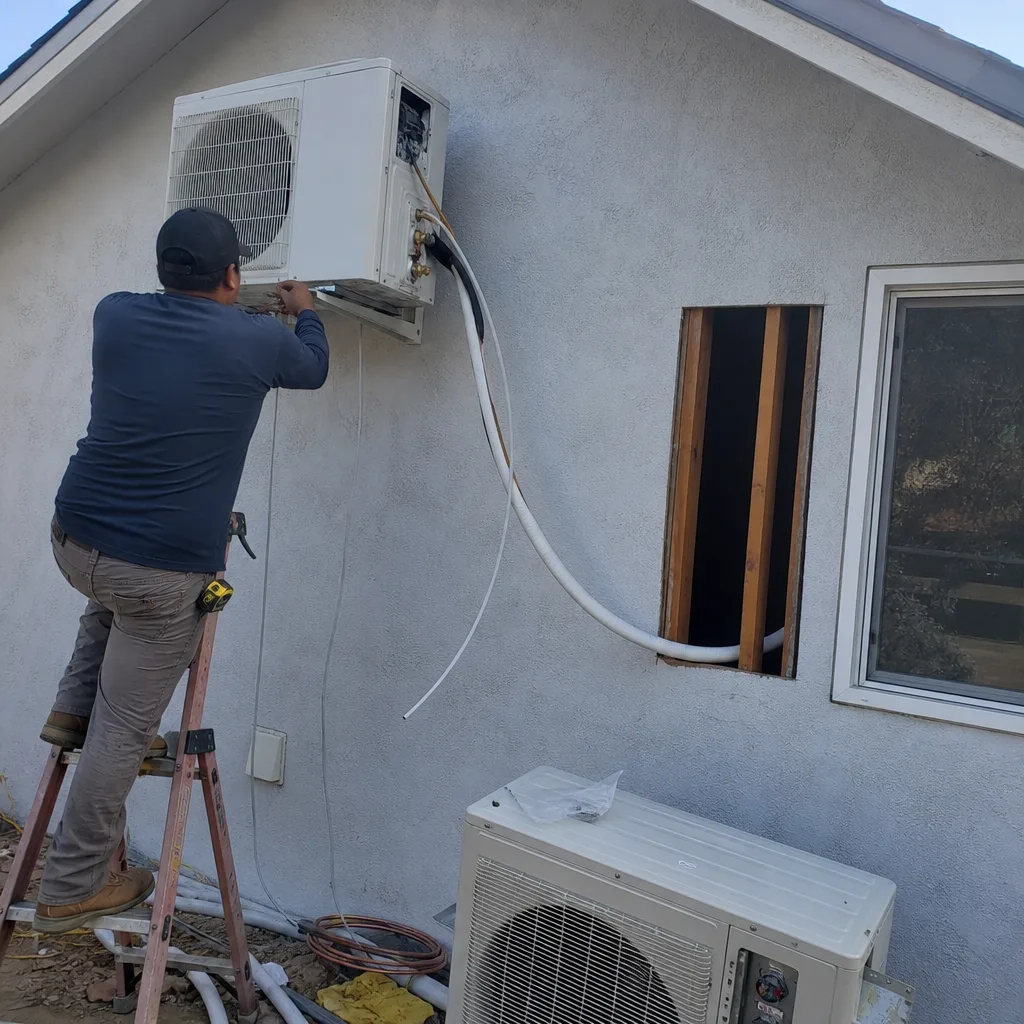
These ranges reflect Corona’s market as of 2024-2025, based on our project history and vendor relationships. Every project we quote carries a written price before work starts, per Haven Standard Clause 1.
| Service | Typical Range | Frequency |
|---|---|---|
| Mini-split filter (DIY) | $15 - $35 | Monthly (summer) |
| HVAC pre-season service | $180 - $280 | Annual (spring) |
| Roof flashing re-caulk (DIY materials) | $30 - $60 | Annual (fall) |
| Professional roof inspection | $250 - $400 | Every 2-3 years |
| Water heater anode rod replacement | $80 - $150 | Every 2 years |
| Grading correction (minor regrade) | $800 - $1,500 | As needed |
| Stucco crack repair (cosmetic) | $200 - $500 | As needed |
| Stucco crack repair (structural evaluation) | $400 - $800 | As needed |
| Full maintenance log setup (digital + physical) | $0 - $50 | One-time |
Annual budget for a conscientious ADU owner in Corona: $500 to $900 in routine maintenance, plus $500 to $2,000 every three to five years for corrective items. See more guides & resources for budgeting tools. Compare this to the $15,000 to $40,000 cost of deferred maintenance failures we’ve documented in ADUs that skipped three or more seasons of care.
Special Considerations for Prefab and Modular ADUs
Ellery ADU Studio specifies and coordinates prefab and modular systems from Dvele, Mighty Buildings, Boxabl, Plant Prefab, and other manufacturers within the same single-contract design-build model. These systems have maintenance profiles that differ from site-built ADUs.
Factory-Sealed Envelopes
Prefab units from Dvele and Plant Prefab arrive with the wall assembly completed in a climate-controlled factory. The critical maintenance point is not the wall itself but the marriage lines - the seams where modules connect on site. These are sealed with gaskets and cover strips that require inspection in fall, before wind season, and spring, after thermal expansion cycles.
Mighty Buildings: 3D-Printed Composite Shells
Mighty Buildings uses a stone composite material that does not crack like stucco, but the UV-stable topcoat requires renewal every 7 to 10 years. The manufacturer specifies the coating; using generic exterior paint voids the warranty. We include the coating schedule in the handover documentation for every Mighty Buildings project.
Boxabl and Compact Units: Transport Stress Points
Boxabl units fold for transport and unfold on site. The hinge mechanisms and fold seams are engineered for repeated cycling, but the sealant at these joints demands annual inspection. In Corona’s heat, the fold-seal gasket compresses permanently over time; we recommend replacement at year five as preventive maintenance.
Utility Connections in Modular Setups
Site-built utilities connect to prefab units at a single point, typically a utility chase on the module exterior. This chase is the most vulnerable point in the system - it penetrates the factory envelope and is field-sealed. We inspect these penetrations annually as part of our fall wind-prep protocol.
Common Mistakes to Avoid
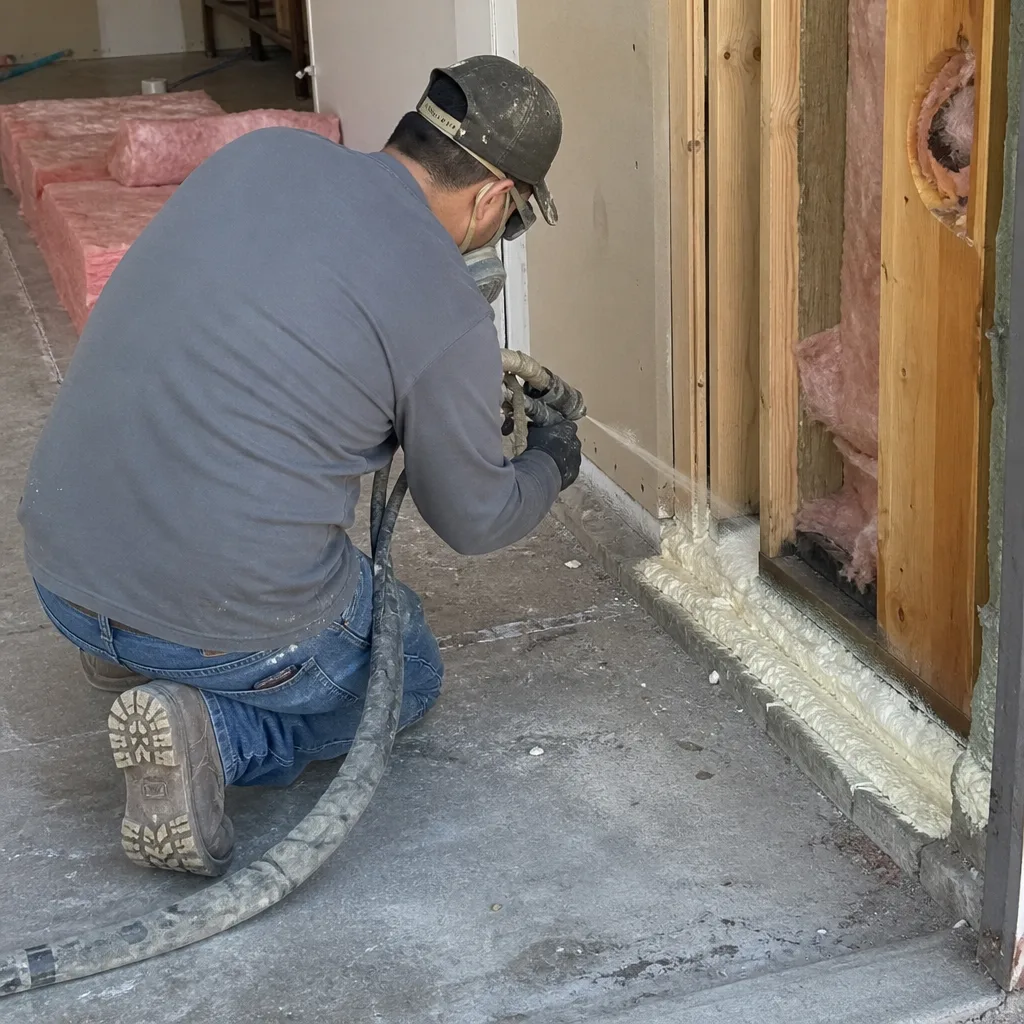
- Treating Corona like coastal California. The humidity differential is extreme: Corona’s summer relative humidity drops to 15 percent, while coastal cities stay near 60 percent. Wood trim and siding that thrive in Santa Monica check and split in Corona without proper sealing and expansion gaps.
- Skipping the first fall inspection after handover. New ADUs settle and sealant cures unevenly. The October after completion is the highest-risk window for the parapet and flashing failures described in our opening.
- Using the primary residence maintenance schedule for the ADU. ADUs are smaller, run harder per square foot, and often have different equipment - tankless water heaters, mini-splits, compact appliances with shorter duty cycles.
- Ignoring the defensible space requirement. Corona’s VHFHSZ designation is not advisory. Non-compliance can result in fines and will void fire coverage on some policies. The city offers free inspections; use them.
- Waiting for visible damage to act. By the time stucco shows efflorescence or a ceiling shows water staining, the repair cost has multiplied by five to ten. The maintenance log’s purpose is catching conditions before they become damage.
- Neglecting to document DIY maintenance. Insurance adjusters and buyers discount unrecorded work. A filter change with no receipt or photograph is, in their eyes, a filter change that did not happen.
- Assuming the builder’s warranty covers everything. The 365-Day Done Right Promise at Ellery ADU Studio covers construction defects, not owner neglect. A failed compressor from dirty filters is a maintenance issue, not a warranty issue.
When to Call a Professional
Some conditions exceed homeowner maintenance and require licensed evaluation: stair-pattern stucco cracks indicating foundation movement, refrigerant pressure readings outside manufacturer specification, water intrusion with no obvious entry point, electrical panel corrosion or breaker tripping, and gas odor or pilot light irregularities.
Ellery ADU Studio Corona offers free estimates on any ADU concern, including second opinions on written estimates already in hand. We document what we find with photographs, explain it in plain language, and quote a written price before any work begins. Call (951) 476-3715 to schedule.
Frequently Asked Questions
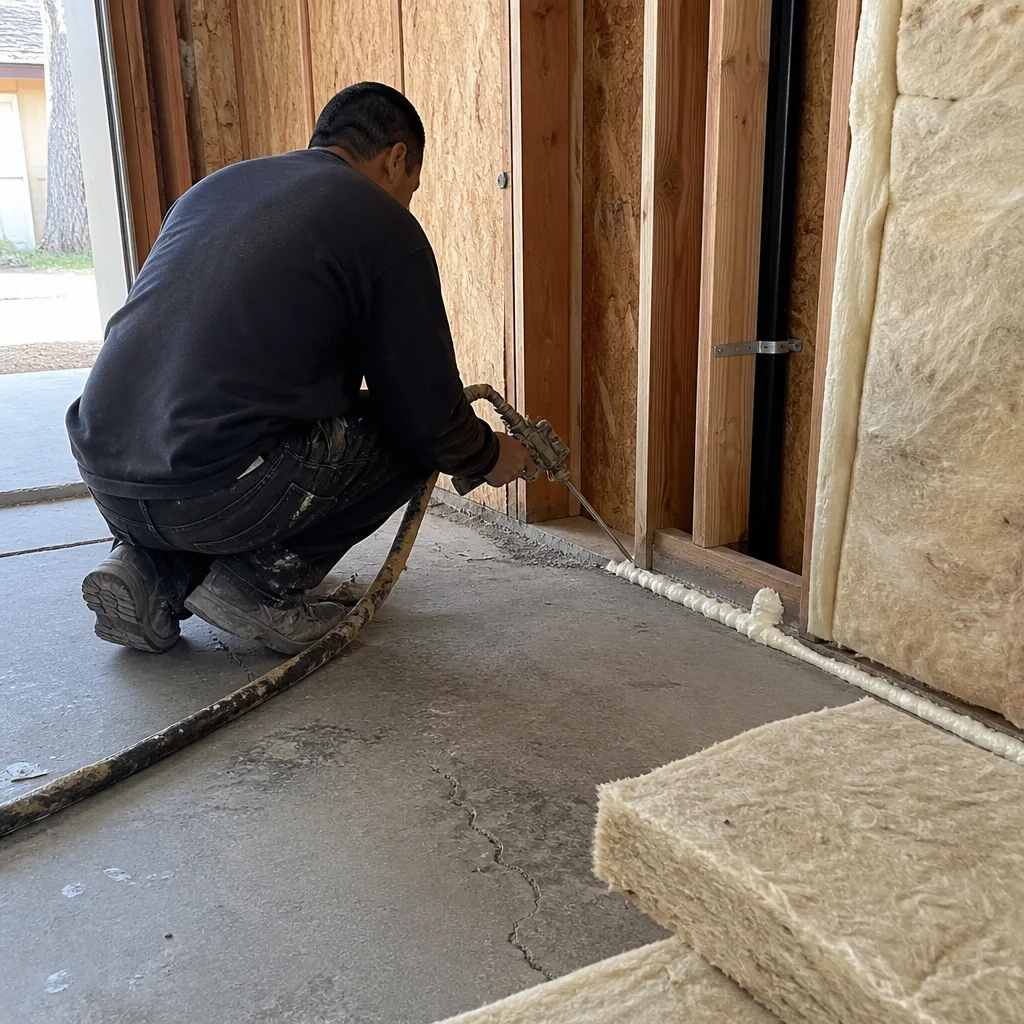
Routine seasonal maintenance for an ADU in Corona typically runs $500 to $900 annually, plus $500 to $2,000 every three to five years for corrective items like grading adjustment or coating renewal. The exact figure depends on ADU size, equipment type, and whether you perform filter changes and basic inspections yourself. Call (951) 476-3715 for a written estimate on any specific concern - estimates are free.
No. Under Haven Standard Clause 1, every project is quoted with a written price before any work begins. The scope is locked at signing; no door-side upsells, no scope creep. If we find a condition that requires additional work, we document it, quote it separately, and you approve it in writing before we proceed.
Pure maintenance - filter changes, caulking, weatherstripping, cleaning - does not require permits in Corona. Structural repairs, electrical or plumbing modifications, and roof membrane replacement may. We pull all required permits for any work we perform and pass all inspections. If you are unsure whether your planned work needs a permit, call us for a free second opinion.
Corona averages 14 days above 100°F annually; Los Angeles averages two. That heat load shortens HVAC filter life, increases refrigerant pressure, and accelerates exterior sealant degradation. The maintenance intervals that work in Los Angeles are insufficient in Corona. We specify shorter cycles in every ADU handover documentation we prepare.
Request a log with dated entries, specific equipment model numbers, condition descriptions, and photographs. Gaps of more than one year in HVAC or plumbing maintenance are red flags. A complete log with manufacturer-recommended intervals followed precisely adds $5,000 to $15,000 in perceived value at sale, based on our conversations with Corona-area real estate professionals.
We evaluate and service ADUs from any builder, including prefab and modular units from Dvele, Mighty Buildings, Boxabl, and Plant Prefab. Our single-contract model applies to new design-build projects; maintenance and repair work is quoted separately with the same written-price guarantee. We also offer free second opinions on any written estimate you have received from another contractor.
The Bottom Line
Corona’s climate demands a maintenance rhythm that coastal California guides do not address: monthly filter changes in summer, wind-prep in fall before the Santa Anas peak, drainage verification after the first winter rain, and stucco and HVAC checks in spring before demand pricing begins. The cost of disciplined maintenance is modest; the cost of deferral is not. A documented maintenance log protects your investment at resale and satisfies the underwriters who will evaluate it. For ADU owners who want professional evaluation or a free second opinion on any concern, Ellery ADU Studio Corona provides written estimates before any work begins, backed by the Haven Standard.
Written by Nadia Ellery, Owner at Ellery ADU Studio Corona, serving Corona since 2015.