
Last updated September 25, 2026
ADU Cost Breakdown: The Corona Homeowner’s Reference for 2026
Most Corona homeowners who call us have already received one “all-in” estimate that felt suspiciously round. A detached ADU quoted at $320,000, with no line-item breakdown, no mention of the sewer lateral condition, and no allowance for the electrical panel upgrade that Southern California Edison will require before they’ll release a new meter. Six months later, that same project is at $380,000 and climbing. The construction itself didn’t change. What changed was the discovery of parcel-specific costs that a bundled estimate had hidden. In Corona’s 92881, 92882, and 92883 ZIP codes, we’ve seen sewer lateral replacements alone swing from $8,000 to $34,000 depending on whether the original clay line runs under a mature oak or a recently repaved driveway. This guide breaks every cost category to the line item, with 2026 ranges drawn from active Riverside County projects we’ve permitted, and points to our ADU Design & Permitting Maintenance Checklist for Corona Homeowners for ongoing project tracking. built.
Quick Answer
A complete ADU project in Corona in 2026 typically ranges from $180,000 for a modest garage conversion to $420,000 for a larger detached unit with full utility upgrades. The construction cost per square foot is only part of the picture: soft costs (design, engineering, permits, soils) add $30,000-$60,000, and parcel-specific utility connections can add $15,000-$65,000 depending on your existing service capacity. The homeowners most surprised by their final bill are those who received a single bundled number instead of a line-item scope tied to their specific parcel.
Table of Contents
- Soft Costs: Design, Engineering, and Permits
- Hard Construction Costs by ADU Type
- Utility Connection Costs: The Parcel-Specific Wildcard
- Impact Fees and AB 1600 Nexus in Corona
- How a Single Fixed-Price Contract Prevents Overruns
- Financing and Paying for Your ADU in 2026
- Cost Timeline: When Each Payment Is Due
- What Your ADU Returns in Corona’s Market
 Before
 After
AfterSoft Costs: Design, Engineering, and Permits
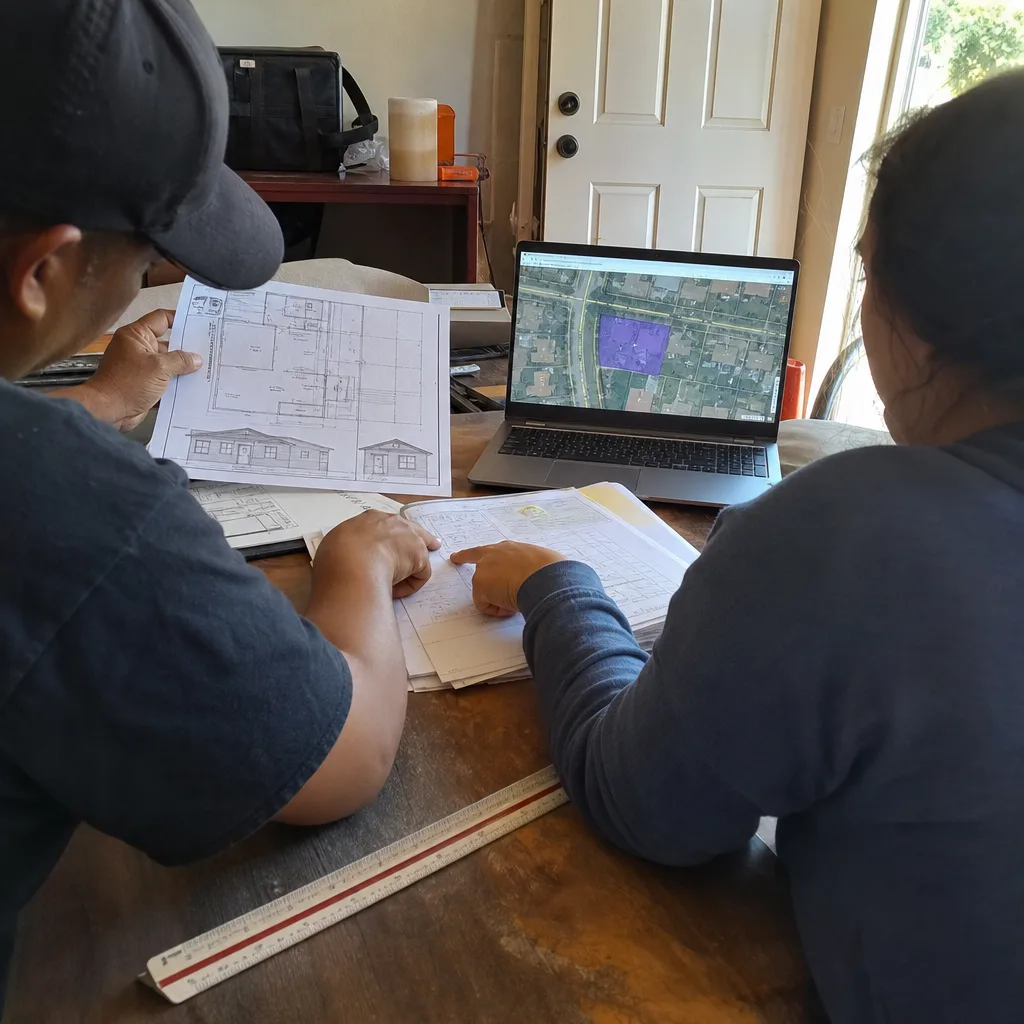
Soft costs are where Corona ADU projects most commonly derail before construction begins. These are the professional services and regulatory fees paid before a shovel hits the ground, and they vary by parcel, not by project ambition.
Design and architectural documentation: $18,000-$32,000
This covers the measured survey of your existing property, the design development of floor plans and elevations, and the production of the permit set: structural calculations, energy compliance documentation, and Title 24 reports. In Corona, the city’s Planning Division requires a complete submittal package before they’ll schedule intake, and incomplete packages are returned without review. We’ve seen homeowners pay a designer $12,000 for “concepts” that required another $15,000 to become a permit-ready set. At ADU Design & Permitting in Corona, the permit set is the core deliverable, not an afterthought. Every drawing is produced to Corona’s specific submittal checklist, which was updated in 2024 to include wildfire-urban interface setbacks in the Sierra Del Oro and Dos Lagos areas.
Structural engineering: $4,500-$8,500
Required for all detached ADUs and for garage conversions where the existing slab or roof structure is modified. Corona sits in a Seismic Design Category D, which triggers more conservative lateral force requirements than coastal Orange County. Engineering for a 600-square-foot detached unit typically runs $5,500-$7,000; a 1,200-square-foot unit with a vaulted ceiling and clerestory windows can push $8,500.
Soils report (geotechnical investigation): $2,000-$5,000
Corona’s geology shifts dramatically block by block. The flat neighborhoods south of Ontario Avenue sit on alluvial fill that may require engineered fill or overexcavation. The hillside areas above Yorba Linda Boulevard encounter sandstone and clay layers that affect foundation design. A soils report isn’t always required for garage conversions on existing slabs, but for any new foundation, Riverside County Building and Safety will want borings or test pits. We’ve had projects in Corona’s South Main Street corridor where the soils report added $4,200 because the original fill was undocumented and required recompaction certification.
Title 24 energy compliance documentation: $1,500-$3,000
California’s energy code requires performance modeling for all new conditioned space. In Corona’s hot-dry climate zone (CEC Climate Zone 10), cooling loads dominate, and the prescriptive path often fails for ADUs with west-facing glass. We typically run performance calculations using EnergyPro or CBECC-Com, which adds this line item but prevents costly redesign if the prescriptive path is rejected at plan check.
Permit and plan check fees: $8,000-$18,000
Corona’s permit fees scale with project valuation, which the city calculates using a published valuation table, not your contract price. A 650-square-foot garage conversion at $120,000 valuation carries lower fees than a 650-square-foot new detached ADU at $280,000 valuation, even if the finished spaces are identical. For 2026, Corona’s combined planning, building, and fire fees for a typical detached ADU run $12,000-$16,000. School impact fees, which we cover separately, are additional.
Soft cost total: $30,000-$60,000 before construction begins.
Hard Construction Costs by ADU Type
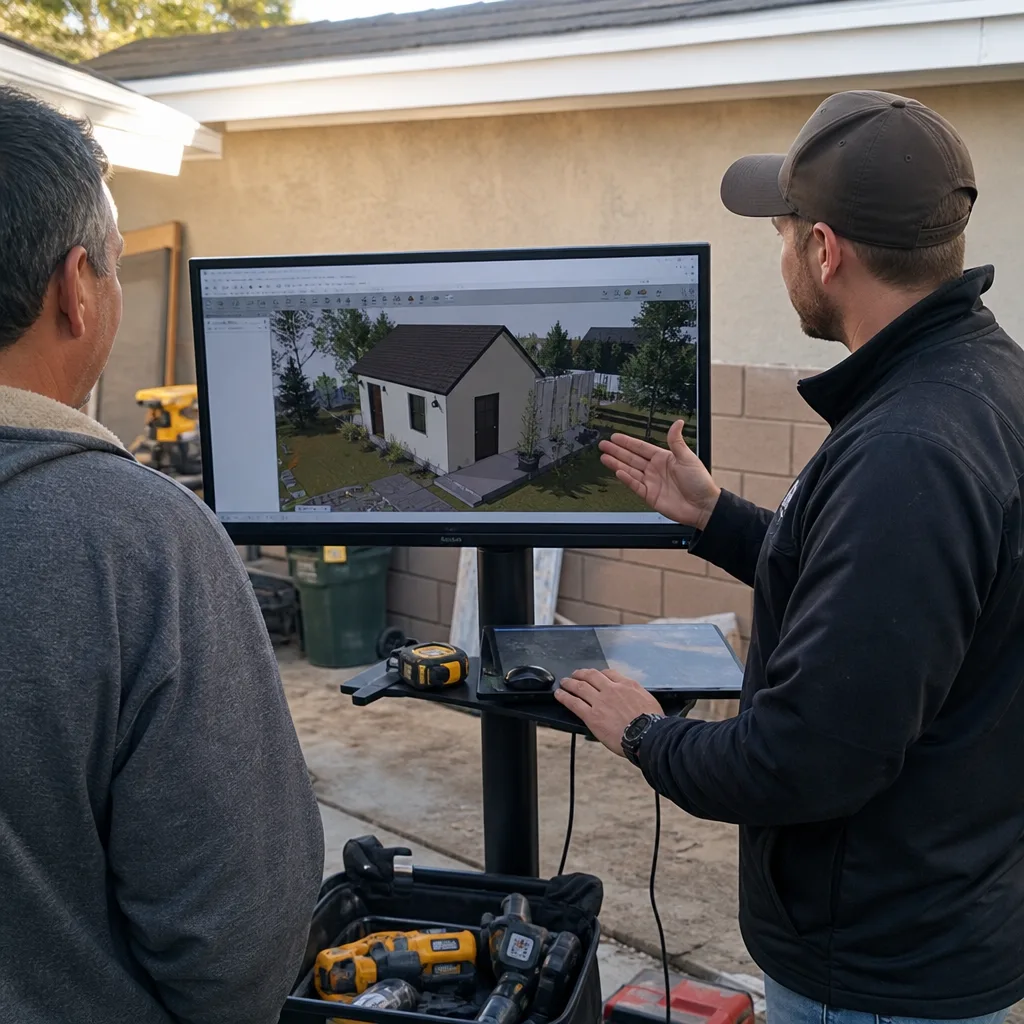
Hard costs are what most homeowners picture when they think “ADU price.” These are materials, labor, and the subcontractor trades that build the structure. In Corona’s 2026 market, labor availability has stabilized post-pandemic, but material costs for electrical components and lumber remain elevated compared to 2019 baselines.
Garage Conversion ADU: $95-$145 per square foot
The lowest per-square-foot entry point, but only if the existing structure is sound. A 400-square-foot garage conversion in Corona’s older neighborhoods, where the slab is 4 inches thick and the roof is stick-framed with adequate pitch, can hit the $95/sf range. The same conversion in a 1980s tract home with a thin post-tensioned slab and low headroom pushes $145/sf after slab thickening, ceiling reframe, and insulation upgrades.
Variables that push garage conversions toward the high end:
- Foundation work: adding 2 inches of concrete or installing a floating slab over the existing
- Headroom: dropping the floor or raising the roof to meet 7’6″ minimum ceiling height
- Fire separation: upgrading the garage-to-ADU wall to 1-hour rated assembly
- HVAC integration versus standalone mini-split system
At Garage Conversion ADU in Corona, we start with a structural assessment that identifies these variables before quoting, not after demolition. Under Haven Standard Clause 1, the written price you receive accounts for what we find, not what we hope to find.
New Detached ADU: $280-$420 per square foot
This is the broadest range because “detached ADU” covers everything from a 400-square-foot studio on piers to a 1,200-square-foot two-bedroom with full kitchen, laundry, and covered patio. In Corona’s market, a straightforward 600-square-foot rectangular unit on a flat lot with standard finishes typically lands at $310-$350/sf.
Variables that push detached ADUs toward $420/sf:
- Complex roof forms (hip roofs, multiple dormers) increasing framing and roofing labor
- High-end finishes: quartz counters, custom cabinetry, tile showers
- Extended utility trenches: sewer, water, gas, and electrical runs exceeding 75 feet
- Grading and retaining walls for sloped lots in Corona’s hillside zones
- Prefabricated or modular systems requiring crane rental and specialized foundation prep
We’ve specified and coordinated prefab systems from Dvele and Mighty Buildings for Corona clients who wanted faster weather-tight dates. These systems don’t eliminate hard costs, but they shift labor from the site to the factory, which can compress the construction schedule by 6-10 weeks. The trade is precision: the foundation must be within 1/4-inch tolerance, which adds $3,000-$6,000 to the concrete line item but reduces framing labor.
Attached Addition ADU (or Junior ADU): $195-$310 per square foot
An attached ADU shares one or more walls with the primary residence and typically requires less envelope work than a detached unit. Junior ADUs, limited to 500 square feet and requiring owner-occupancy of the primary residence, fall in the lower half of this range. The upper end applies when the addition requires structural modification of the existing home, such as removing a load-bearing wall to create access.
In Corona’s Corona Hills and Sierra Del Oro neighborhoods, we’ve seen attached ADUs become the preferred option when the primary residence has ample side yard but the rear setback won’t accommodate a detached unit under Corona’s 4-foot rear yard requirement.
Utility Connection Costs: The Parcel-Specific Wildcard
This is where the $280,000 estimate becomes $340,000. Utility connections are not proportional to ADU size. They are proportional to your existing service capacity, the age of your infrastructure, and the distance from your main to the new unit.
Sewer lateral upgrade or replacement: $8,000-$35,000
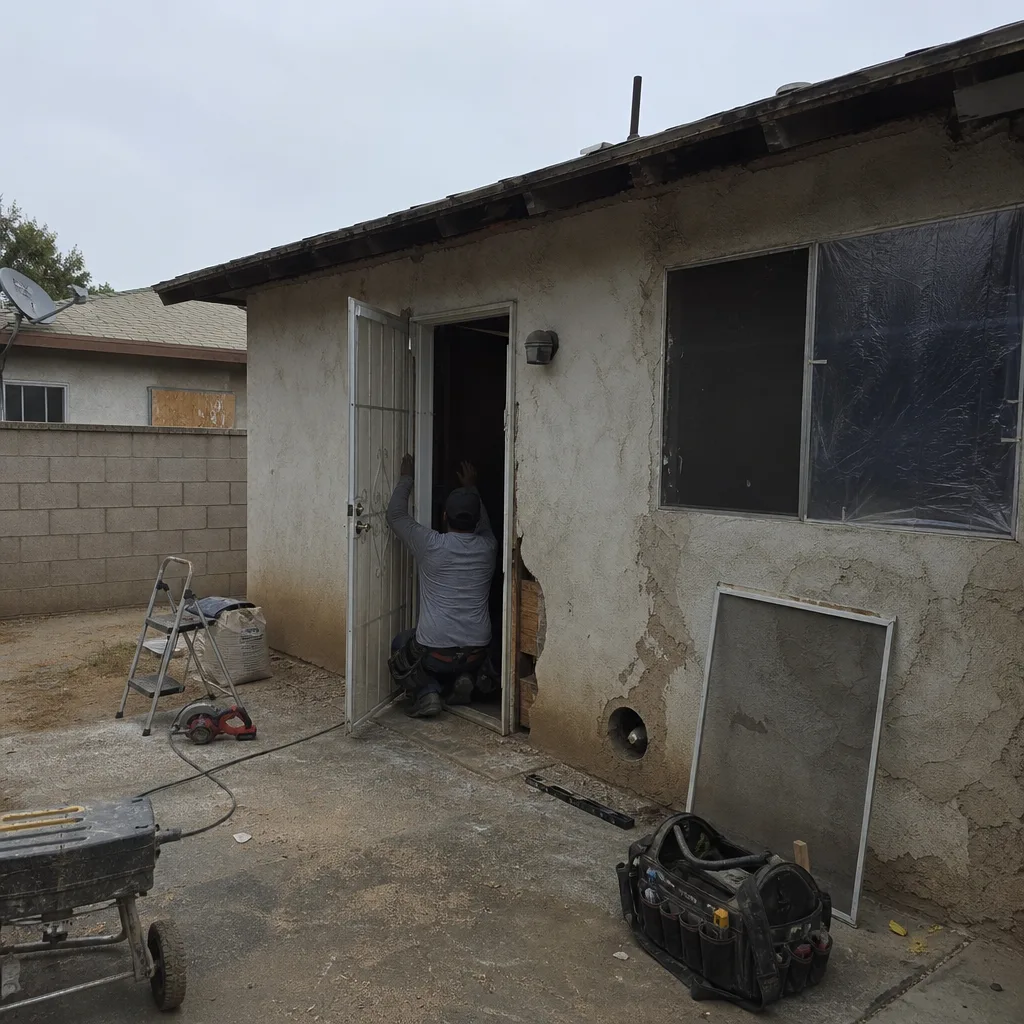
Corona’s older neighborhoods, particularly those built before 1980, often have 4-inch clay or Orangeburg pipe laterals that fail when flow increases. The city requires a video inspection before issuing a sewer connection permit for any new ADU. If the lateral is cracked, bellied, or root-intruded, replacement is mandatory. The cost driver is depth and access: a lateral running 6 feet deep under a driveway that was repaved in 2022 adds $12,000-$18,000 for pavement removal and restoration alone. We’ve had Corona clients in the original Downtown Corona grid where the lateral tied into a 100-year-old main at 10 feet depth, pushing replacement to $34,000-one of the warning signs covered in our ADU Warning Signs: A Corona Homeowner’s Reference Guide.
Water meter upsizing or dual meter installation: $4,000-$12,000
Corona Utilities requires adequate flow and pressure for the combined dwelling. If your existing 5/8-inch meter serves a home with original galvanized supply lines, upsizing to 1 inch may be required. A dual-meter setup, which separates ADU water billing, adds the meter itself plus a second connection fee. In 2026, Corona’s water connection fee for a new residential meter is approximately $6,800, but this is scheduled for review in the July rate hearing.
Electrical service panel upgrade: $6,000-$18,000
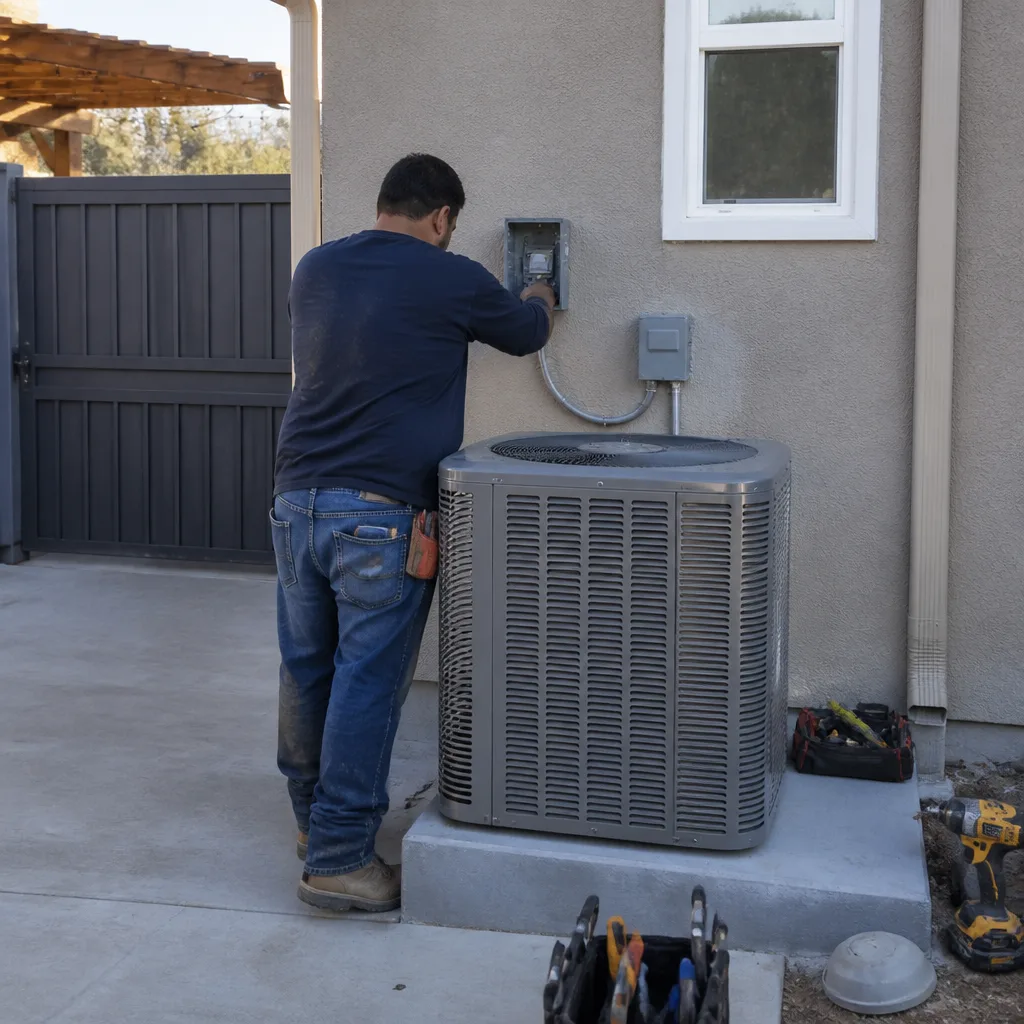
This is the most common surprise in Corona’s post-1990 subdivisions, where 150-amp panels were standard but are now inadequate for a primary residence plus ADU with electric water heating, cooking, and HVAC. Southern California Edison’s queue for service upgrades in Corona currently runs 8-12 weeks for scheduling, which can delay project completion even if construction is finished. A 400-amp service with new underground lateral from the transformer is the upper end of this range; a 200-amp panel swap with existing overhead service is the lower end.
Gas line extension or upgrade: $2,500-$8,000
SoCalGas requirements vary by pressure and pipe sizing. For ADUs with tankless water heaters and gas ranges, a 1-inch high-pressure line may be required from the meter, not just a branch from the existing low-pressure house line.
Utility connection total: $15,000-$65,000, with most Corona parcels landing in the $25,000-$45,000 range.
Under Haven Standard Clause 5 (No Surprises), we video-inspect sewer laterals and verify electrical service capacity before finalizing your written price. The $35,000 lateral replacement is in your scope, or it’s not. There is no “discovered during construction” add-on.
Impact Fees and AB 1600 Nexus in Corona
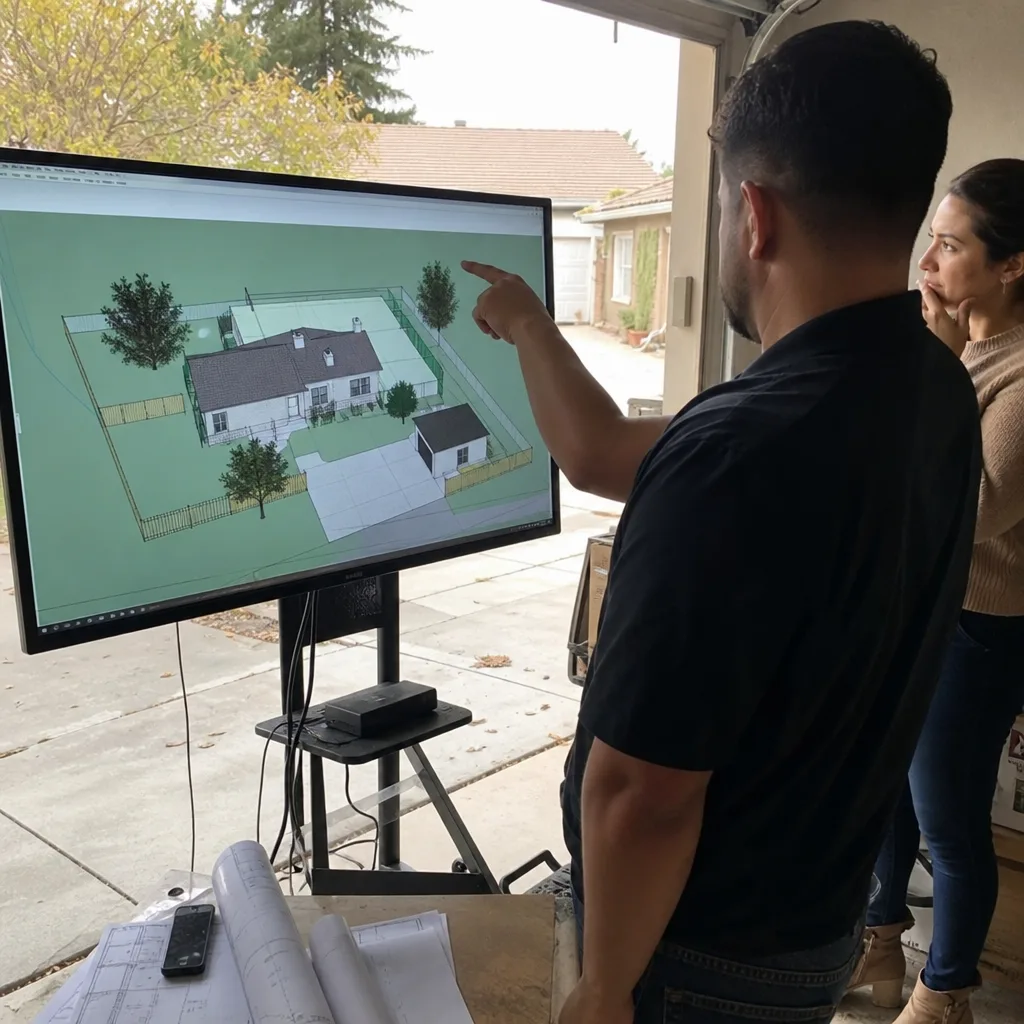
Impact fees are charges that cities levy to offset the public cost of new development: schools, roads, parks, fire protection. Under California’s AB 1600 and subsequent ADU legislation, these fees are restricted for ADUs but not eliminated.
School impact fees: Currently $4.14 per square foot for residential construction in Corona, collected by the Corona-Norco Unified School District. For an 800-square-foot ADU, this is $3,312. For a 1,200-square-foot unit, $4,968. These fees are adjusted annually; the 2026-2027 rate will be set by June 2026.
Traffic impact fees: Varies by project type and location. In Corona, new detached ADUs in the “High Traffic Impact” zones (generally commercial corridors and major intersections) may trigger fees of $2,000-$5,000. Garage conversions and Junior ADUs are typically exempt under state law.
Park and recreation fees: Corona charges a Quimby Act fee for new residential units, but ADUs under 750 square feet are exempt. Larger ADUs pay a pro-rata share, typically $1,200-$2,800.
Fire facilities fees: $1.50-$2.10 per square foot, depending on fire district. Corona’s city fire department and Cal Fire contract areas have different schedules.
The critical point: these fees are not optional, and they are not negotiable with the contractor. They are paid to the city or special district at permit issuance. A contractor who bundles them into a round number without identifying each fee is obscuring a cost you will pay regardless of who builds the project.
How a Single Fixed-Price Contract Prevents Overruns
The standard ADU industry model separates design from construction. You hire an architect or designer for $15,000-$25,000, pay them regardless of whether the permit is approved, then solicit bids from contractors who may or may not have reviewed the permit set. When the city requests corrections, the designer blames the contractor’s interpretation; the contractor blames the designer’s drawings. You pay for redesign, resubmittal, and delayed construction.
This is not theoretical. In 2023, we took over a Corona project where the homeowner had paid $18,000 for a permit set that was rejected three times by Riverside County Building and Safety for structural calculation errors. The designer, paid in full, was unresponsive. The homeowner was $18,000 down and six months behind.
Ellery ADU Studio Corona home operates as a design-build studio: one contract, one written price, one accountable party. The permit set is produced by the same team that will build from it. If the city requests a correction, we make it. If the soils report reveals unexpected conditions, we absorb it within the written scope or identify it before you sign. Haven Standard Clause 1 requires a written price before any work starts. Clause 5 locks the scope at signing. Clause 7, the 365-Day Done Right Promise, states that if the finished ADU is not built to the permitted drawings, we make it right, in writing, before the project starts.
The financial protection is structural, not sentimental. When the designer’s fee is contingent on permit approval and the builder’s margin depends on no surprises, both parties are incentivized to identify problems early. In our experience across 900+ ADUs, this alignment eliminates the soft-cost overruns that plague split-contract projects.
Financing and Paying for Your ADU in 2026
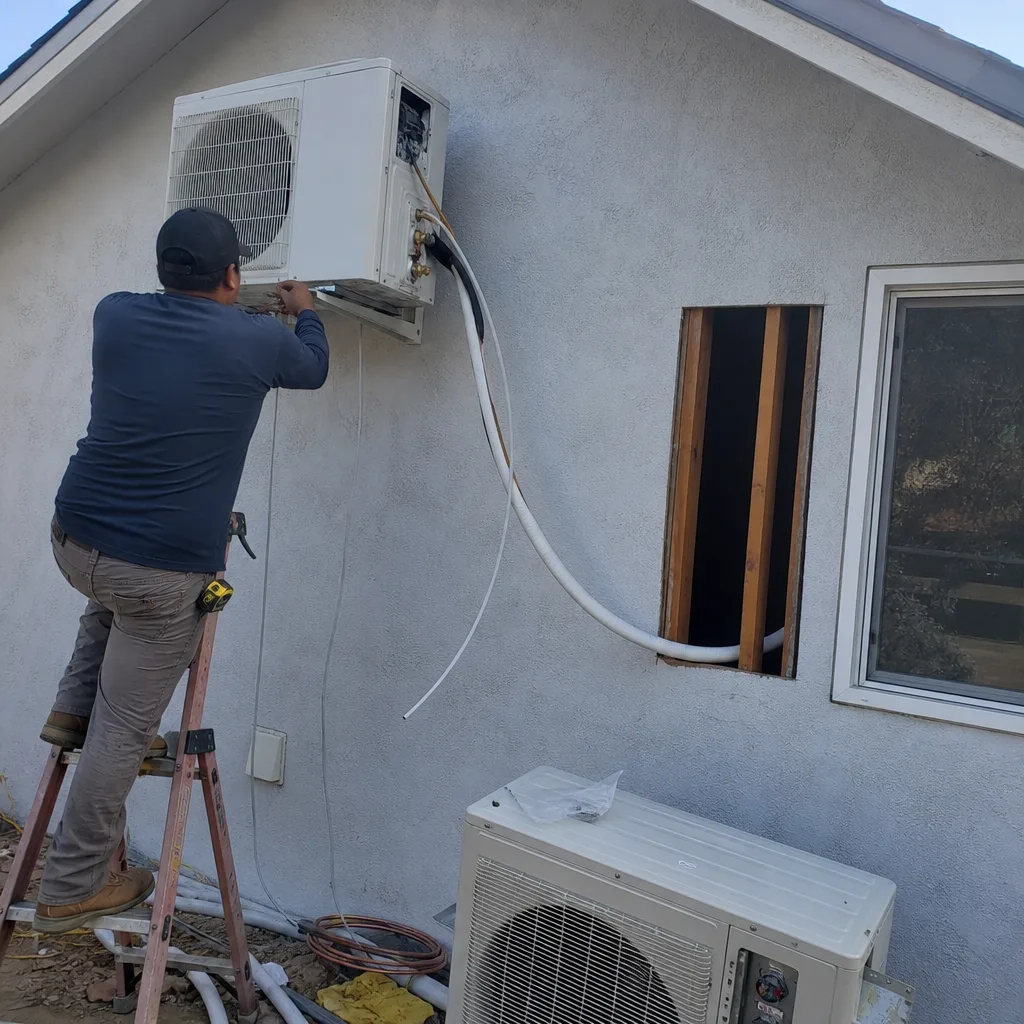
Most Corona homeowners do not pay cash for ADU construction. The financing landscape for 2026 has shifted toward ADU-specific products, but qualification remains tied to home equity and debt-to-income ratios.
- Home equity line of credit (HELOC): Still the most common tool for ADU financing in Corona. Rates in early 2026 range from 7.25%-8.75% for well-qualified borrowers. The advantage is flexibility: draw only what you need, when you need it. The risk is variable rates and a 10-year draw period that converts to repayment.
- Cash-out refinance: Fixed rates at 6.875%-7.625% for 30-year terms. Best for homeowners with substantial equity who want payment certainty. The trade is closing costs of $4,000-$7,000 and a reset of your primary mortgage term.
- ADU-specific renovation loans (Fannie Mae HomeStyle, FHA 203(k)): These products allow borrowing against future appraised value, which can help if your current equity is insufficient. However, they require lender approval of the contractor and draw schedule, which adds 3-4 weeks to project start. We are pre-approved with several lenders offering these products and can coordinate documentation.
- California Housing Finance Agency (CalHFA) ADU Grant: As of early 2026, the previous ADU grant programs are under legislative review. We monitor these programs and advise clients during the feasibility phase if new funding becomes available.
Our recommendation: secure financing approval before finalizing your ADU design. The written price we provide under Haven Standard Clause 1 is valid for 90 days, which gives you a fixed target for loan application. We’ve had Corona clients pre-approved for $300,000, design a 750-square-foot unit at $285,000, then discover their lender requires a 10% contingency reserve that pushes the loan requirement to $313,500. Designing to your approved amount prevents redesign costs later.
Cost Timeline: When Each Payment Is Due
Understanding cash flow helps you align financing draws with construction milestones. Our projects in Corona typically follow this schedule:
- Design agreement (10% of total contract): Due at signing. Covers measured survey, preliminary design, and feasibility confirmation including utility assessment.
- Permit set completion (15% of total contract): Due when the full permit set is approved by you and submitted to the city. At this point, the written construction price is locked under Haven Standard Clause 5.
- Permit approval and pre-construction (25% of total contract): Due when Corona issues the building permit and we order long-lead materials. This covers site prep, utility coordination, and material deposits.
- Framing and rough-in (25% of total contract): Due at framing inspection pass, when structural, plumbing, electrical, and mechanical rough-ins are complete and inspected.
- Finish work and final (20% of total contract): Due at substantial completion, before final inspection and certificate of occupancy.
- Final retainage (5% of total contract): Due at final inspection pass and documented photo record delivery. Haven Standard Clause 3 requires the photo record before final payment is processed.
This schedule means 50% of your project cost is paid before construction begins, which is standard for design-build ADU work. The protection is in the written scope, not in payment timing. Under Clause 5, no payment triggers a scope change without your written approval.
What Your ADU Returns in Corona’s Market
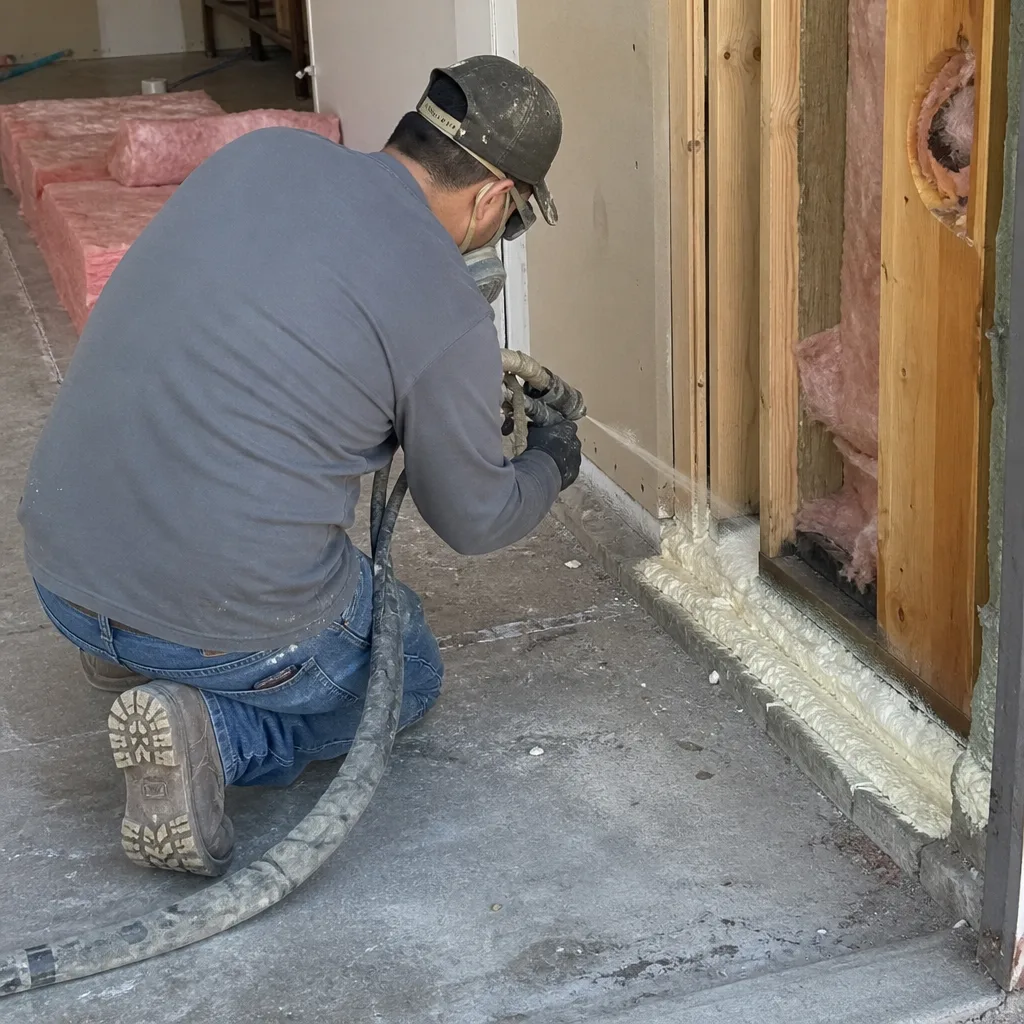
Cost is only one side of the ledger. In Corona’s rental market, a permitted, code-compliant ADU generates measurable returns that improve with time.
As of early 2026, Corona’s fair market rents for ADU-sized units range from $1,850 for a studio to $2,800 for a two-bedroom, depending on neighborhood and finish quality. The Sierra Del Oro and Dos Lagos areas command premiums; the older grid south of Sixth Street rents at the lower end but with lower construction costs per square foot.
At $2,200 monthly rent on a $320,000 total project cost, gross annual return is 8.25% before expenses. After property management, maintenance reserve, and increased property tax (Proposition 13 base year preserved, but improvements trigger reassessment of the ADU value only), net returns typically run 5.5%-6.5%. For homeowners with adult children, aging parents, or future flexibility needs, the non-financial returns are harder to quantify but no less real; see our more guides & resources for planning family-use layouts.
We’ve had Corona clients in the 92883 ZIP code build ADUs specifically for short-term rental eligibility, though Corona’s municipal code restricts STRs to primary residences only. The ADU returns value as long-term housing, which is the more stable income stream in any case.
For homeowners weighing prefab options, Boxabl and Plant Prefab units can compress construction schedules, but the total installed cost rarely falls below site-built equivalents in Corona’s market due to transport, crane, and foundation precision requirements. The value is speed and weather protection, not necessarily price reduction.
Common Mistakes to Avoid
- Accepting a single “all-in” number without line-item breakdown. The $320,000 estimate that becomes $380,000 always lacked transparency on utility connections. Demand the spreadsheet.
- Paying a designer in full before permit approval. If the city rejects the set, you’ve bought expensive paper. Structure payments to align with milestones.
- Assuming your garage slab is adequate. Corona’s 1970s and 1980s slabs are often 3.5 inches with no vapor barrier. A conversion on this slab risks floor failure and code rejection. Test before you budget.
- Ignoring the electrical service upgrade timeline. SCE’s 8-12 week queue for panel upgrades can stall a finished project. Apply for service changes at permit submittal, not at rough-in.
- Buying a prefab unit without verifying foundation tolerance. Factory-built modules require precision that adds cost to the concrete work. The module price is never the installed price.
- Neglecting to verify school fee rates for your specific project year. Corona-Norco Unified adjusts rates annually. A 2025 estimate using outdated fees creates a surprise at permit issuance.
- Starting construction without a written warranty. The 365-Day Done Right Promise is our standard. If your contractor won’t put warranty terms in writing, the warranty doesn’t exist.
When to Call a Professional
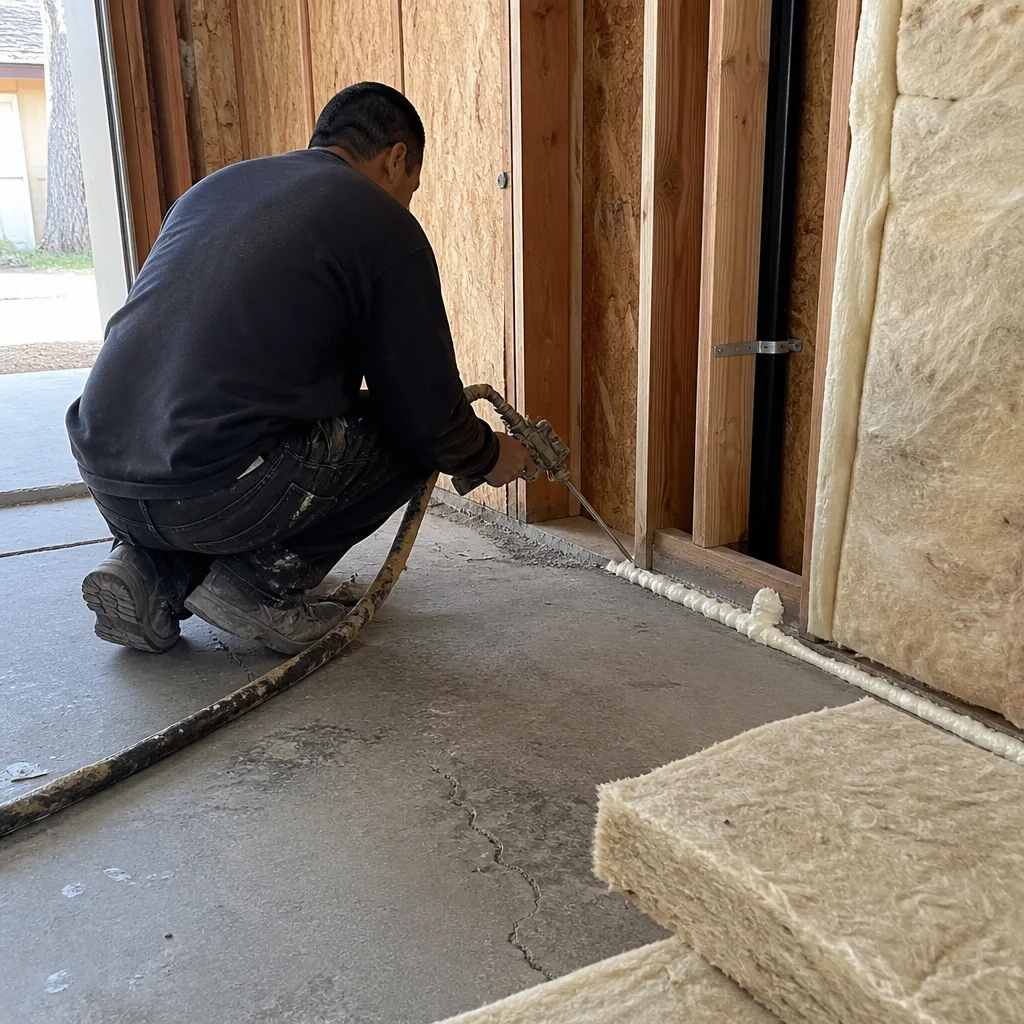
Call a design-build professional when you’re still in the research phase, not after you’ve commissioned drawings that may not be permit-ready. The most expensive moment in an ADU project is when you realize your $15,000 design won’t pass plan check. New Detached ADU in Corona projects especially benefit from early professional involvement, since setback, height, and utility routing decisions made in the first two weeks determine costs for the next six months.
Ellery ADU Studio Corona offers free estimates in Corona. We’ll assess your parcel’s specific conditions, including sewer lateral access, electrical service capacity, and soils indicators, and provide a written line-item price before any work begins. Call (951) 476-3715 to schedule your free estimate.
Frequently Asked Questions
A complete ADU project in Corona ranges from $180,000 for a garage conversion to $420,000 for a larger detached unit with full utility upgrades, with most projects landing between $250,000 and $340,000 all-in. The exact figure depends on your ADU type, existing utility capacity, and site conditions. Call (951) 476-3715 for a written estimate specific to your parcel - estimates are free.
Lower estimates typically omit soft costs (design, engineering, permits), utility connection upgrades, or impact fees. A $220,000 “all-in” quote for a detached ADU that doesn’t include the $25,000 sewer lateral replacement you’ll discover during construction is not a lower price - it’s a delayed price. Under Haven Standard Clause 1, our written price includes every identified line item before you sign.
Under Haven Standard Clause 5, the scope and price are locked at contract signing. The only changes occur if you request a modification in writing, or if concealed conditions are found that were genuinely unforeseeable. We video-inspect sewers, verify electrical capacity, and assess slab conditions before quoting to minimize even these exceptions.
We pull all permits as part of our single-contract service. The permit set is produced by our team, submitted to Corona Planning and Building, and tracked through approval. You receive copies of all permits and approvals, but the administrative burden is ours. This is standard for our ADU Design & Permitting in Corona work.
From design agreement to certificate of occupancy, a garage conversion typically takes 8-12 months; a new detached ADU, 12-18 months. Permit processing in Corona currently runs 3-4 months for complete submittals, and utility coordination adds 2-3 months. Prefab systems from brands like Dvele or Mighty Buildings can reduce the construction phase by 6-10 weeks but don’t accelerate permitting.
New detached ADUs on new foundations require geotechnical investigation in nearly all Corona locations. Garage conversions on existing slabs may be exempt if the slab is documented and adequate. We order preliminary soils data during feasibility to confirm whether this line item applies to your project, so it’s in your written price or explicitly excluded.
Most ADU financing products cover both soft and hard costs in a single loan. We provide a detailed scope of work and draw schedule that satisfies lender requirements for renovation loans. Some clients use a HELOC for soft costs during design, then refinance into a construction-to-permanent loan at permit approval. We can coordinate documentation with your lender.
The Bottom Line
ADU costs in Corona are knowable, but only when broken to the line item. The construction price per square foot is a starting point, not a total. Soft costs add $30,000-$60,000. Utility connections, the most variable category, add $15,000-$65,000 depending on your parcel’s existing infrastructure. Impact fees, while reduced by state law, still add $5,000-$12,000 for most projects. The homeowners who avoid surprises are those who receive a written, line-item price before work begins, from a single accountable party who both designs and builds. That’s the model we’ve operated since 2015, governed by The Haven Standard, and it’s the standard we apply to every project in Corona.
Call (951) 476-3715 to schedule your free estimate. We’ll assess your specific parcel conditions and provide a written price before any work begins.
Written by Nadia Ellery, Owner at Ellery ADU Studio Corona, serving Corona since 2015.