
Last updated September 25, 2026
How to Hire a ADU Contractor in Corona: A Step-by-Step Guide
The most common ADU dispute in California isn’t a contractor overcharge. It’s a disagreement over whose scope error caused a failed inspection, because the designer and the builder signed separate contracts with the same homeowner. In Corona, where Riverside County’s ADU ordinance overlays the city’s own setback and parking rules, that blame gap widens. One party drew the plans. The other built to them. When the city rejects a footing depth or a fire-separation detail, each points at the other, and the homeowner pays to resolve it.
This guide reframes the hiring decision around contract structure, not bid price. You’ll learn the three ways to structure an ADU project in Corona, the exact license verification steps that filter out unqualified bidders, and the five questions that expose a contractor who has never pulled an ADU permit in Riverside County. By the end, you’ll know how to read a fixed-price contract for the loopholes that turn a $180,000 bid into a $240,000 final invoice, and you’ll find more guides & resources on our blog.
Quick Answer
Hiring an ADU contractor in Corona means verifying a CSLB license with B-General or appropriate trade classification, confirming active workers’ compensation and bond coverage, and choosing a contract structure - designer-then-GC, design-build single contract, or owner-builder - that assigns clear liability for permit approval and inspection passage. A legitimate Corona ADU contractor provides a written fixed price before work starts, pulls all required permits, and carries liability for both design compliance and construction quality in a single enforceable document.
Table of Contents
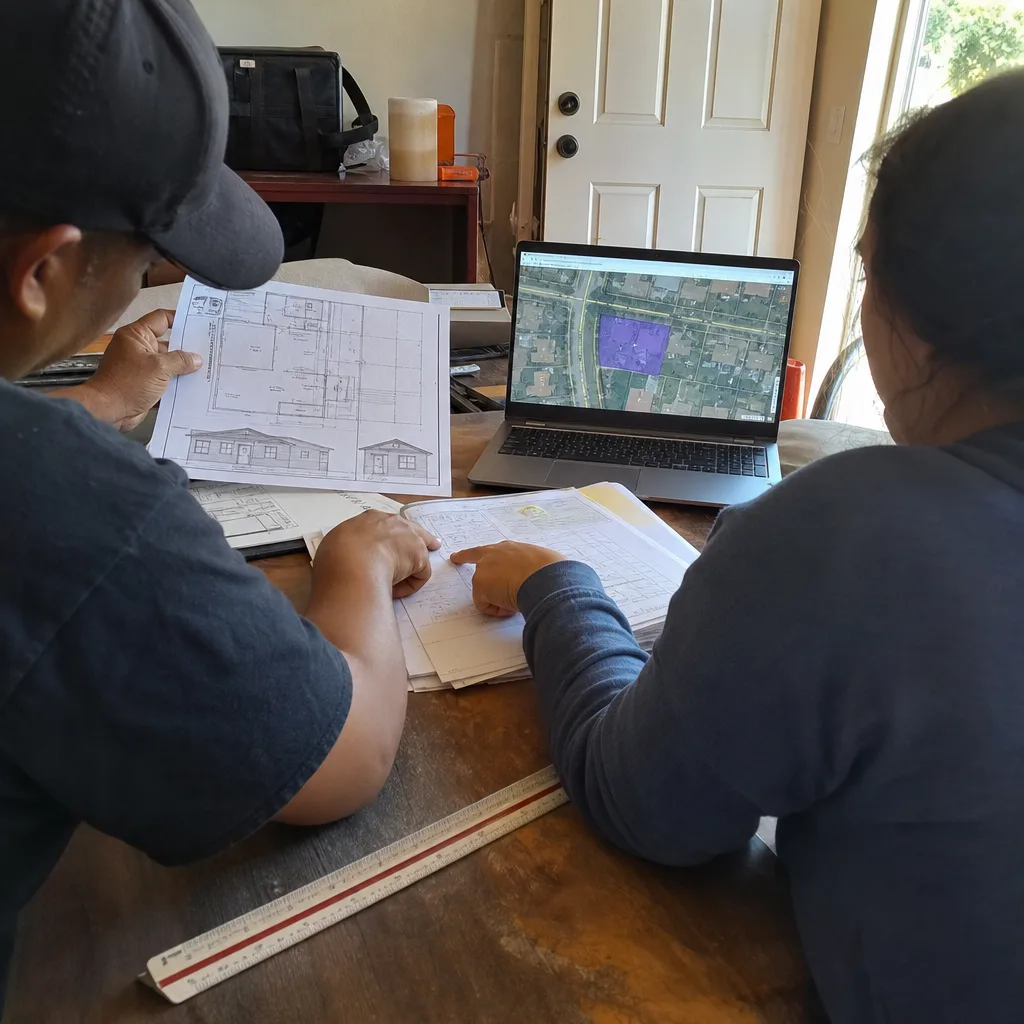
- Why “Get Three Bids” Fails for Corona ADU Projects
- The Three Contract Structures and Their Liability Traps
- How to Verify a Contractor’s License in California
- Five Questions That Expose an Inexperienced ADU Contractor
- Fixed-Price Contracts vs. Low Bids: Reading the Clause Language
- The Documentation Checklist Before You Sign
- Corona-Specific Factors That Affect Your Project
- Common Mistakes to Avoid
- When to Call a Professional
- Frequently Asked Questions
- The Bottom Line
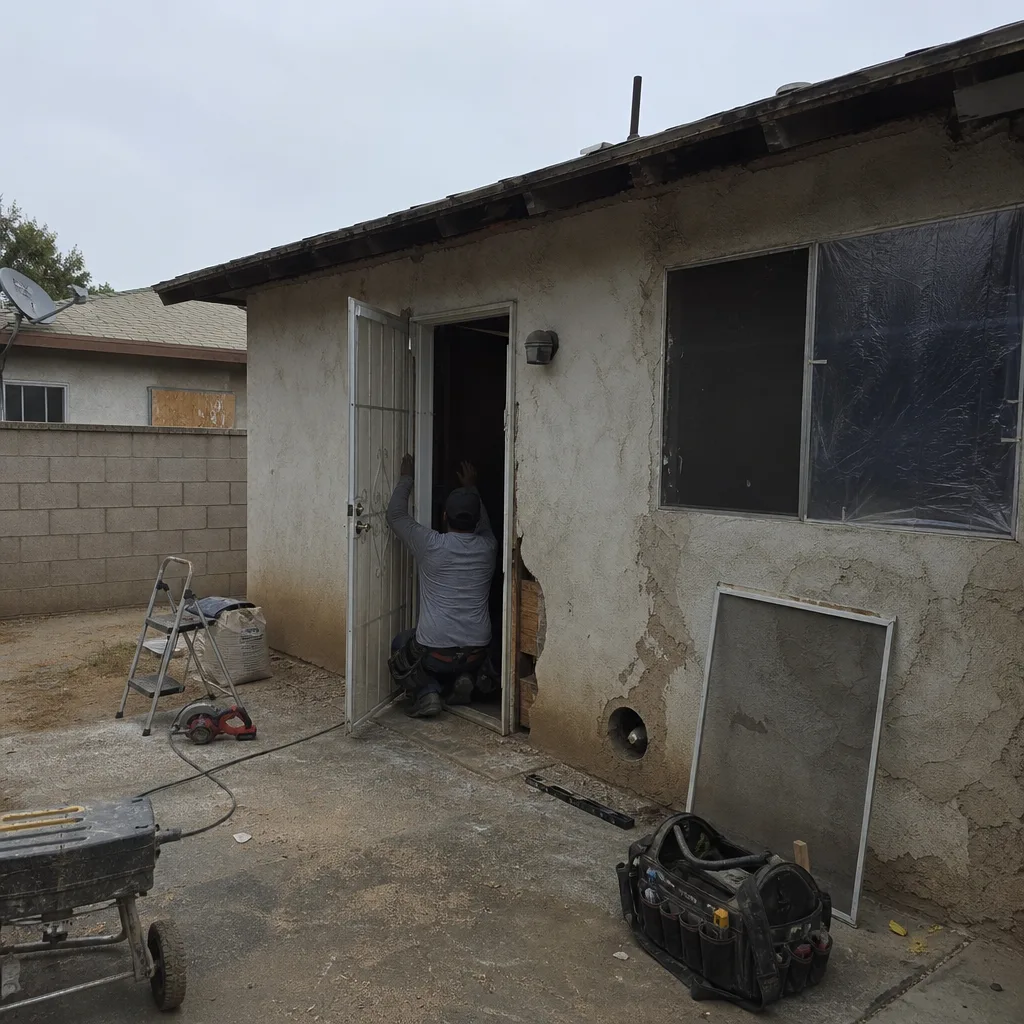 Before
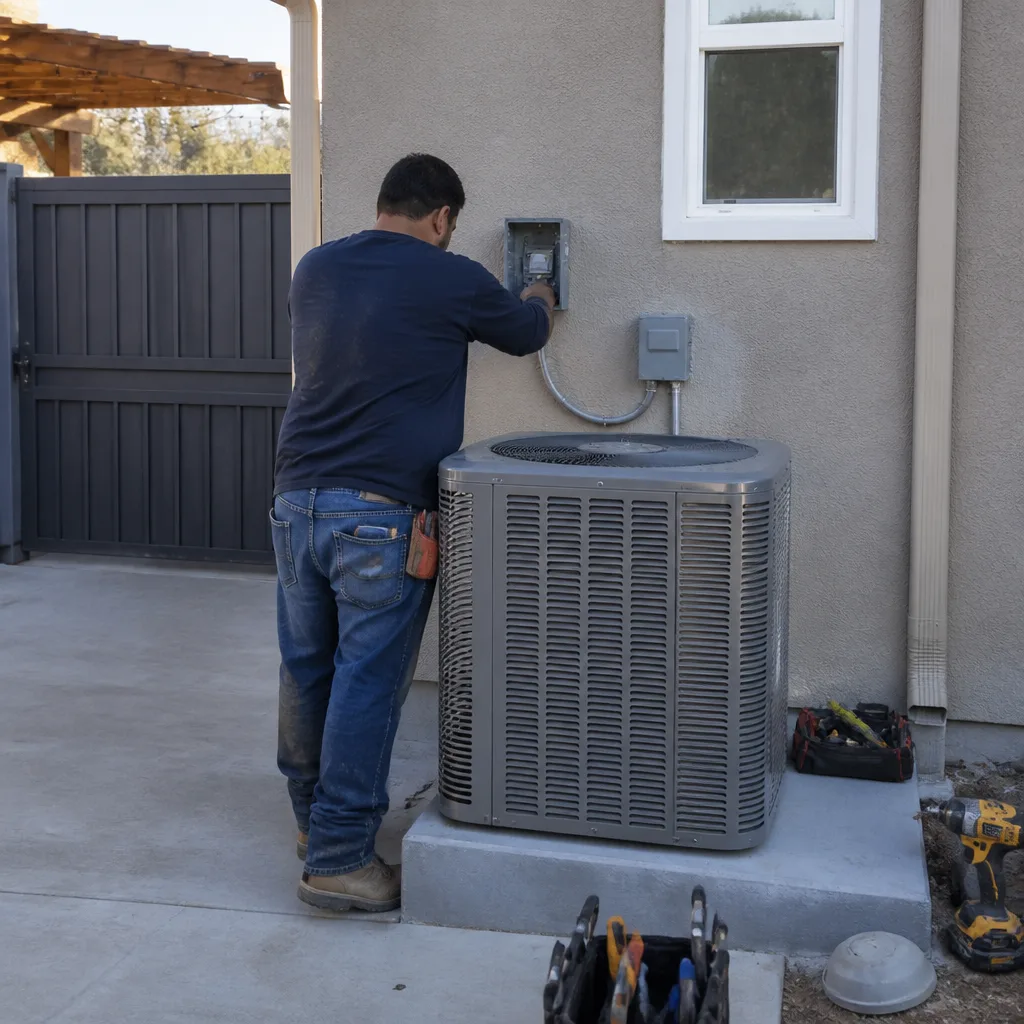 After
AfterWhy “Get Three Bids” Fails for Corona ADU Projects
The standard advice to get three bids assumes comparable scopes. For an ADU in Corona, that assumption is wrong. Three bids from three separate general contractors, each working from their own interpretation of the city’s ADU ordinance, price fundamentally different projects. One bidder assumes a 4-inch slab is sufficient; another prices a new 6-inch footing. One includes fire-rated drywall between garage conversion and main house; another omits it, assuming the existing wall qualifies. The lowest bid often wins - and the homeowner discovers the gap during inspection, when Riverside County Building & Safety flags a code violation that wasn’t priced.
We’ve seen this in Corona’s Sierra Del Oro and Horsethief Canyon neighborhoods, where garage conversions on 1980s slabs frequently require soil testing the original builder never performed. A bid that assumes standard prescriptive footings without a soils report will come in $15,000-$25,000 lower than one that includes geotechnical verification. But the low bidder doesn’t necessarily intend to deceive. They simply priced what they saw, not what the site requires. When the city demands the report, the change order follows.
The deeper problem is the designer-builder split. In a traditional designer-then-GC structure, the architect or designer completes a permit set, then the homeowner solicits construction bids. The designer’s contract typically ends at permit issuance. The builder’s contract begins at construction. If the city requests a correction during construction - a revised structural calc, a clarified egress window detail - the designer has already been paid, and the builder argues the plans were deficient. The homeowner sits between them, paying hourly for design revisions that delay construction.
Ellery ADU Studio operates under a different model. ADU Design & Permitting in Corona and construction are a single contract at a single written price. When Riverside County requests a revision mid-build, we revise, rebuild, and absorb the coordination cost. The Haven Standard, Clause 5 (No Surprises), locks the scope at signing. No door-side upsells, no scope creep.
The Three Contract Structures and Their Liability Traps
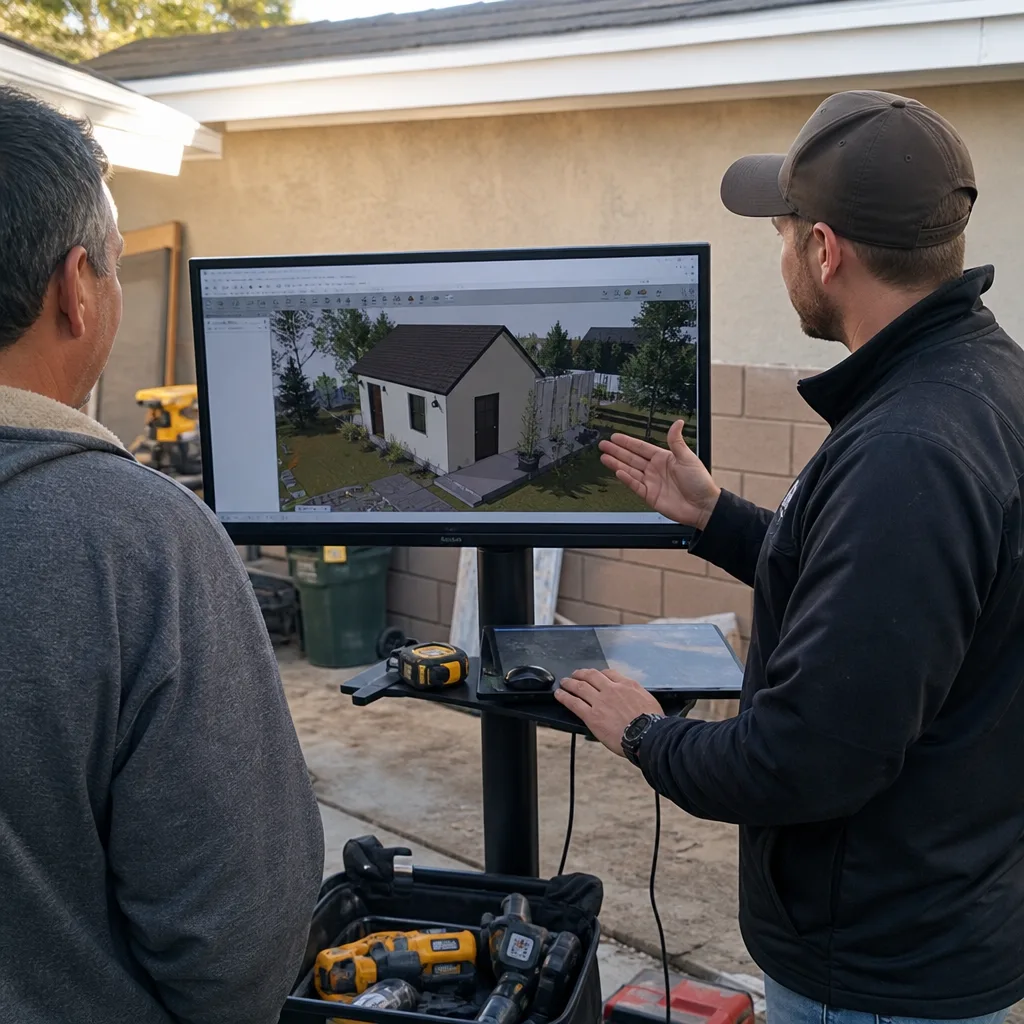
Every ADU project in Corona uses one of three contract structures. Each assigns liability differently, and the difference determines who pays when something goes wrong.
Structure 1: Designer, Then General Contractor
The homeowner hires a designer or architect to produce permit drawings, then separately hires a general contractor to build. This is the traditional model, and it is where most ADU disputes originate.
Liability gap: The designer warrants that the drawings comply with code. The builder warrants that construction matches the drawings. Neither warrants that the drawings are buildable as drawn, or that the city will accept them without revision. When Riverside County requests a change - common with ADUs, where state law shifts faster than local interpretation - the builder claims the plans were incomplete. The designer claims the builder deviated from intent. The homeowner funds the resolution.
Cost pattern: Initial design fees of $8,000-$15,000, followed by construction bids that exclude contingency for mid-project revisions. Final costs frequently exceed the highest initial bid.
Structure 2: Design-Build Single Contract
One entity holds both design and construction responsibility. The permit set is produced in-house or under direct supervision, and construction proceeds from those drawings with continuous coordination.
Liability assignment: The design-build entity is responsible for permit approval, inspection passage, and as-built compliance. If the city rejects a detail, the entity revises and resubmits at its own cost. If a field condition requires redesign, the same team adjusts without finger-pointing. This is the model Ellery ADU Studio uses for Garage Conversion ADU in Corona, New Detached ADU in Corona, and all other ADU types.
Cost pattern: A single written price before any work starts, covering drawings through final inspection. The Haven Standard, Clause 1, requires this. No “call for a quote” - the price is documented, itemized, and fixed.
Structure 3: Owner-Builder
The homeowner acts as their own general contractor, hiring subcontractors directly and pulling permits in their own name.
Liability assignment: The homeowner assumes all liability for code compliance, inspection scheduling, and subcontractor coordination. In Corona, this means navigating Riverside County’s ADU checklist, the city’s utility connection requirements, and Southern California Edison’s separate service upgrade process - which is why our ADU Design & Permitting Maintenance Checklist for Corona Homeowners is essential reading before you start. Mistakes in sequencing - rough electrical before insulation inspection, for example - trigger costly rework.
Cost pattern: Material savings of 10-20% are common, but delay costs and rework frequently consume them. Owner-builders in Corona average 8-14 months from permit to certificate of occupancy, versus 4-6 months under a design-build contract. Financing carrying costs during that gap often exceed the original material savings.
Key takeaway: The contract structure determines where risk lives. In Structure 1, risk sits with the homeowner at the designer-builder interface. In Structure 3, risk sits with the homeowner throughout. In Structure 2, risk sits with the design-build entity, priced into a fixed contract from day one.
How to Verify a Contractor’s License in California
A legitimate ADU contractor in Corona carries specific, verifiable credentials. Anything less exposes the homeowner to liability if a worker is injured, a permit is rejected, or a subcontractor goes unpaid.
Step-by-Step License Verification
- Visit cslb.ca.gov and use the “Instant License Check” tool. Enter the business name or the six- to seven-digit CSLB license number. The number should appear on every proposal, business card, and vehicle. At Ellery ADU Studio Corona, our license number appears on every page of our site and every document we issue.
- Confirm the classification. For ADU work, the relevant classifications are:
- B-General Building Contractor: Can oversee the entire ADU project, including subcontracting trade work.
- C-36 Plumbing, C-10 Electrical, C-20 HVAC: Trade-specific; cannot act as general contractor for full ADU construction unless holding B-General or working under a B-General as subcontractor.
A contractor offering full ADU construction with only a C-36 classification is operating outside their license scope.
- Verify the bond and workers’ compensation. The CSLB record shows active status for both. If the contractor has no employees, they may file an exemption, but this is rare for ADU-scale projects requiring multiple trades. Ask for a certificate of workers’ compensation insurance naming you as additional insured.
- Check the disciplinary history. The CSLB record lists any suspensions, citations, or arbitration awards. Multiple complaints for contract disputes or abandonment are disqualifying.
- Confirm local jurisdiction experience. A valid California license does not mean Riverside County experience. Ask specifically: “How many ADU permits have you pulled in Corona or unincorporated Riverside County in the last 24 months?” Then verify by searching Riverside County’s permit portal for projects under that license number.
Red flags we encounter in Corona: contractors with valid B-General licenses but no ADU-specific permits in their CSLB project history; out-of-county contractors who “serve all of Southern California” but cannot name Corona’s specific utility connection requirements; and handymen operating under a relative’s license number, which is a CSLB violation.
Five Questions That Expose an Inexperienced ADU Contractor
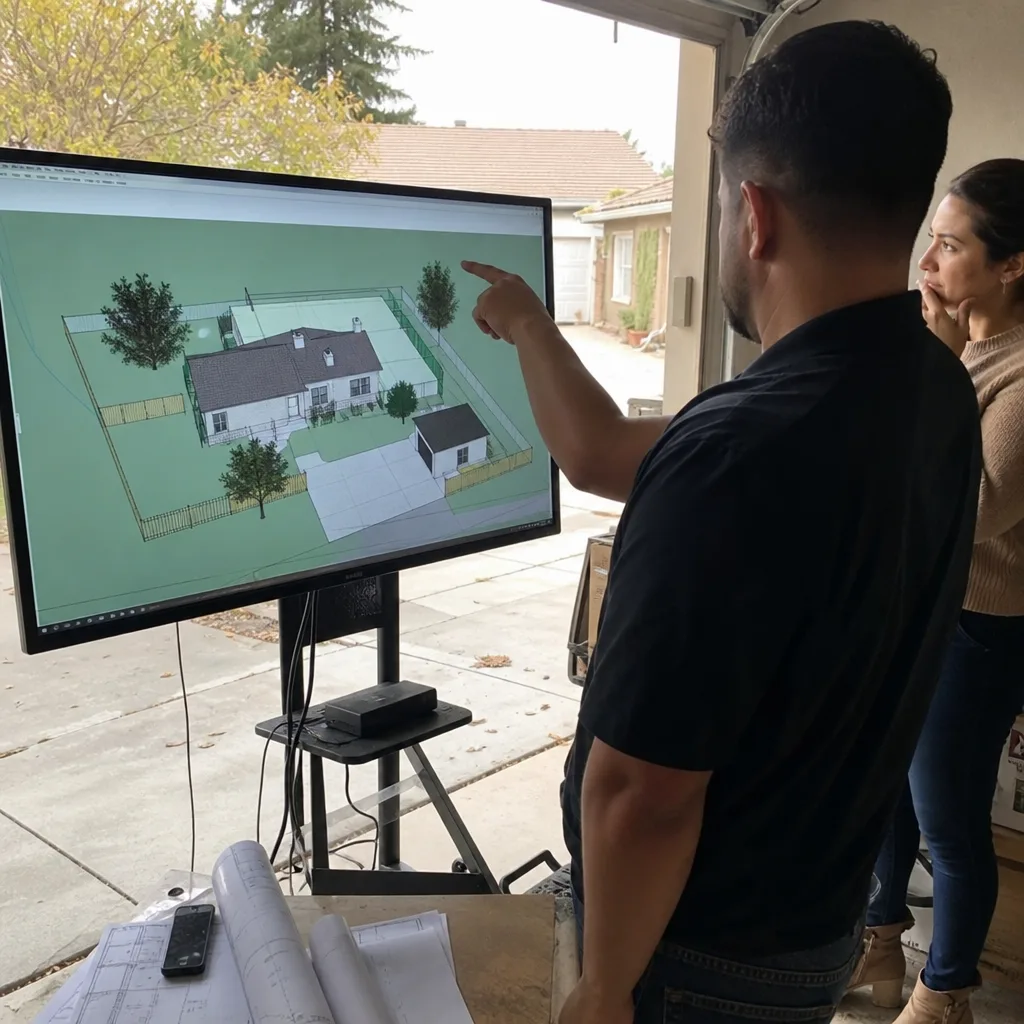
These questions target the gap between general construction knowledge and ADU-specific permitting experience. A contractor who has built additions for 20 years may never have navigated California’s SB 9/SB 10 overlay or Riverside County’s ADU fire-separation requirements.
Question 1: “What is Corona’s current ADU setback from the rear property line for a detached unit?”
The correct answer: Under state law, detached ADUs are subject to a 4-foot rear and side setback, but Corona’s municipal code may impose additional requirements based on zoning district and lot width. A contractor who answers with only the state minimum, or who says “we’ll figure that out during design,” has not pulled a Corona ADU permit recently. The setback determines whether your unit fits; it is not a detail to resolve later.
Question 2: “How do you handle the existing slab in a garage conversion - do you assume it qualifies, or do you verify?”
Corona’s 1970s-1990s housing stock includes garage slabs poured without vapor barriers or adequate depth for habitable space. A qualified contractor explains the verification process: core samples, elevation surveys against the main house floor, and structural engineering if the slab is found inadequate. A contractor who says “garage slabs are always fine” or who prices the conversion without a slab line item is guessing.
Question 3: “Walk me through your fire-separation detail between a garage conversion ADU and the main residence.”
Riverside County requires one-hour fire separation between an ADU converted from a garage and the existing dwelling. This typically means 5/8-inch Type X drywall on the garage side, fire-taped seams, and rated penetrations for any utilities passing through. A contractor who describes this in specific terms - “We use 5/8-inch Sheetrock Type C, not Type X, because the existing framing is 24-inch centers and Type C carries the rating at that span” - has built these before. One who says “we’ll make it safe” or who seems surprised by the requirement has not.
Question 4: “What prefab or modular systems have you specified for Corona’s climate zone?”
Corona sits in California Climate Zone 10, with cooling degree days that exceed heating degree days significantly. Prefab systems must be specified for this load profile. A contractor fluent in Ellery ADU Studio Corona home systems can discuss why Abodu’s standard envelope performs well in this zone, or why James Hardie siding is specified over vinyl for fire-resistance compliance in Riverside County’s wildland-urban interface areas. A contractor who cannot name a prefab brand, or who dismisses modular as “not real construction,” is not current with ADU delivery methods that can compress schedule and cost.
Question 5: “Show me the last ADU permit set you submitted to Riverside County Building & Safety.”
This is the decisive question. A contractor with ADU experience has permit sets, approval letters, and inspection records. They can show you a site plan with Corona’s specific parcel data, a Title 24 energy compliance report, and a structural calc package. A contractor who deflects - “our permits are confidential,” or “the homeowner has those” - either lacks experience or has something to hide. At Ellery ADU Studio, we maintain a documented photo record on every visit, and clients receive evidence of what was found and what was done, not a summary of how it felt.
Fixed-Price Contracts vs. Low Bids: Reading the Clause Language
The difference between a true fixed price and a low bid with hidden escalation lives in specific contract language. Here’s how to read for it.
The “Base Price Plus Allowances” Trap
Common language: “Contractor shall provide base construction for $X, with allowances for flooring ($Y), countertops ($Z), and appliances ($A). Homeowner selections exceeding allowances shall be paid as change orders.” For a detailed look at where these hidden costs accumulate, see our ADU Cost Breakdown: The Corona Homeowner’s Reference for 2026.
This is not a fixed price. It is a base price with open-ended variables. The contractor prices the lowest-grade materials in each category, knowing that any reasonable selection triggers a change order. A $180,000 base price with $35,000 in allowances becomes a $240,000 project when the homeowner selects mid-grade finishes that match the main house.
The “Subject to Field Conditions” Trap
Common language: “If unforeseen conditions are encountered, Contractor shall notify Owner and adjust the contract sum accordingly.”
“Unforeseen conditions” is undefined. In Corona, this clause has been used to escalate prices for soil conditions visible from surface inspection, for utility locations marked on public maps, and for code requirements in effect for decades. A legitimate fixed-price contract defines foreseeability: “Soil conditions per geotechnical report dated [X]; utility locations per USA North 811 locate dated [Y]; code per Corona Municipal Code Chapter 16, current as of [Z].”
The Haven Standard Fixed-Price Model
Under Clause 1 of The Haven Standard, every Ellery ADU Studio project is quoted with a written price before any work begins. The scope document attached to the contract specifies:
- Exact square footage and configuration
- Material specifications by brand and grade, including Tuff Shed or James Hardie where applicable for prefab or site-built elements
- Permit fees and utility connection fees as line items
- Exclusions clearly stated (landscaping restoration beyond 5 feet of structure, for example)
- Contingency, if any, held by the design-build entity, not billed to the homeowner
Clause 5 (No Surprises) locks this scope at signing. If we encounter a condition we should have foreseen, we absorb it. If the homeowner requests a change, we document it in writing with a fixed price for the change before proceeding. No door-side upsells. No “while we’re here” additions.
When comparing bids, demand the same documentation from every bidder. A bid without material specifications is not comparable to one with them. A contract without defined exclusions is not comparable to one with them. The lowest number is meaningless if the scope it represents is incomplete.
The Documentation Checklist Before You Sign
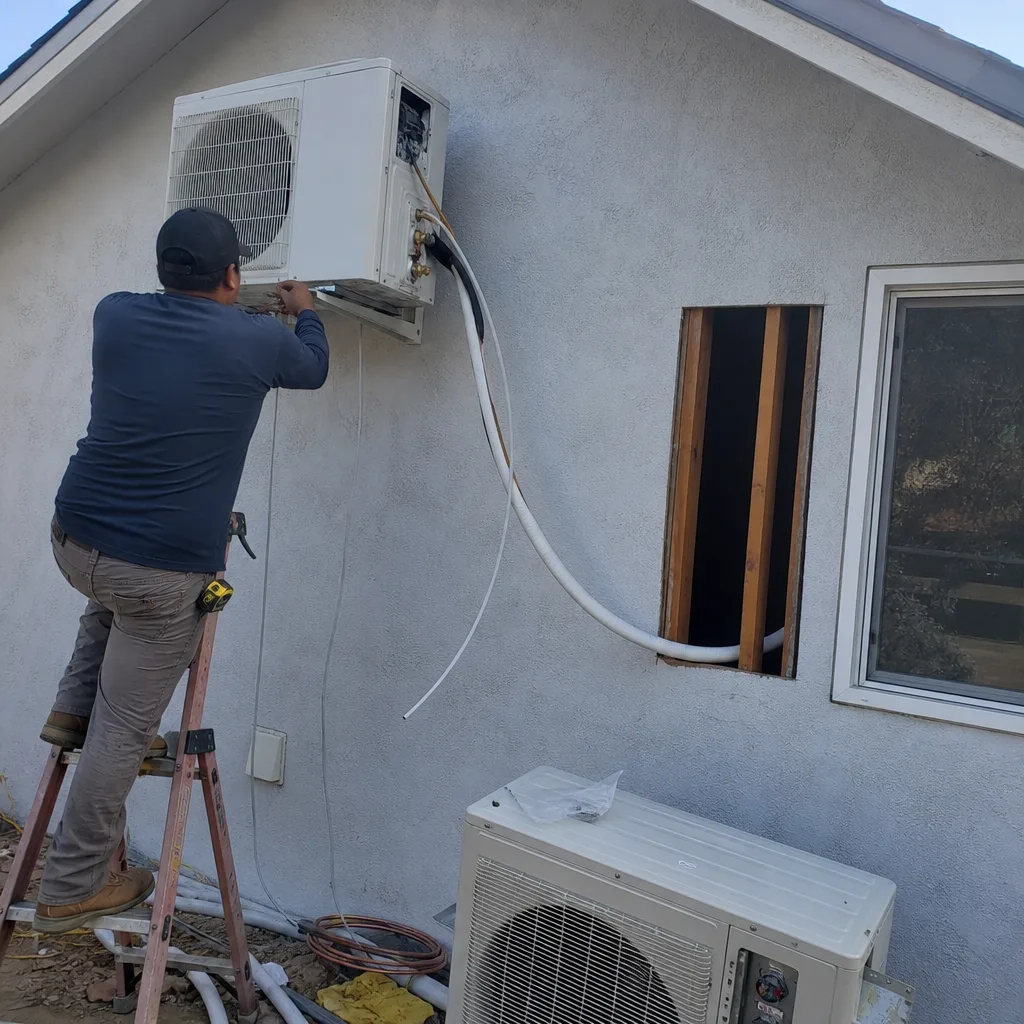
Before executing any ADU contract in Corona, the homeowner should receive and verify the following documents. Their absence is a signal to pause.
Permit Set: What It Contains
A complete ADU permit set for Riverside County includes:
- Site plan showing existing and proposed structures, setbacks, and utility locations
- Floor plans with room labels, dimensions, and egress paths
- Elevations showing exterior materials and heights
- Structural plans with foundation details, framing plans, and lateral force calculations
- Title 24 energy compliance documentation (CF-1R forms)
- Plumbing, electrical, and HVAC plans with load calculations
- Fire separation details where applicable
The permit set is the core product of an ADU project, not an afterthought. At Ellery ADU Studio, we produce the permit set in-house, under our direct control, because it determines every downstream cost and schedule element. A contractor who outsources permit drawings to a third-party drafter they do not supervise has introduced the same designer-builder gap that causes disputes.
The Written Price Document
Per Haven Standard Clause 1, this is a line-item breakdown, not a single lump sum. It shows:
- Design and permitting phase costs
- Site preparation and utility rough-in
- Foundation and structural
- Framing, envelope, and roofing
- Mechanical, electrical, and plumbing
- Interior finishes, fixtures, and appliances
- Final connections, testing, and inspection scheduling
- Project management and documentation
Each line item carries a fixed price. The total is the maximum you will pay for the defined scope.
The 365-Day Done Right Promise
Our written warranty specifies: if the finished ADU is not built to the permitted drawings, we make it right. This is not a general “satisfaction” promise. It is tied to the specific permit set, the specific inspection records, and the specific photo documentation collected during construction. The homeowner can verify compliance by comparing the as-built condition to the permit drawings and the photo record.
Insurance and Bond Certificates
Request certificates naming you as additional insured, not just proof that policies exist. Verify the policy dates cover your project duration. For a typical Corona ADU, this means general liability of at least $1 million per occurrence and workers’ compensation for all employees.
Corona-Specific Factors That Affect Your Project
Corona’s geography, climate, and development history create conditions that ADU contractors from outside the area frequently misprice or overlook, as detailed in our Seasonal ADU Care for Corona: Year-Round Homeowner’s Guide.
Soil and Seismic Conditions
Corona lies in the Elsinore Fault zone, and Riverside County requires seismic design categories appropriate to this risk. Older neighborhoods like Corona Hills and Cresta Verde sit on alluvial fill with variable bearing capacity. A contractor who prices a standard prescriptive foundation without a soils report risks mid-project engineering that adds $10,000-$20,000. We specify geotechnical investigation for any site without a recent report, and we price it into the fixed contract.
Climate Zone 10 Energy Requirements
Corona’s cooling-dominated climate means Title 24 compliance emphasizes envelope performance and cooling efficiency over heating. This affects window specifications, insulation R-values, and HVAC sizing. A contractor specifying heating-oriented packages from cooler climate zones will produce an uncomfortable, inefficient ADU that fails inspection or performs poorly.
Utility Infrastructure Age
Corona’s eastern neighborhoods, developed during the 1980s-1990s boom, frequently have electrical services at or near capacity. An ADU with electric cooking, water heating, and vehicle charging can require a 200-amp service upgrade that Southern California Edison schedules 6-10 weeks out. This sequencing matters: foundation cannot proceed until temporary power is arranged, and permanent power must be coordinated with final inspection. Contractors who do not account for utility lead times in their schedules deliver delayed projects.
Wildland-Urban Interface and Fire Code
Portions of Corona south and east of the 91 corridor fall within State Responsibility Areas or Local Responsibility Areas with enhanced fire codes. This affects exterior materials (James Hardie fiber-cement siding meets these requirements; wood siding may not), eave venting, and emergency access widths. A contractor unfamiliar with Corona’s fire district boundaries may specify materials that trigger plan check rejection.
Neighborhood Character and HOA Restrictions
Corona’s master-planned communities - Dos Lagos, The Retreat, Sycamore Creek - often carry HOA design guidelines that exceed city code. These are not building code, but they are enforceable covenants. A contractor who pulls a city permit without reviewing CC&Rs may deliver a code-compliant ADU that the HOA fines or demands modified. We review CC&Rs as part of our initial site analysis, and we document any HOA pre-approval requirements in the contract scope.
Common Mistakes to Avoid
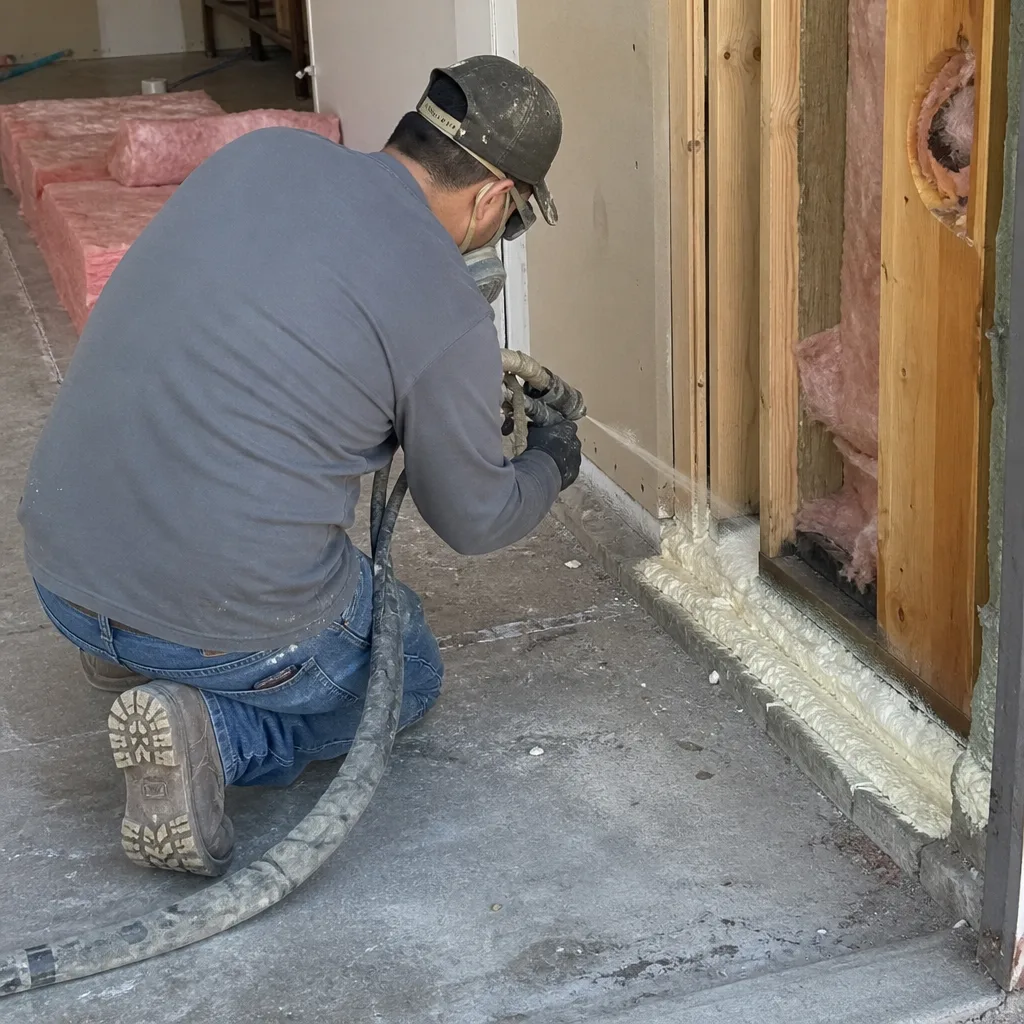
- Comparing bids without comparable scopes. One bid includes slab replacement; another assumes the existing slab is adequate. One includes full kitchen appliance packages; another prices allowances. The lower number is not cheaper; it is less complete. Demand line-item scopes and cross-reference them before comparing totals.
- Hiring based on speed of estimate. A contractor who delivers a firm price in 24 hours has not analyzed your site, your soil, your utility capacity, or your specific zoning. Rapid estimates rely on assumptions that become change orders. A legitimate fixed price requires site visit, documentation review, and permit research.
- Ignoring the designer-builder liability gap. If your designer and builder are separate entities, get a single written document assigning responsibility for permit approval, inspection passage, and as-built compliance. Without it, you are the coordination layer - and the funding source for their disputes.
- Accepting verbal promises about permits. “We handle all the permits” means nothing without specification of which permits, whose responsibility, and what happens if they are delayed or rejected. Permits for a Corona ADU include city planning, city building, Riverside County environmental health (if septic), Southern California Edison (electrical service), and potentially Corona Public Works (stormwater). A contract that says “permits included” without listing these is incomplete.
- Overlooking prefab and modular options. Site-built construction is not always optimal for Corona’s lot sizes or schedule constraints. Systems from Abodu, Cover, or Tuff Shed can reduce on-site construction time from months to weeks, with factory quality control that site-built projects struggle to match. A contractor who does not discuss these options may lack fluency or may prefer the markup on longer site-built schedules.
- Signing without a written warranty tied to the permit set. “We’ll make it right” is unenforceable. “The finished ADU will match the permitted drawings, verified by photo record, with correction at contractor’s cost if it does not” is enforceable. Demand the latter.
- Neglecting to verify local permit history. A contractor with 50 ADU permits in Los Angeles County may have zero in Riverside County. The procedures, personnel, and interpretation differ. Ask for specific Corona or unincorporated Riverside County project references, then verify them in the public permit database.
When to Call a Professional
Call a design-build professional when your ADU project involves any of the following: a garage conversion on a slab of unknown condition; a detached unit on a sloped lot in Corona’s foothill neighborhoods; coordination with prefab or modular systems requiring factory-site interface; or any situation where the designer and builder might disagree about responsibility. These are not weekend projects. They are six-figure capital improvements with permanent legal and financial consequences.
Ellery ADU Studio Corona offers free estimates in Corona. We also provide a Free Second Opinion on any written estimate already in hand - we’ll review the scope, identify gaps, and explain what the other bidder left undefined. Call (951) 476-3715 to schedule. A live person answers calls 24/7.
Frequently Asked Questions
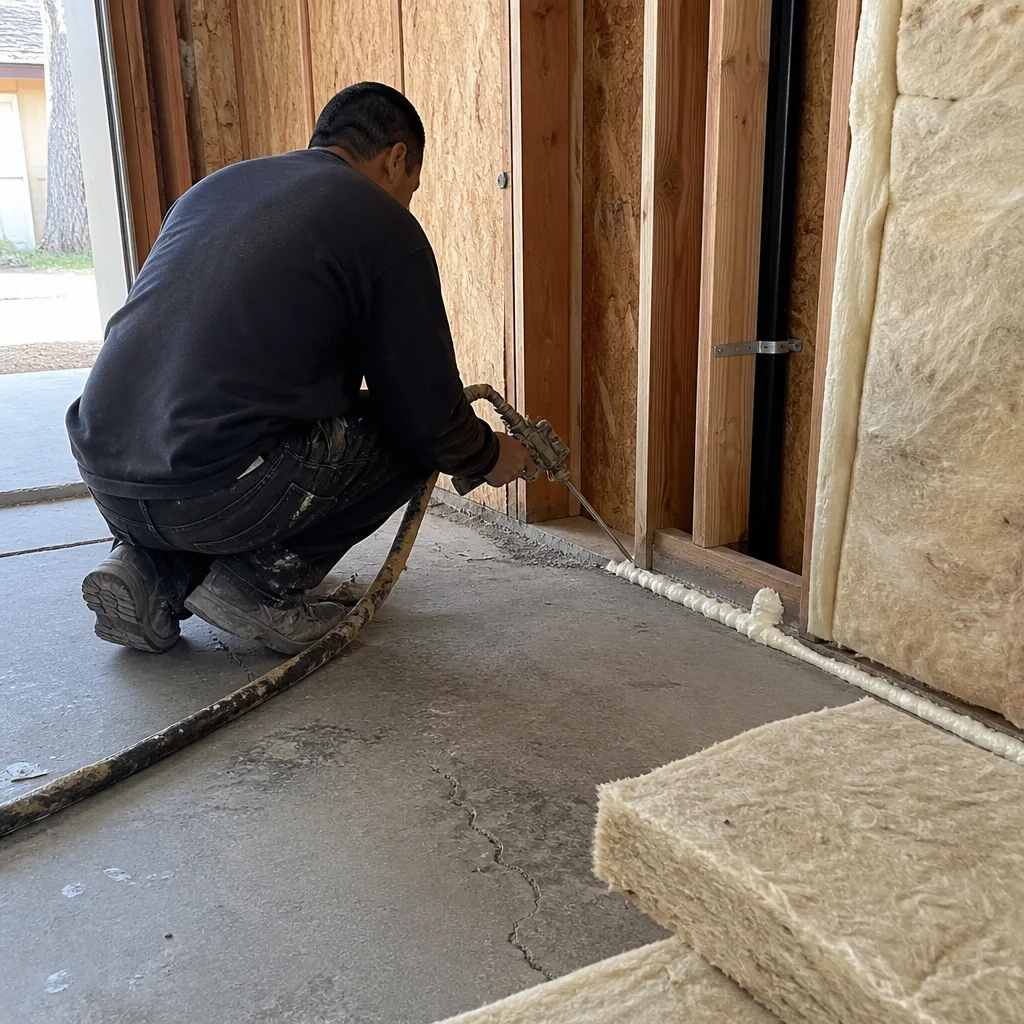
Garage conversion ADUs in Corona typically run $165,000-$245,000 all-in, drawings through final inspection, while new detached ADUs range from $285,000-$425,000 depending on size, foundation requirements, and utility connections. Every project Ellery ADU Studio quotes carries a written fixed price before work starts, per Haven Standard Clause 1. Call (951) 476-3715 for an exact quote on your specific site - estimates are free.
Yes. All ADUs in Corona require a city building permit, and most require planning review for zoning compliance. Garage conversions may need additional permits for electrical service upgrades or sewer connections. Riverside County Building & Safety issues the permits, and the city of Corona enforces its own ADU ordinance for zoning matters. A contractor who suggests “permit-free” construction or who proposes building without city notification is exposing you to stop-work orders, fines, and mandatory demolition.
From signed contract to certificate of occupancy, a garage conversion ADU in Corona typically takes 4-6 months, and a new detached ADU takes 6-10 months. Permitting accounts for 6-10 weeks of that timeline, with Riverside County’s current ADU review queue. Site-built projects on complex lots may extend longer; prefab systems from Abodu or Cover can compress the on-site construction phase to 2-4 weeks after foundation completion. Schedule estimates without permit time included are misleading - ask any bidder to separate design, permitting, and construction phases in their timeline.
Under a true fixed-price contract with defined exclusions, the price does not change unless the homeowner requests a scope modification. The Haven Standard, Clause 5, locks the scope at signing. Be wary of contracts with “allowances,” “subject to field conditions” clauses, or open-ended “plus cost of work” language - these are not fixed prices, and they will change. Call (951) 476-3715 to review any estimate you’re considering; we’ll identify the escalation risks before you sign.
Ellery ADU Studio pulls all required permits as part of our single-contract scope. The permit set is produced in-house, submitted under our license, and tracked through approval and inspection. You do not interface with Riverside County Building & Safety unless you choose to attend inspections. This is standard for design-build; it is not standard for designer-then-GC arrangements, where the homeowner often becomes the permit applicant of record. Ask any bidder: “Whose license will the permits be issued under?”
If the finished ADU is not built to the permitted drawings, Ellery ADU Studio makes it right - in writing, before the project starts. This is not a general satisfaction guarantee; it is a specific commitment to as-built compliance with the approved permit set, verified by the documented photo record collected during construction. The promise is backed by The Haven Standard, a written agreement that governs every project. Few Corona ADU contractors offer comparable documentation or warranty specificity.
The Bottom Line
Hiring an ADU contractor in Corona is not about finding the lowest bid. It is about finding a contract structure that assigns clear liability, a contractor with verifiable local permit experience, and documentation that protects you when assumptions prove wrong. Get three bids if you wish, but only after ensuring those bids describe the same scope, the same materials, and the same responsibility for permit approval and inspection passage. The designer-builder split that causes most California ADU disputes is avoidable. A single-contract design-build model, with a written fixed price and a warranty tied to the permit set, eliminates the blame gap and gives you a single point of accountability from first sketch to final inspection.
Written by Nadia Ellery, Owner at Ellery ADU Studio Corona, serving Corona since 2015.