
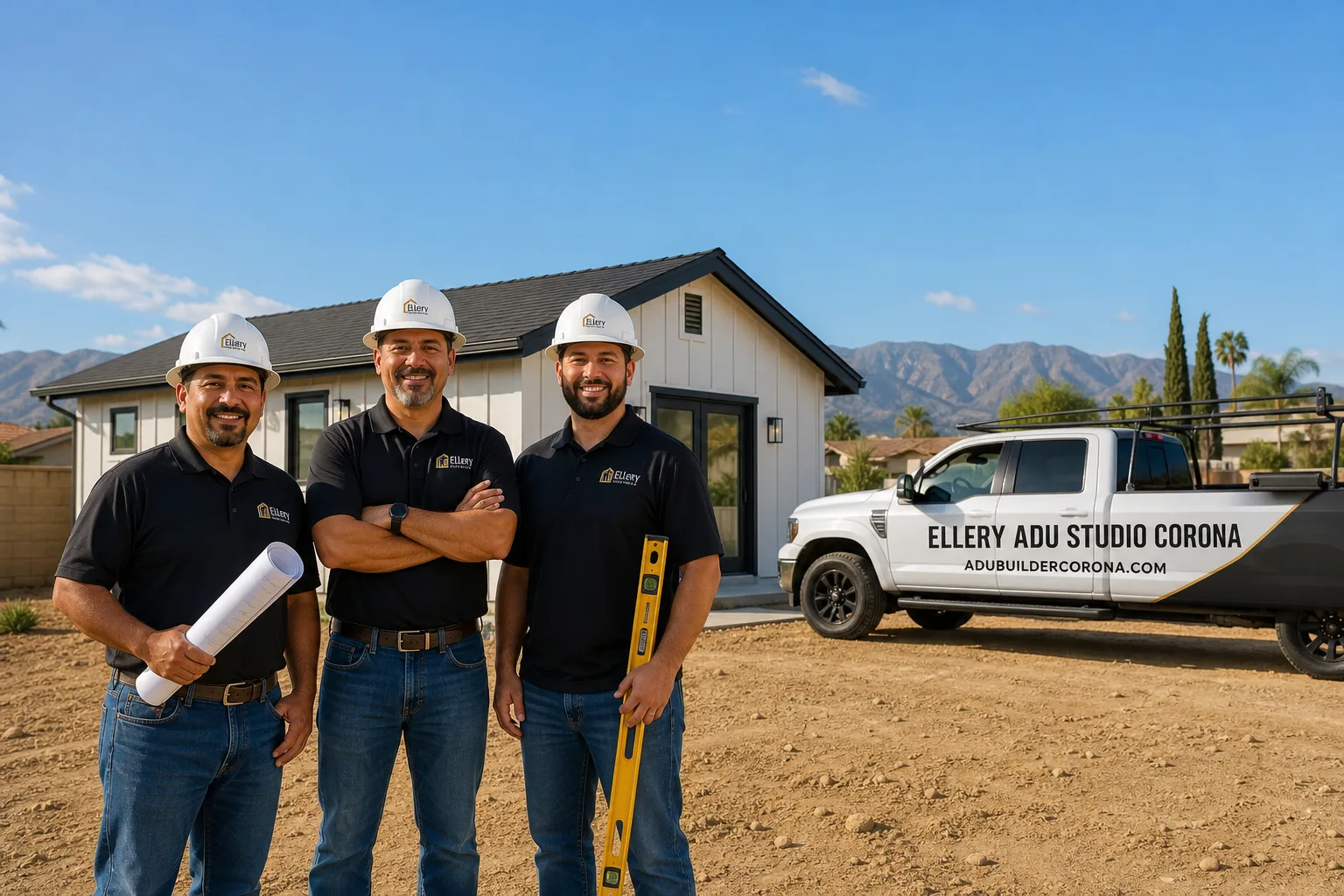
How Much Does Garage Conversion ADU Cost in Corona?
Our Garage Conversion ADU services in Corona, CA typically cost $95,000 to $175,000 all-in – drawings through final inspection. Most single-car garage conversions land between $95,000 and $130,000, while two-car garages converted to a full one-bedroom unit run $130,000 to $175,000 depending on the scope of structural and utility work. Every project Ellery ADU Studio quotes comes with a written price before any work starts, per Haven Standard Clause 1 – so the number you see on paper is the number you build to.
Garage Conversion ADU Cost Breakdown (2026)
The table below reflects current subcontractor and materials costs in the Corona market as of early 2026. Corona’s Inland Empire location means labor rates run slightly below coastal Orange County figures, but permit fees, energy code compliance (Title 24), and structural requirements are consistent with the rest of Southern California’s strict building standards.
| Line Item | Typical Range | Notes |
|---|---|---|
| Architectural drawings and permit set | $8,000 – $14,000 | Included in Ellery’s single contract; not billed separately |
| City of Corona permit fees | $3,500 – $7,500 | Varies by square footage and valuation; school district impact fees apply in some zones |
| Foundation work (slab inspection, thickening, stem wall) | $4,000 – $18,000 | Corona’s expansive clay soils in areas like Chase Ranch and Temescal Valley can require more extensive prep |
| Framing and structural upgrades | $10,000 – $22,000 | Includes garage door opening infill, header replacement, shear wall panels if required |
| Electrical (panel upgrade, sub-panel, ADU wiring) | $8,000 – $16,000 | Older homes in South Corona neighborhoods built pre-2000 often need a panel upgrade to 200A |
| Plumbing (rough-in, new bathroom and kitchen lines) | $9,000 – $18,000 | Concrete slab cut-and-patch for drain lines adds cost; budget higher if garage is far from main stack |
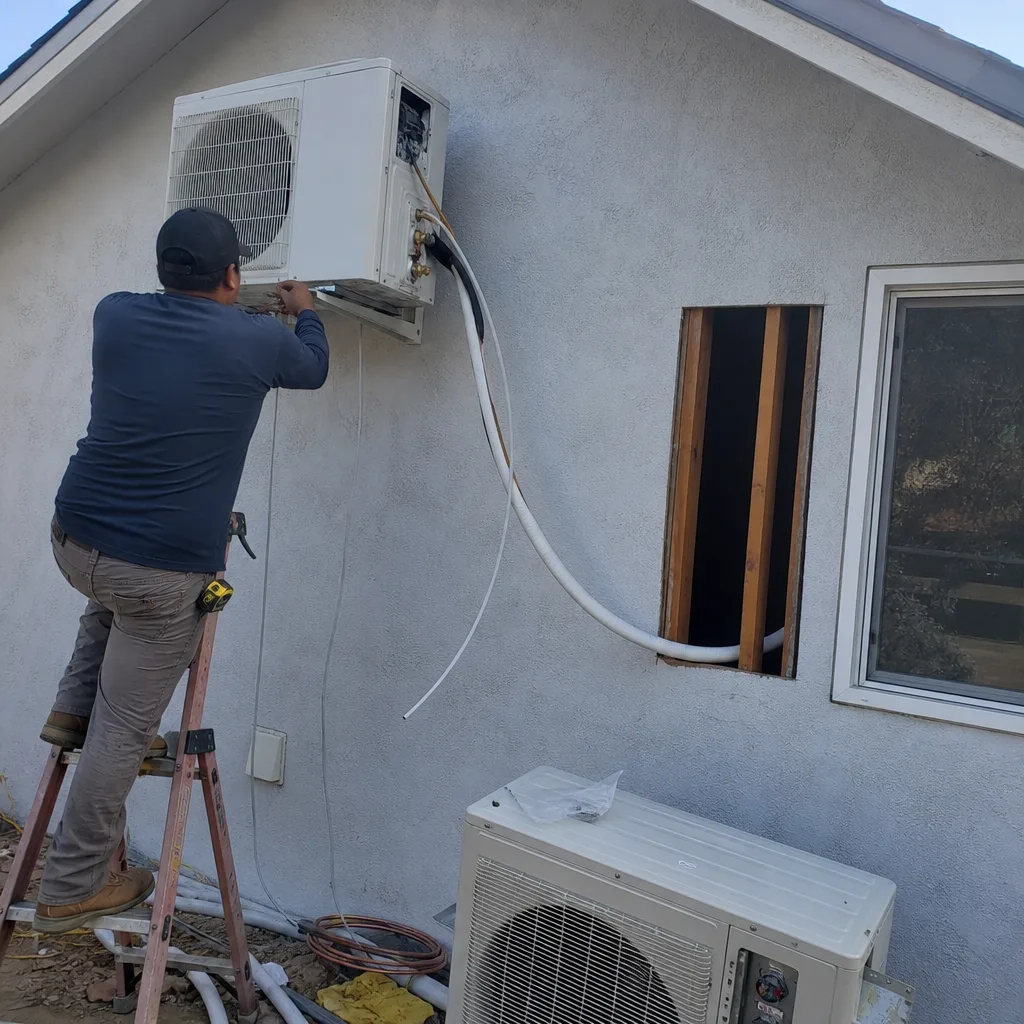
| HVAC (mini-split or ducted system, Title 24 compliance) | $5,000 – $11,000 | Corona’s summer highs routinely exceed 100°F; undersized HVAC is a failed inspection, not just a comfort issue |
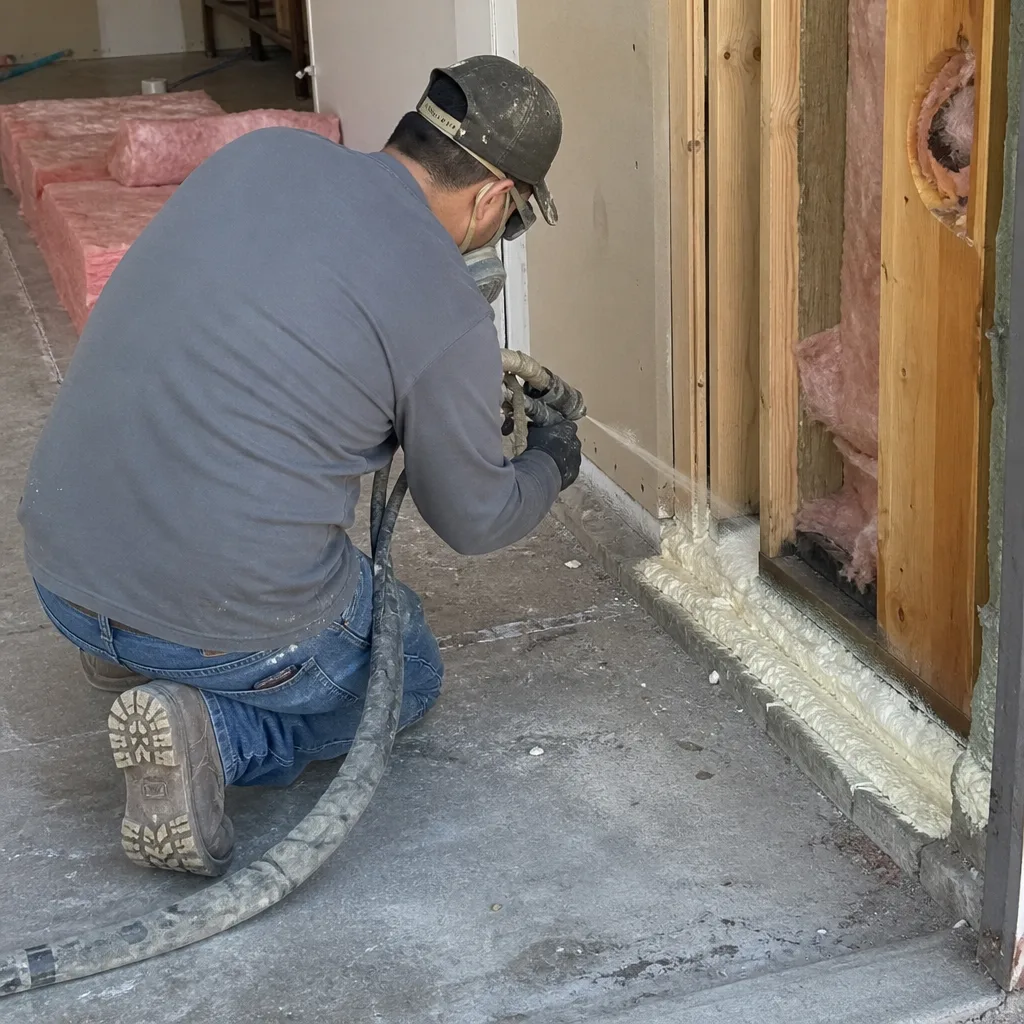
| Insulation (wall, ceiling, floor – Title 24 envelope) | $3,500 – $7,000 | Spray foam is common on the garage slab side; required R-values are non-negotiable in California |
| Drywall, finishes, and paint | $6,000 – $12,000 | Standard finish level; upgraded tile and cabinetry push this higher |
| Kitchen (cabinetry, counters, appliances) | $8,000 – $20,000 | Range reflects builder-grade through mid-range; custom cabinetry is outside this band |
| Bathroom (fixtures, tile, vanity) | $7,000 – $14,000 | Standard single bath; second bath adds $9,000 – $13,000 |
| Windows and exterior door | $3,500 – $8,000 | California requires dual-pane low-E glass; egress sizing is confirmed in the permit drawings |
| Exterior finish (stucco match, paint, trim) | $4,000 – $9,000 | Matching existing stucco color and texture in Corona’s sun-bleached finish tones takes extra effort |
| Site work (utilities connection, address, mailbox) | $2,500 – $6,000 | Corona requires a separate address for a permitted ADU used as a rental |
| Total (single-car, 400-500 sq ft) | $95,000 – $130,000 | Written price confirmed before work starts |
| Total (two-car, 500-700 sq ft) | $130,000 – $175,000 | Written price confirmed before work starts |
Two line items catch homeowners off guard more than any other in Corona. The first is foundation work. A significant portion of Corona – particularly older tracts in El Cerrito, South Corona near Foothill Parkway, and parts of Temescal Valley – sits on expansive clay soil. When we inspect a garage slab ahead of a conversion, we document the slab thickness with photos. A 4-inch slab is within range for most conversions; a 3-inch slab with visible heaving means we need to address that before framing starts, and the permit set reflects it. The second surprise is the electrical panel. Homes built in Corona before about 2002 frequently have 100-amp service, and adding a full ADU with its own HVAC, kitchen appliances, and washer-dryer hookup pushes that panel past capacity. The upgrade cost is real, but it appears in the written quote, not on a change order after framing is underway.
What Affects Garage Conversion ADU Pricing in Corona
- Garage size and configuration: A standard single-car garage in Corona runs roughly 240 to 360 square feet. Converting that to a permitted ADU requires meeting California’s minimum of 150 square feet for a studio, but a livable single-bedroom unit really needs 400 square feet or more – which sometimes means a small addition to the existing footprint. Two-car tandem garages common in Eastvale-adjacent tracts near the Riverside County line can convert cleanly to a one-bedroom with separate living space without any addition at all.
- Distance from the main house utility connections: If the garage sits at the back of a long lot – common in older Corona neighborhoods near 6th Street and Grand Boulevard – running new water, sewer, and gas lines that distance adds material and labor cost. We measure this during the site assessment and include it in the written quote.
- Existing slab condition and soil type: As noted above, Corona’s clay soils cause slab movement over time. A slab that’s cracked or uneven may need partial replacement or a new floating floor system before finish floors go in. This is a line item we document with photos at the first site visit, not a surprise at framing.
- Title 24 energy compliance requirements: California’s energy code is strict, and Corona’s climate zone (Zone 10) requires specific insulation R-values, window performance ratings, and HVAC efficiency thresholds. The permit set we produce locks these in from the start; there’s no discovering mid-project that the HVAC spec doesn’t meet compliance.
- HOA restrictions in planned communities: A meaningful share of Corona’s housing stock – particularly in Sycamore Creek, Sierra Del Oro, and the Retreat – falls under HOA CC&Rs that may restrict exterior modifications. We review HOA documents before the design phase begins. A city permit doesn’t override an HOA restriction, and finding that out after drawings are complete is an expensive lesson.
- Finish level and fixture selections: Builder-grade kitchen and bath packages are priced into the base range above. Quartz countertops, custom tile, upgraded appliances, or a second bathroom each add cost in predictable increments. Because Ellery uses a single-contract model, those selections are priced before work starts – not negotiated floor-by-floor as the project progresses.
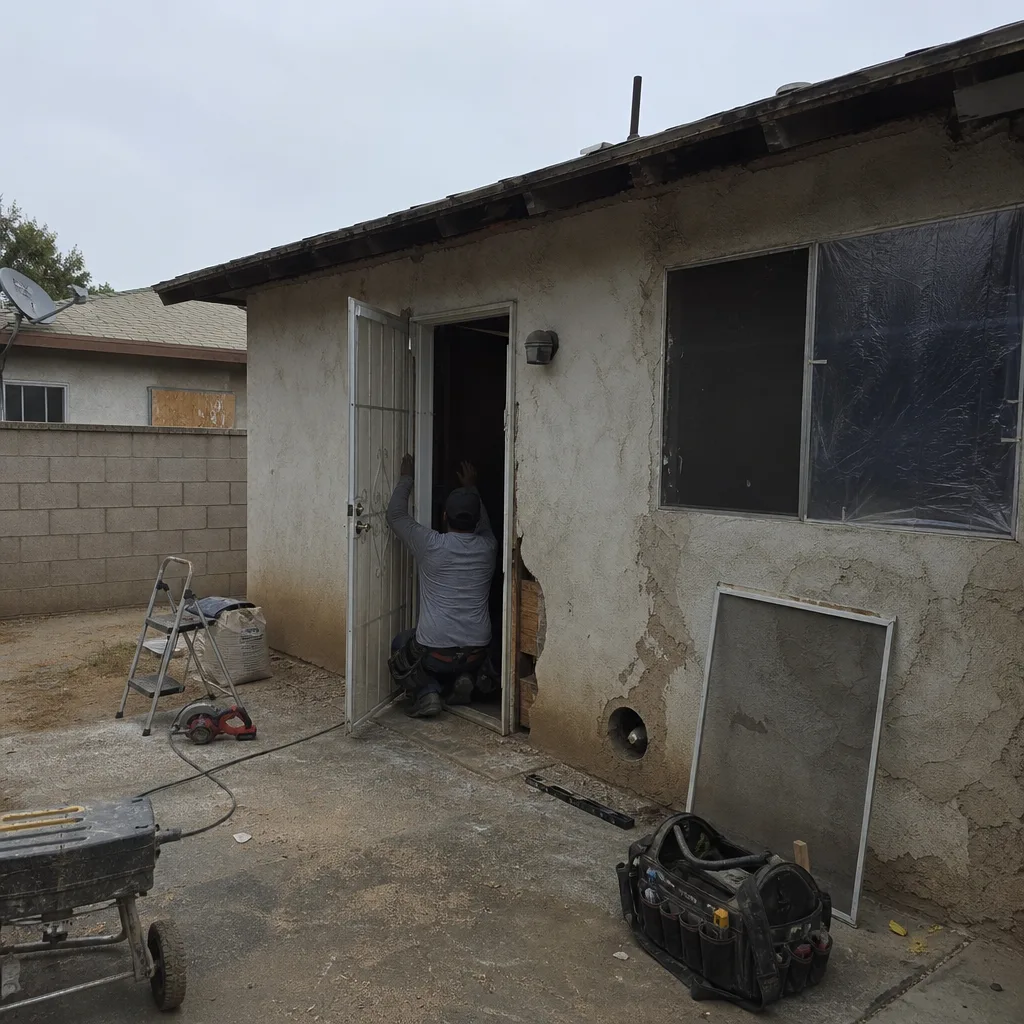 Before
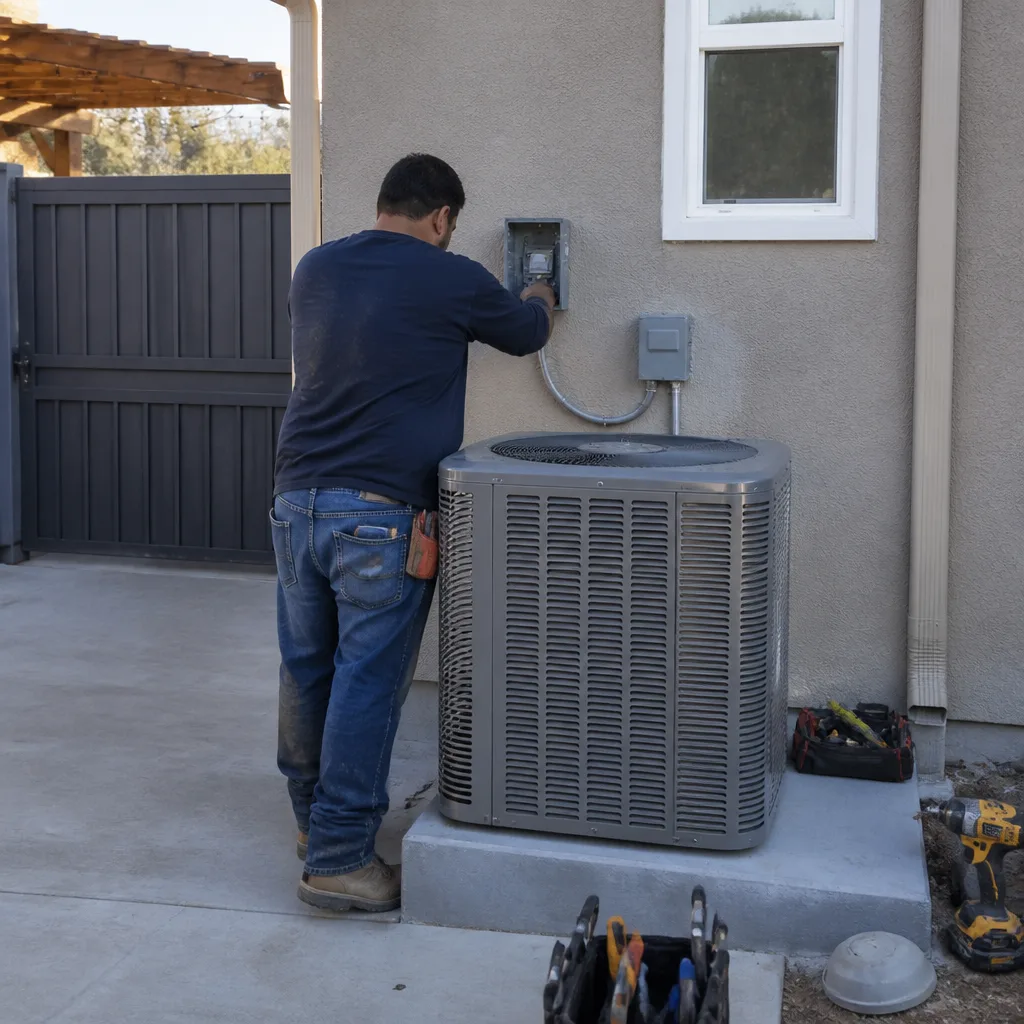 After
AfterHow to Save on Garage Conversion ADU in Corona
The most reliable way to keep costs under control on a garage conversion ADU is to lock the scope before any work starts and not change it. Scope creep – adding a second bathroom after framing, upgrading countertops after cabinetry is ordered, moving the kitchen wall after plumbing rough-in – is the single largest driver of budget overruns on ADU projects. Haven Standard Clause 5 (No Surprises) locks scope at signing. That clause exists because we’ve seen what mid-project changes cost homeowners who worked with separate designers and contractors who each had room to absorb or pass along the change order.
Here are the specific decisions that move the needle on cost without compromising the finished product:
- Convert, don’t add: If your existing two-car garage is already 480 to 520 square feet, a pure conversion – no structural addition – is the most cost-efficient path. We see this frequently in Corona’s West Side tracts where attached two-car garages were built to full depth. Staying within the existing footprint avoids new foundation work, new roof framing, and sometimes avoids triggering additional setback review.
- Use the existing roof if it’s sound: A garage roof that’s been maintained and is under 15 years old in Corona’s dry climate is usually worth keeping. Re-roofing adds $8,000 to $15,000 depending on slope and material. We inspect and document the existing roof condition in the site assessment.
- Choose a mini-split over ducted HVAC: For most garage conversion ADUs under 600 square feet in Corona, a single-zone ductless mini-split (typically a Mitsubishi or Daikin unit) performs well in our climate and costs $2,000 to $4,000 less installed than a ducted system. It also passes Title 24 without additional duct blower-door testing.
- Specify mid-range fixtures from the start: The cost difference between builder-grade and mid-range cabinetry, countertops, and tile is real but modest at the specification stage. Upgrading after cabinetry has been ordered is two to three times more expensive than selecting the right tier upfront. We walk through finish selections before the written quote is issued.
- Get a second opinion on any estimate you already have: If you’ve received a written bid from another contractor or design-build firm, Ellery’s Free Second Opinion will review it line by line. We’ve found permit fees mis-stated, foundation scope omitted, and Title 24 compliance costs left out entirely in bids brought to us for review. The second opinion is free. Call (951) 476-3715 and bring the written estimate.
One thing that does not save money: skipping the permit. Unpermitted garage conversions in Corona cannot be legally rented, reduce resale value, and create significant liability when buyers’ inspectors flag them. Corona’s code enforcement has also become more active in residential neighborhoods since 2023. The permit is not optional – it’s what makes the ADU a legal, financeable, insurable asset.
Corona ADU Permit Requirements and Timeline
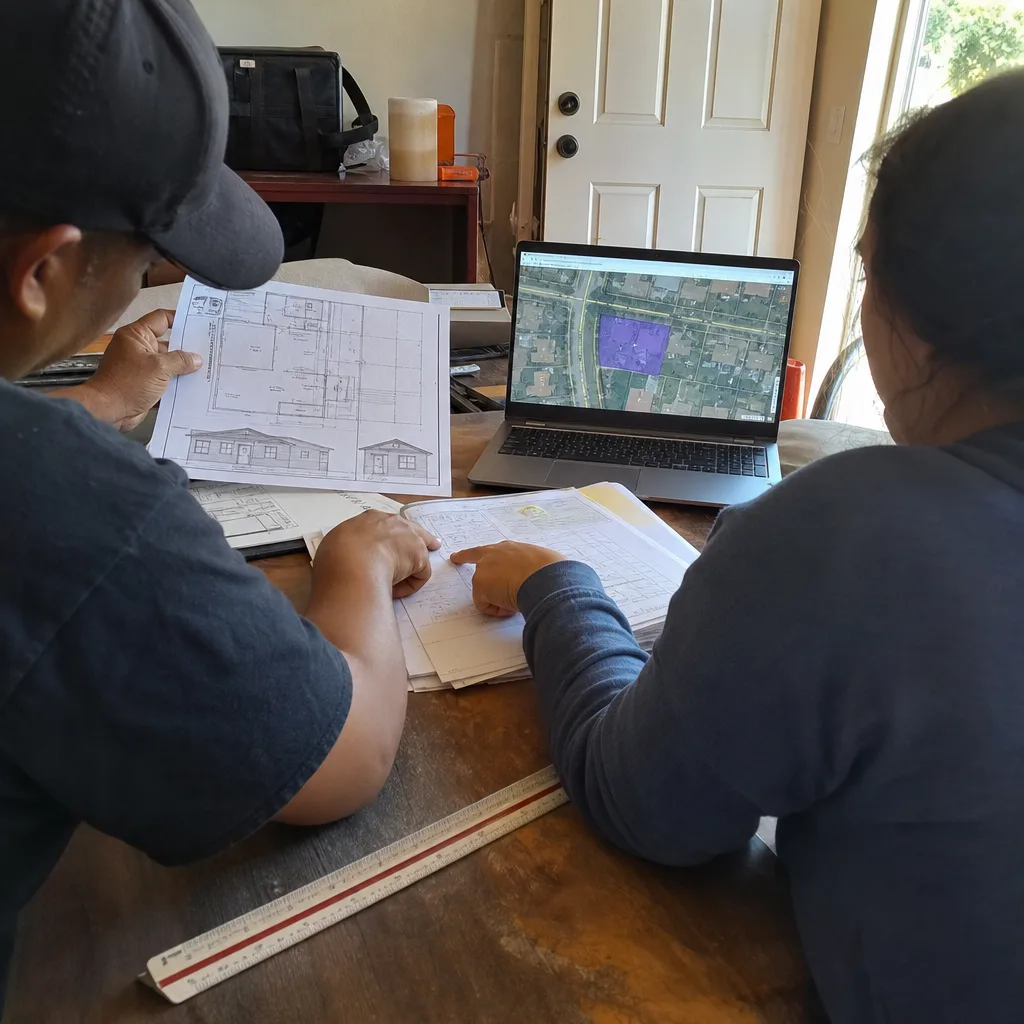
The City of Corona processes ADU permits through the Building Division, and garage conversions are subject to both the California ADU law that streamlined approvals statewide and Corona’s own municipal standards. Here’s what the permit timeline looks like in practice, based on projects Ellery has completed in Corona since 2021.
- Pre-application and site assessment: 1 to 2 weeks. We review the parcel, HOA documents if applicable, utility maps, and existing slab condition before drawings begin.
- Design and permit set production: 4 to 6 weeks. This produces the full architectural and structural drawings, Title 24 energy calculations, and all forms required for a complete submittal to Corona Building Division.
- City plan check: 4 to 10 weeks. Corona’s first-review turnaround has averaged 6 to 8 weeks for residential ADUs in 2025. Under California law (AB 2334 and subsequent amendments), ADU plan checks for qualifying conversions are capped at 60 days. We track every open plan check internally.
- Construction: 10 to 18 weeks for a garage conversion. Two-car conversions with full kitchens and bathrooms run toward the higher end; straightforward single-car studio conversions can close inspections in 10 to 12 weeks.
- Final inspection and certificate of occupancy: 1 to 2 weeks after the final inspection request is submitted. The CO is the document that makes the ADU legally habitable and rentable.
Total timeline from signed contract to CO: roughly 6 to 9 months for most Corona garage conversion ADUs. Projects that encounter HOA review, soil reports, or city correction rounds can run longer. We document every review cycle with date-stamped records so clients have a clear timeline picture throughout.
Garage Conversion vs. New Detached ADU in Corona: Which Costs Less?
This is the first question homeowners in Corona’s single-family neighborhoods ask once they understand both options are available on their parcel. The short answer: a garage conversion is almost always $50,000 to $120,000 less expensive than a new detached ADU of comparable size, because you’re working with an existing foundation, an existing roof structure, and existing walls. A new detached ADU in Corona – ground-up, with a concrete foundation, full framing, and all utilities run from scratch – typically runs $220,000 to $340,000 for a 600 to 800 square foot unit.
The tradeoff is parking. Attached Garage Conversion in Corona may trigger the city’s parking replacement requirements depending on your zoning and proximity to transit. California’s ADU law has significantly reduced mandatory parking replacement for ADUs near transit corridors, and parts of North Main Street and the Corona Metrolink station area qualify for exemptions. We confirm parking status during the pre-application phase so you know before the drawings start, not after.
For homeowners who want to learn more about how garage conversions fit the full range of ADU options in Corona, our Garage Conversion ADU in Corona service page covers the process end to end. And if you’re still weighing whether an ADU is the right move for your property, the home page gives an overview of every service Ellery offers under a single contract.
What $95,000, $130,000, and $175,000 Actually Buys in Corona
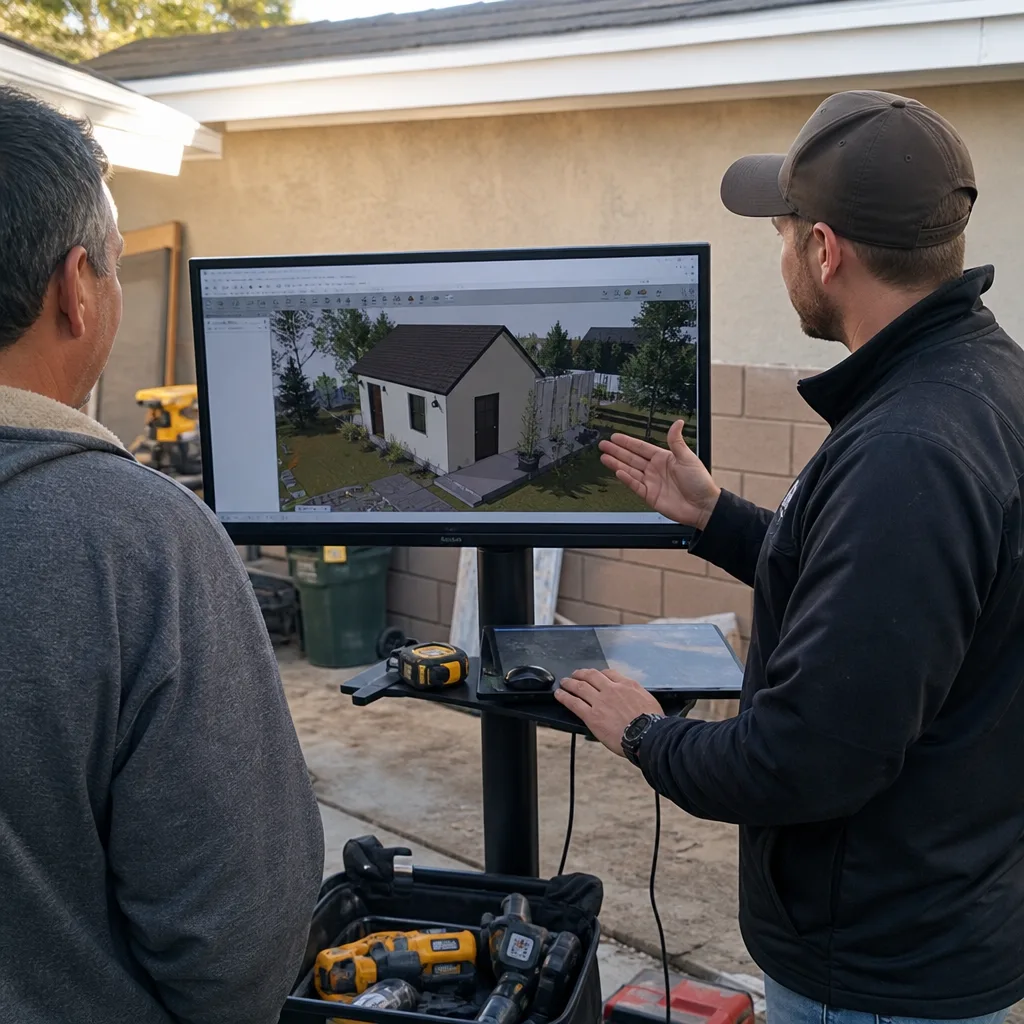
Price ranges only mean something when you know what’s inside them. Here’s how the three benchmarks break down in plain terms.
$95,000 – $110,000: Single-Car Conversion to Studio ADU
This is a 240 to 380 square foot garage with a sound slab, no panel upgrade required, close utility connections, and a builder-grade finish package. The unit comes out as an open-plan studio with a full bathroom, a kitchenette, and a separate entrance. Livable and legally rentable. Not spacious. In neighborhoods like Coronita or the tracts north of Ontario Avenue where attached single-car garages are common, this is a realistic budget for the right parcel.
$115,000 – $145,000: Single-Car Conversion to One-Bedroom ADU
Achieving a true one-bedroom – separate sleeping area, full kitchen, full bath – in a single-car garage usually requires either a small bump-out addition or a well-configured 420 to 500 square foot footprint. This range covers those projects with mid-range finishes. Panel upgrades, moderate foundation work, and a mini-split HVAC system are included in the written price. This is the most common project Ellery completes in established Corona neighborhoods.
$145,000 – $175,000: Two-Car Conversion to Full One-Bedroom or Two-Bedroom ADU
A Carport Conversion or two-car garage in Corona – typically 440 to 600 square feet – converts to a genuine one-bedroom apartment with a separate living room, or a compact two-bedroom, at this price point. These projects often involve more complex plumbing (two bathrooms, full kitchen), a full panel upgrade, and more involved Title 24 envelope work because of the larger conditioned area. Finish level is mid-range to slightly above. Projects in Sycamore Creek or Sierra Del Oro where garages are finished and well-maintained tend to land in the lower half of this range.
FAQs – Garage Conversion ADU Cost in Corona
How much does a garage conversion ADU cost in Corona, CA in 2026?
A garage conversion ADU in Corona costs between $95,000 and $175,000 all-in, covering design drawings, permits, and construction through final inspection. Single-car garages converted to studios or compact one-bedroom units run $95,000 to $130,000. Two-car conversions with full kitchens and bathrooms run $130,000 to $175,000. Every Ellery project is quoted with a written price before any work begins – the quote you receive is the number the project is built to. Call (951) 476-3715 for a written estimate specific to your parcel.
What are the permit fees for a garage conversion ADU in Corona?
City of Corona permit fees for a garage conversion ADU typically run $3,500 to $7,500, depending on the square footage and assessed construction valuation. That range includes the building permit, electrical, plumbing, and mechanical sub-permits. School district impact fees apply to some projects depending on parcel location within the Corona-Norco Unified School District boundaries – these can add $1,500 to $3,500 and are frequently omitted from competitor estimates. Ellery includes all known permit fees in the written quote before work starts.
How long does a garage conversion ADU take to complete in Corona?
From signed contract to certificate of occupancy, most garage conversion ADU projects in Corona take 6 to 9 months. That breaks down as: 4 to 6 weeks for design and permit set production, 4 to 10 weeks for City of Corona plan check (state law caps it at 60 days for qualifying conversions), and 10 to 18 weeks of construction. Projects that require HOA approval or soil reports run toward the longer end of that window. Ellery documents every milestone with dated records so you’re never guessing where the project stands.
Is a garage conversion ADU cheaper than building a new detached ADU in Corona?
Yes, significantly. A garage conversion in Corona runs $95,000 to $175,000. A new ground-up detached ADU of comparable size runs $220,000 to $340,000. The cost difference comes from the existing foundation, existing roof structure, and existing wall framing that a conversion uses. The tradeoff is that a conversion loses the garage parking space, which may or may not trigger parking replacement requirements depending on your specific parcel and its proximity to a transit corridor. We confirm parking requirements before drawings start so there are no surprises at plan check.
Does converting a garage to an ADU add value to a home in Corona?
Yes, and the numbers are specific enough to be useful. Rental-ready one-bedroom ADUs in Corona’s current market command $1,600 to $2,100 per month in rent. At a cap rate typical for Inland Empire residential investment property (5.5% to 6.5%), a unit generating $1,800 per month in rent adds roughly $165,000 to $195,000 to assessed income-adjusted property value. The finished ADU also broadens the buyer pool when the home eventually sells, because a permitted legal unit is a documented income stream, not a potential liability. Unpermitted conversions, by contrast, are typically flagged during buyer inspections and either renegotiated or required to be removed.
What does Ellery ADU Studio include in the garage conversion price?
Ellery’s single contract covers architectural drawings, structural engineering if required, the complete permit set submitted to the City of Corona, all construction phases from demolition and framing through finish work, final inspection, and the certificate of occupancy. Design and permitting are not billed separately – they’re part of one written price issued before any work starts, per Haven Standard Clause 1. The 365-Day Done Right Promise backs the construction: if the finished ADU is not built to the permitted drawings, Ellery corrects it in writing. A documented photo record is produced at every site visit so clients have evidence of exactly what was done at each stage.
Why Nadia Ellery Built the Studio as a Design-Build Practice
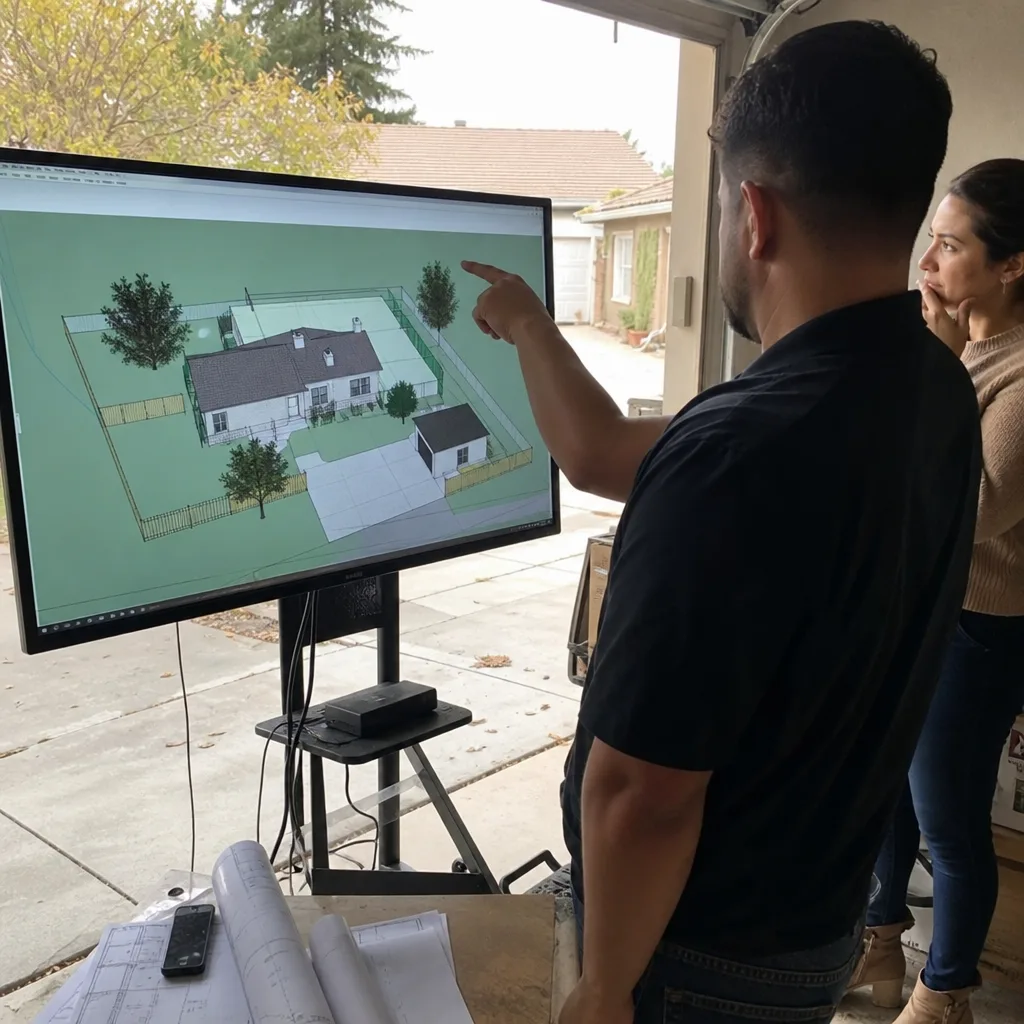
Nadia Ellery founded Ellery ADU Studio in 2015 – the year California’s ADU permitting laws began their first major loosening – specifically because she kept watching homeowners get stuck in the gap between their architect and their contractor. The architect drew something the contractor bid differently. The contractor built something that didn’t match the drawings. The homeowner paid for both disputes. The design-build model closes that gap at the contract stage: one written price, one party responsible from drawing to inspection, one document that says what “done” means before a single board is framed.
Since 2015, the studio has designed, permitted, and built more than 900 ADUs – every one with a written price before work started and a documented photo record when work was complete. That record isn’t a formality. It’s how Nadia and her team prove what was done, what was found during construction, and what was corrected when something wasn’t right. In a project category where verbal promises are common and change orders are chronic, documentation is the practice.
The Free Second Opinion offer exists for the same reason. If you have a written bid from another firm and want a line-by-line read on whether the scope is complete, the permit fees are accurate, and the foundation work is priced in, call (951) 476-3715. Bring the written estimate. The review is free and takes less than an hour.
Key Takeaways: Garage Conversion ADU Cost in Corona (2026)
- All-in cost range: $95,000 to $175,000 depending on garage size, scope, and finish level – drawings through final inspection.
- City of Corona permit fees add $3,500 to $7,500; school district impact fees may add another $1,500 to $3,500 in some zones.
- Foundation work is the most commonly underestimated line item in Corona due to expansive clay soils in neighborhoods like Chase Ranch, Temescal Valley, and South Corona tracts.
- Electrical panel upgrades are required on most pre-2002 Corona homes and cost $8,000 to $16,000 – they belong in the written quote, not a change order.
- Total timeline from signed contract to certificate of occupancy: 6 to 9 months for most Corona garage conversion ADUs.
- A permitted garage conversion ADU in Corona can generate $1,600 to $2,100 per month in rental income.
- Every Ellery project is quoted with a written price before any work begins and backed by the 365-Day Done Right Promise.
- A Free Second Opinion on any written estimate you already hold is available at no cost – call (951) 476-3715.
Get a Written Price for Your Corona Garage Conversion ADU
If you’re ready to know what a garage conversion ADU will actually cost on your specific parcel in Corona, call Ellery ADU Studio at (951) 476-3715. A live person answers – not a voicemail queue. We’ll schedule a site assessment, document what we find, and issue a written price before any work starts. That’s not a sales promise; it’s Haven Standard Clause 1, in writing, on every project. If you already have a written estimate from another firm and want a second set of eyes on it, bring it to the call. The second opinion is free.
Written by Nadia Ellery, Owner at Ellery ADU Studio, serving Corona, CA since 2015. Pricing reflects the Corona market as of 2026. Ellery ADU Studio Corona offers free estimates – call (951) 476-3715.
What Our Customers Say
"The rental income has covered the payment since the second month. They were realistic about the numbers rather than optimistic."
- Odette N."Garage conversion finished on the drawings and close to the schedule. They were honest that the sewer connection was the unknown, and it was."
- Arjun D."Every allowance was itemised at the start, so the finish selections did not turn into a surprise at the end."
- Benedict H.