
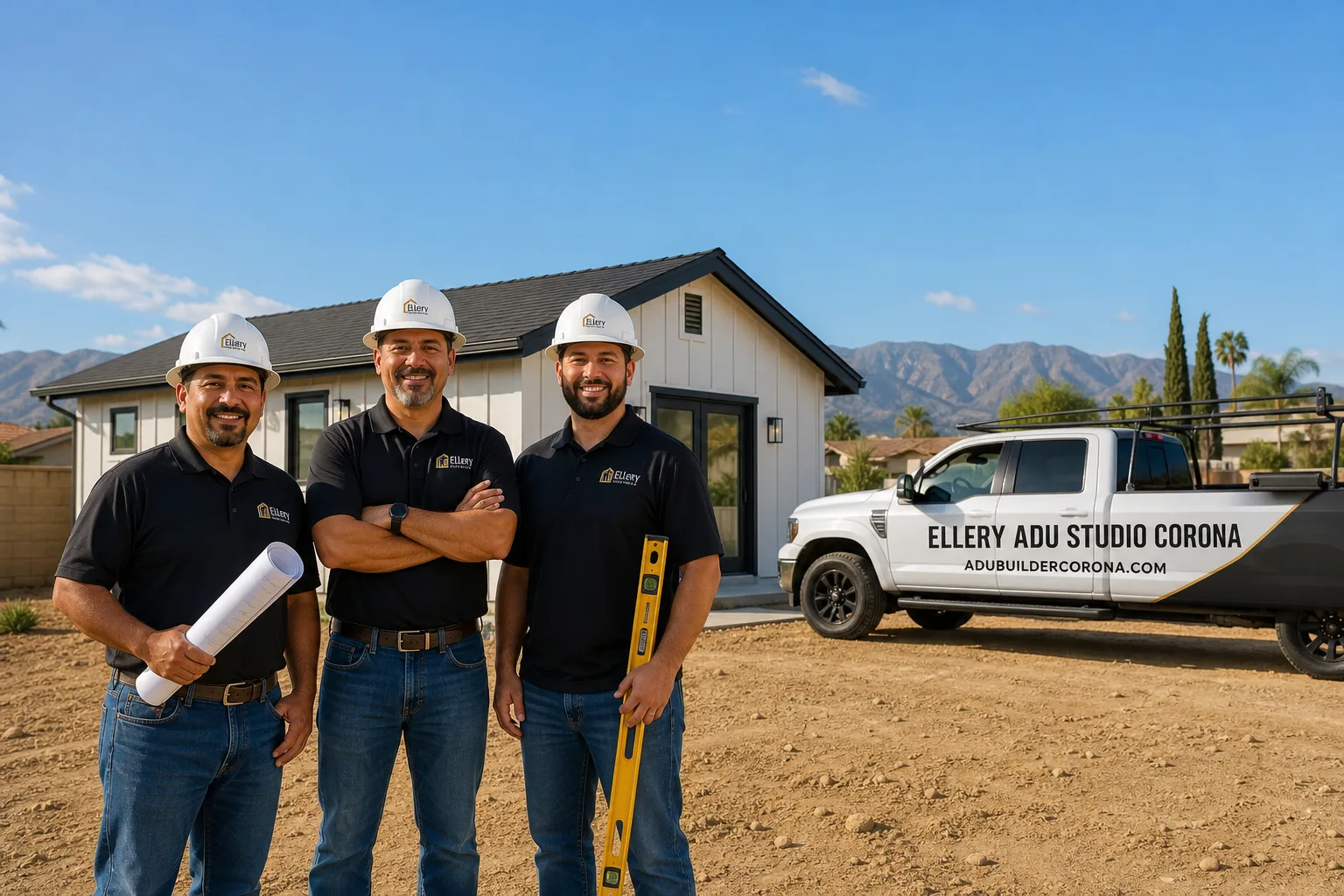
How Much Does a New Detached ADU Cost in Corona?
A new detached ADU in Corona, CA typically costs between $180,000 and $420,000 all-in, covering design, permit drawings, site prep, and construction through final inspection. Most standard builds in the 400-800 sq ft range land between $220,000 and $320,000 depending on finish level, site conditions, and whether you choose stick-built or prefab. At Ellery ADU Studio, every project starts with a written price before any work begins – that number is locked in per Haven Standard Clause 1, not revised at framing.
New Detached ADU Cost Breakdown (2026)
A new detached ADU in Corona isn’t one line item – it’s eight or nine, each with real variability. The table below reflects what Ellery ADU Studio is quoting on active Corona projects in 2026. These are all-in numbers: drawings through certificate of occupancy, no separate design invoice, no surprise change orders at drywall.
| Line Item | Typical Range (Corona, 2026) | Notes |
|---|---|---|
| Architectural Design & Permit Set | $8,000 - $18,000 | Included in Ellery’s single contract; not billed separately |
| City of Corona Permit Fees | $6,000 - $14,000 | Varies by sq ft and valuation; school fees add $2,000-$4,500 |
| Site Prep & Grading | $4,500 - $22,000 | Corona’s hillside lots in El Cerrito and Sierra del Oro frequently need cut-and-fill |
| Foundation | $12,000 - $38,000 | Slab-on-grade is lowest; raised or pier-and-beam adds cost on sloped lots |
| Framing & Structural | $28,000 - $65,000 | Stick-built standard; prefab systems (Cover, Abodu) can compress this range |
| Exterior Finish & Roofing | $18,000 - $42,000 | James Hardie fiber cement siding is common in Corona HOA zones |
| Mechanical, Electrical & Plumbing (MEP) | $28,000 - $55,000 | New utility lateral from street is the biggest variable on older Norco-adjacent parcels |
| Interior Finishes (cabinets, flooring, fixtures) | $18,000 - $55,000 | Standard vs. designer finish; rental-grade vs. owner-occupant spec |
| Landscaping / Hardscape Restoration | $3,500 - $12,000 | Required where construction disturbs existing grade or HOA common area |
All-In Estimates by Unit Size
- Studio / 1-bed (up to 500 sq ft): $180,000 - $255,000
- 1-bed / 1-bath (500-650 sq ft): $220,000 - $295,000
- 2-bed / 1-bath (650-800 sq ft): $265,000 - $340,000
- 2-bed / 2-bath (800-1,000 sq ft): $310,000 - $395,000
- 1,200 sq ft max (California ADU cap): $370,000 - $420,000+
What pushes a project toward the high end of each range: a sloped lot requiring engineered retaining walls, a utility lateral that hasn’t been touched since the 1970s, HOA design standards requiring specific rooflines or materials, and premium interior specifications. What keeps a project at the lower end: a flat graded pad that’s already accessible, a gas and electrical service point within 50 feet of the build site, a rental-grade interior spec, and a prefab or panelized system like Plant Prefab or Mighty Buildings that compresses on-site labor days.
The written price Ellery provides before any work starts captures all of this. Under Haven Standard Clause 1, that number doesn’t change because a framing crew ran short on lumber or because city plan check came back with a correction. If the scope changes, the price change is documented and signed before the work proceeds – not explained after.
What Affects New Detached ADU Pricing in Corona
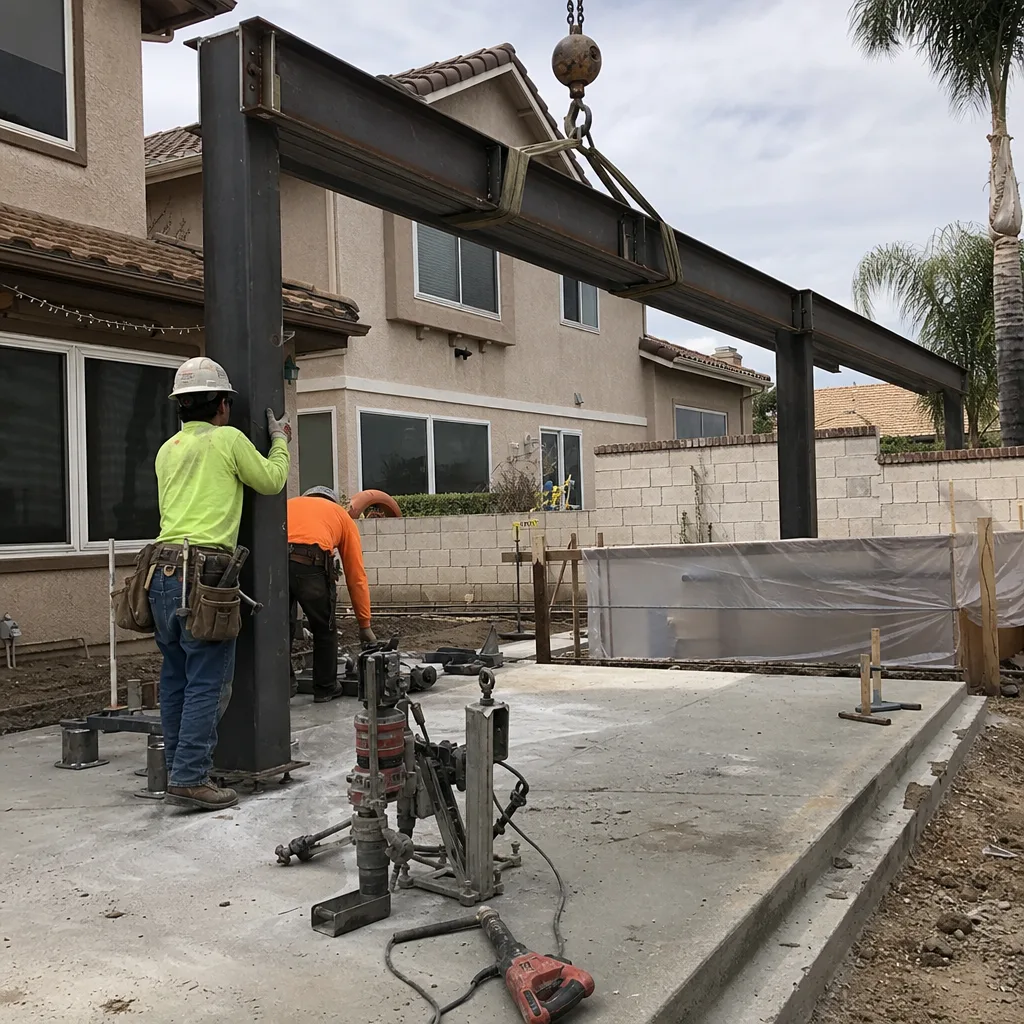
Corona’s ADU market has specific cost drivers that don’t apply the same way in Irvine or Riverside. The city’s mix of 1980s tract lots, hillside custom properties, and newer HOA-governed communities means no two projects quote the same. Here are the six factors that move the number most.
- Lot topography and grading requirements. Corona’s hillside neighborhoods – particularly El Cerrito, Sierra del Oro, and the elevated streets near the 91 freeway corridor – frequently require cut-and-fill grading and engineered retaining walls. A flat South Corona lot near Foothill Parkway might need $5,000 in site prep. A sloped parcel in El Cerrito can need $20,000 or more before the foundation is poured.
- HOA design standards. A significant share of Corona’s newer subdivisions, especially in areas built after 2000, carry HOA CC&Rs that dictate roofline pitch, exterior color palettes, siding materials, and sometimes setback rules stricter than the city minimum. James Hardie fiber cement siding, for example, is frequently specified to match the primary residence – it’s a good product, but it adds $6,000-$14,000 over vinyl. Ellery’s permit set is reviewed against HOA requirements before drawings are submitted to the city.
- Utility connection distance and age. California ADU law prevents cities from requiring a new utility lateral for an ADU on a lot where the primary home already has service – but that protection doesn’t apply if the existing service panel or water line is undersized. On older parcels near downtown Corona, a panel upgrade from 100 to 200 amps is common and adds $4,000-$8,000. A new gas lateral, when needed, adds $3,500-$9,000.
- Build method: stick-built vs. prefab vs. modular. Stick-built construction on-site is the most flexible but carries the highest labor cost in the current Inland Empire subcontractor market. Panelized systems like Plant Prefab or prefab units from Abodu or Cover can reduce on-site build time and predictably compress the framing budget. Modular units from Dvele or Mighty Buildings go further – most of the assembly happens off-site, which helps when a Corona project needs to limit disruption to an occupied property. Ellery specifies and coordinates all of these within the same single contract.
- Unit size and bedroom count. This is the most direct cost lever. California caps ADU size at 1,200 sq ft for detached units. Each additional 100 sq ft adds roughly $18,000-$28,000 in construction cost at current Corona labor rates, plus a proportional increase in permit fees based on the city’s valuation tables. A second bathroom adds $9,000-$16,000 on top of that.
- Permit timeline and plan check cycles. The City of Corona processes standard ADU applications on a predictable timeline for straightforward lots. Projects requiring a setback variance – the additional review when a structure can’t meet standard 4-foot side or rear setbacks – add 6-10 weeks and $1,500-$4,000 in additional documentation costs. Hillside lots may also trigger a soils report requirement from the city, adding $2,500-$5,500 to the pre-construction phase.
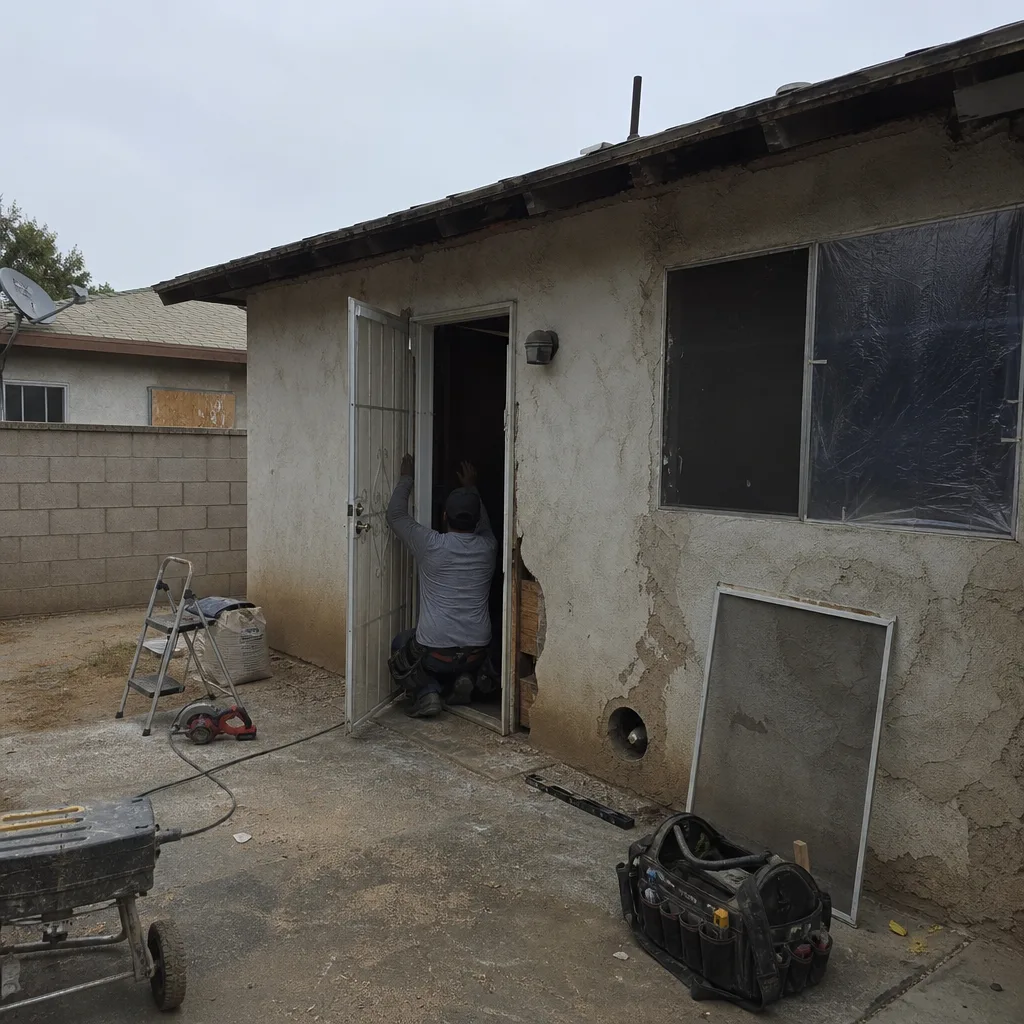 Before
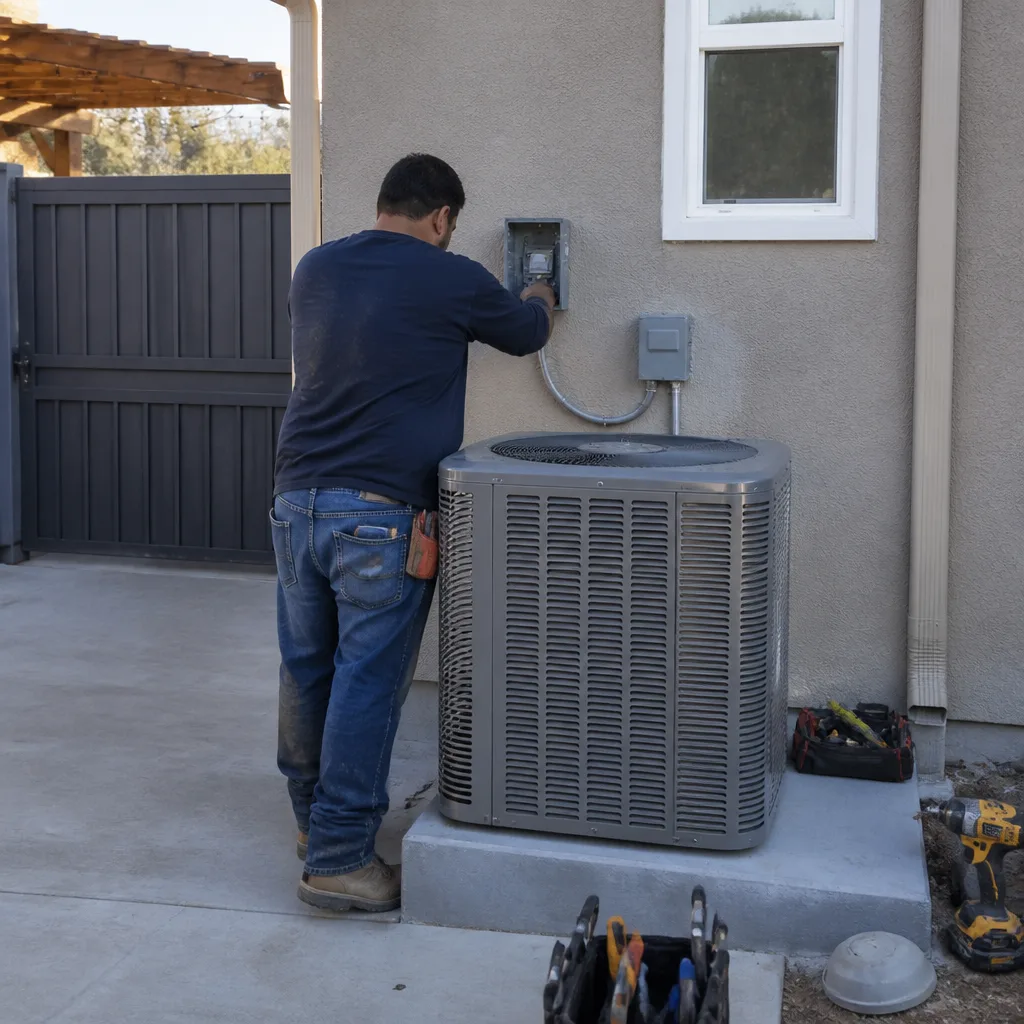 After
AfterCorona ADU Permit Fees and Local Costs Worth Knowing
The City of Corona calculates permit fees against the project’s construction valuation, so larger or higher-spec units pay more. For a 600 sq ft ADU at a standard residential valuation, total city permit fees typically land between $7,500 and $11,000. That figure includes building, electrical, mechanical, and plumbing permits but not school impact fees.
School impact fees are the line item that surprises most first-time ADU owners in Corona. Under the Alvord Unified and Corona-Norco Unified district rules, new residential square footage triggers a per-square-foot levy. For a 700 sq ft ADU in 2026, that school fee typically runs $2,800-$4,200. It’s not optional and it’s not negotiable – but it’s also not hidden. Ellery’s written estimate includes it as a named line item before any check is written.
One cost that varies dramatically based on timing: the New Detached ADU in Corona approval process occasionally requires a fire sprinkler system if the structure exceeds 500 sq ft and the primary home doesn’t already have them. That addition runs $6,000-$11,000 and is triggered by the plan check, not by the builder. Knowing this before permit submission – not after – is part of what Ellery’s permit set is designed to do.
Prefab and Modular ADU Options in the Corona Market
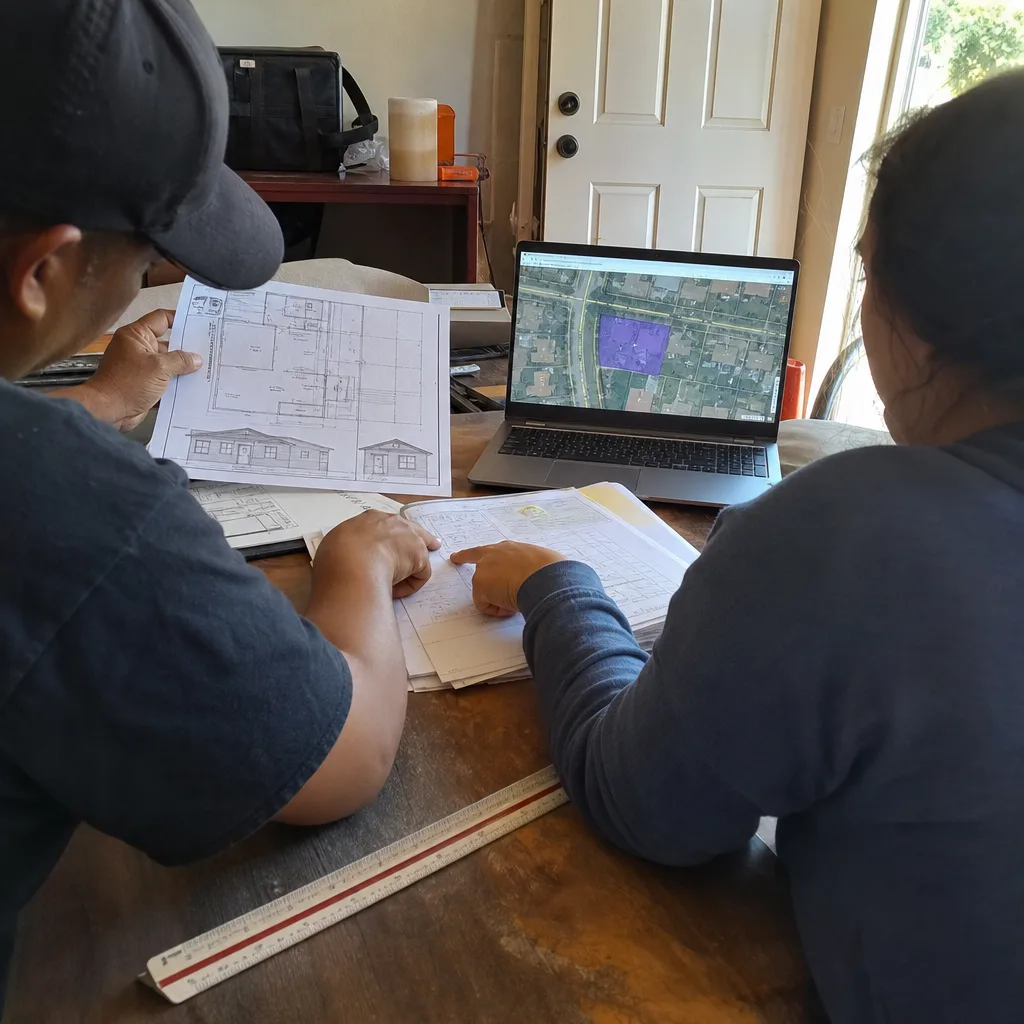
Prefab isn’t cheaper by default – but it is more predictable, which in a construction market where Inland Empire subcontractor availability fluctuates, has real value. Here’s how the main systems Ellery works with perform in the Corona context.
- Abodu: Delivers a fully finished unit on a flatbed. Strong for flat Corona lots with direct side-yard access. Build time once delivered is 2-4 weeks. Total all-in cost for a 340-500 sq ft unit runs $185,000-$230,000 in the current market, including site prep and utility connection.
- Cover: Custom-designed, factory-built panels assembled on-site. Good fit for HOA neighborhoods because the design can be spec’d to match the primary home’s architecture before a single panel ships. All-in range for a 600-800 sq ft Cover unit in Corona: $260,000-$340,000.
- Plant Prefab: Panelized construction with strong sustainability credentials. Units ship from their Rialto facility, which keeps freight costs low compared to Northern California-based competitors. A 2-bed Plant Prefab ADU in Corona runs approximately $285,000-$355,000 all-in.
- Mighty Buildings: 3D-printed polymer composite panels. Durable in heat – relevant for Corona’s summer temperatures, which routinely exceed 100°F in July and August. Studio to 1-bed range runs $195,000-$265,000 all-in in the local market.
- Dvele: Fully modular, high-spec interiors. The highest cost in the prefab category but also the highest rental rate per square foot on the Corona rental market. All-in for a Dvele 1-bed ADU in Corona: $310,000-$390,000.
- Boxabl: Container-derived units. Currently limited by production availability, but where units can be sourced, they offer the lowest per-unit cost for a studio configuration. Pricing is market-volatile; Ellery will provide a current figure at the time of estimate.
Ellery specifies and coordinates all of these systems within the same single contract. If a prefab manufacturer’s lead time shifts or a product changes, Ellery is the single point of contact – not a go-between asking you to call the factory directly.
How to Save on a New Detached ADU in Corona
There are legitimate ways to keep a Corona ADU project toward the lower end of its range. There are also false economies that cost more than they save. Here’s the difference.
Things That Actually Reduce Cost
- Choose a flat, accessible lot footprint. If your property has a flat graded area with side-yard access, use it. Every foot of elevation change that requires cut-and-fill adds labor and material cost that can’t be engineered away. If you have a choice of placement on a larger lot, the flat zone is almost always cheaper to build on.
- Size to the rental market, not the maximum. California allows 1,200 sq ft for a detached ADU. The Corona rental market – especially in the south and east parts of the city near Dos Lagos and Crossings at Corona – supports strong rents for 600-750 sq ft 1-bed and 2-bed units without requiring the larger build. A 700 sq ft unit that rents for $1,950/month in South Corona produces a better return than a 1,100 sq ft unit that adds $90,000 in construction cost for $200 more in monthly rent.
- Use a prefab or panelized system if your lot allows it. On lots where delivery and crane access are practical, systems like Abodu or Plant Prefab compress on-site labor days. In the Inland Empire subcontractor market, fewer labor days is a real cost reduction, not a theoretical one.
- Lock in a single-contract design-build quote before prices move. Material costs and subcontractor rates in the Corona market have moved in one direction since 2020. A written price that’s locked at signing per Haven Standard Clause 1 protects you from mid-project lumber or MEP price increases. Splitting design and construction into two separate contracts means you get a design-phase price and a separate construction bid – the second number is unknown until you’ve already paid for the drawings.
- Get a second opinion on any written estimate before you sign. Ellery offers a free second opinion on any written estimate already in hand. If another studio or contractor has given you a number, we’ll tell you whether it’s in range for the scope, and where the gaps or surprises are likely to appear. There’s no cost for that review and no obligation to move your project to us.
Things That Look Like Savings But Usually Aren’t
- Hiring a separate designer and then bidding to contractors. The designer-versus-builder blame gap is the most common source of ADU cost overruns in the Corona market. When the drawings don’t account for site conditions the contractor finds during excavation, someone pays for the revision. If it’s two contracts, that conversation gets complicated fast. With one contract, it’s one phone call.
- Skipping the soils report on a hillside lot. The City of Corona may require a soils report during plan check for elevated or sloped parcels. If a contractor tells you they can start without one and figure it out during grading, that’s the conversation that produces a $15,000 change order at foundation pour.
- Reducing permit fees by undervaluing the project. Permit fee valuation is set by the city’s published residential construction cost tables, not by what you tell them. Under-declaring doesn’t reduce the fee – it triggers a correction and adds weeks to the plan check cycle.
For a free written estimate on your specific lot and program, call (951) 476-3715. That estimate is a real number – not a range designed to be revised after you’ve committed.
Corona ADU Rental Income Context
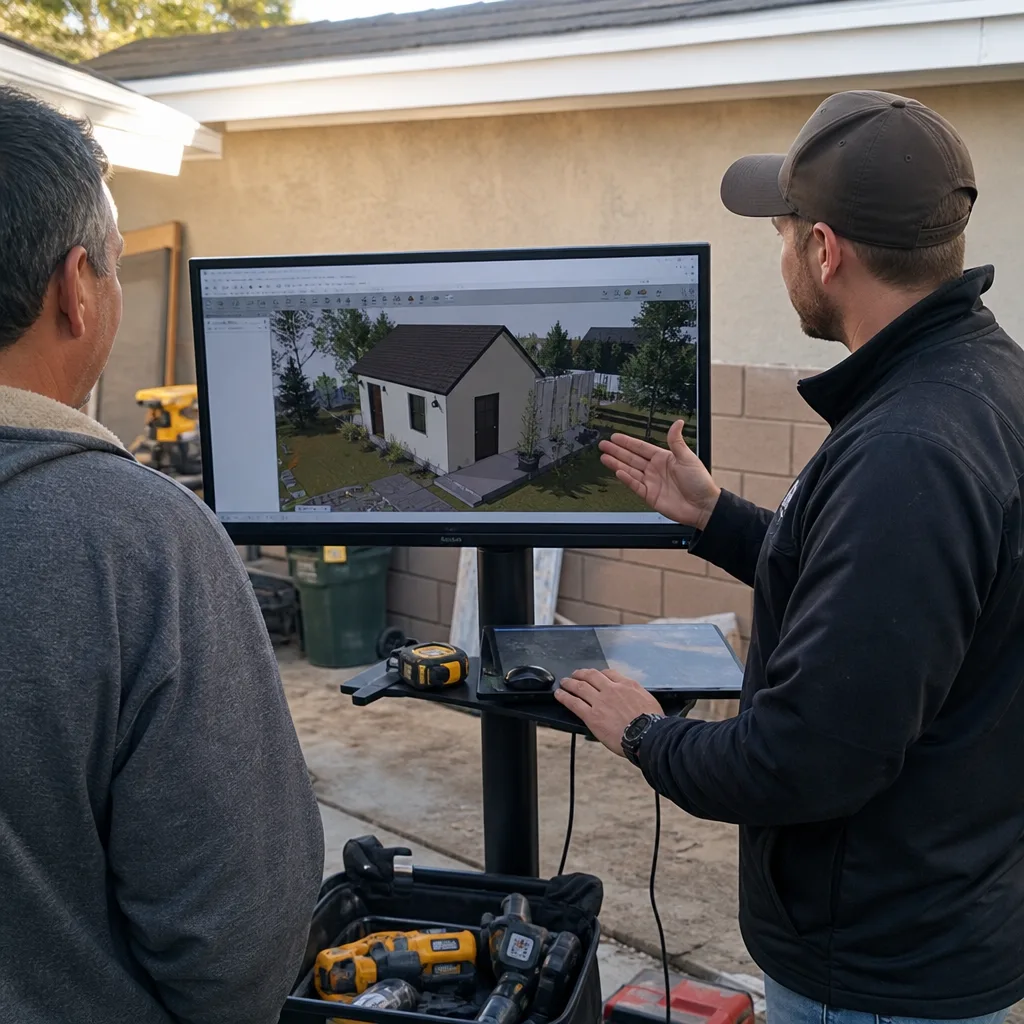
Cost only tells half the story. What does a new detached ADU in Corona actually rent for in 2026?
Current market rents for newly built ADUs in Corona run:
- Studio / 1-bed up to 500 sq ft: $1,550 - $1,850/month
- 1-bed / 1-bath, 500-700 sq ft: $1,850 - $2,150/month
- 2-bed / 1-bath, 700-900 sq ft: $2,100 - $2,500/month
- 2-bed / 2-bath, 900-1,100 sq ft: $2,400 - $2,850/month
South Corona and the Dos Lagos corridor command a modest premium over central and north Corona neighborhoods. A $265,000 all-in 2-bed ADU renting at $2,200/month produces a gross yield of roughly 10% annually before taxes and vacancy – before any consideration of the property value increase that comes with permitted square footage added to the lot. Most Ellery clients in the 32-50 age range who are looking at a detached ADU are running this math before they call, and they should be. The numbers work in Corona in a way they don’t in higher-construction-cost coastal markets.
Key Takeaways
- New detached ADU construction in Corona, CA runs $180,000 - $420,000 all-in, with most 1-bed and 2-bed builds landing between $220,000 and $340,000.
- The biggest cost variables are lot topography, HOA requirements, utility connection distance, and whether you choose stick-built or a prefab/modular system.
- City of Corona permit fees for a standard ADU run $6,000 - $14,000; school impact fees add another $2,800 - $4,200 for most unit sizes.
- Hillside lots in El Cerrito and Sierra del Oro frequently add $10,000 - $20,000 in site prep and grading costs that flat South Corona lots don’t incur.
- Under Haven Standard Clause 1, Ellery provides a written price before any work starts – the number you receive is the number in the contract.
- Prefab and modular options (Abodu, Plant Prefab, Mighty Buildings, Dvele, Cover, Boxabl) are available within the same single contract – no separate manufacturer coordination required.
- A free second opinion on any written estimate is available at no cost and no obligation.
FAQs – New Detached ADU Cost in Corona
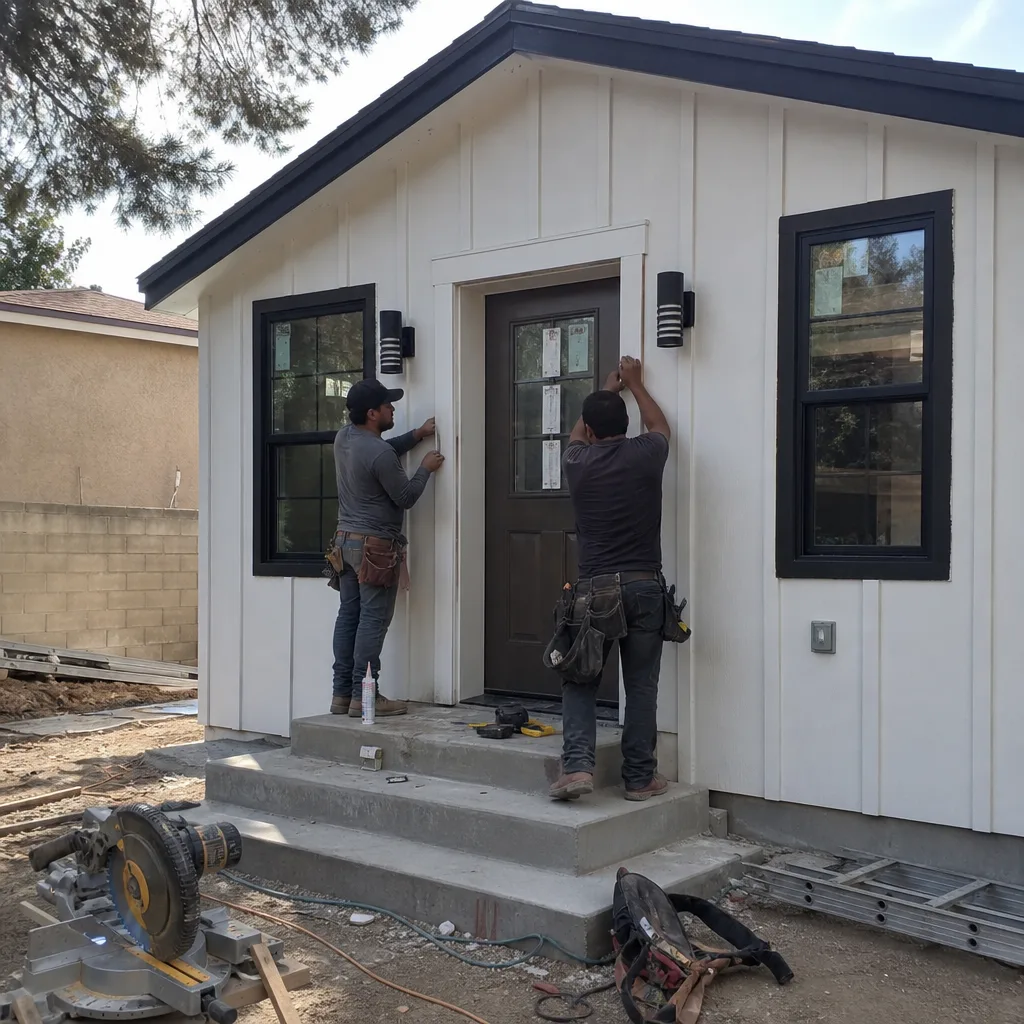
How much does a new detached ADU cost in Corona, CA in 2026?
A new detached ADU in Corona costs between $180,000 and $420,000 all-in, including design, permit drawings, site prep, foundation, framing, MEP, and interior finishes. Most 1-bed and 2-bed builds land between $220,000 and $340,000 depending on lot conditions and finish level. Ellery’s written estimate will give you a specific number for your parcel – call (951) 476-3715 for a free estimate that is a real dollar figure, not a range designed to be revised after you’ve committed.
What are the permit fees for a new ADU in Corona?
City of Corona permit fees for a new detached ADU typically run $6,000 - $14,000 based on the project’s construction valuation. School impact fees under the Corona-Norco Unified and Alvord Unified districts add $2,800 - $4,200 for most ADU sizes. If the unit exceeds 500 sq ft and fire sprinklers are triggered during plan check, that adds another $6,000 - $11,000. All of these are included as named line items in Ellery’s written estimate – nothing surfaces after the contract is signed.
How long does it take to build a new detached ADU in Corona?
From signed contract to certificate of occupancy, a typical new detached ADU in Corona takes 10 - 16 months for a stick-built project. Design and permit set preparation runs 6 - 10 weeks; City of Corona plan check adds another 8 - 14 weeks for standard applications (longer if a setback variance or soils report is required); construction runs 16 - 24 weeks depending on unit size and site complexity. Prefab and modular systems from Abodu or Plant Prefab can compress the construction phase to 8 - 14 weeks once permits are approved. Call (951) 476-3715 to get a realistic timeline estimate for your specific lot and program.
Is a prefab ADU cheaper than stick-built in Corona?
Not always cheaper, but more cost-predictable. In the current Inland Empire subcontractor market, prefab and panelized systems can reduce on-site labor days meaningfully. A fully stick-built 700 sq ft ADU in Corona might run $280,000 - $310,000; a comparable Abodu or Plant Prefab unit on a flat accessible lot might run $255,000 - $290,000. The gap narrows or reverses on lots with access constraints, HOA design requirements, or configurations that don’t match prefab module dimensions. Ellery specifies and coordinates both options within the same single contract – the right choice depends on your lot, your HOA, and your timeline, and we’ll tell you which pencils out better for your project specifically.
Can I use an ADU to generate rental income in Corona?
Yes, and the numbers support it in the current Corona market. Newly built 1-bed ADUs in Corona rent for $1,850 - $2,150/month; 2-bed units run $2,100 - $2,500/month. A $265,000 all-in 2-bed ADU renting at $2,200/month produces a gross annual yield of roughly 10%. South Corona neighborhoods near Dos Lagos and Crossings at Corona command a slight premium. That yield figure doesn’t account for the property value increase that comes with permitted square footage – a separate but significant factor for owners who bought between 2015 and 2022 and are thinking about long-term asset strategy. For a project-specific estimate, call (951) 476-3715.
What is Ellery ADU Studio’s 365-Day Done Right Promise?
If the finished ADU is not built to the permitted drawings, Ellery makes it right – and that commitment is in writing before the project starts, not offered after a problem surfaces. This applies to every project Ellery takes on in Corona, regardless of unit size or build method. It is not a marketing claim that gets qualified in the fine print. The scope it covers is the scope in the permit set – the same drawings the City of Corona approved and the same drawings the crew builds to. You can read the exact language before signing anything.
For a full walkthrough of what a new detached ADU project looks like from site assessment through certificate of occupancy, see Ellery ADU Studio’s home page, which covers the full design-build process and the five service categories under one contract.
Ready to get a written number for your Corona property? Call (951) 476-3715. A live person answers – no voicemail queue, no callback promise that doesn’t materialize. Nadia Ellery and the Ellery ADU Studio team have worked through more than 900 ADU projects since 2015, every one with a written price before work started. Your estimate will be a specific number for your specific lot, and it won’t change because conditions the site assessment already caught turned out to be harder than expected.
Pricing reflects the Corona market as of 2026. Ellery ADU Studio Corona offers free estimates – call (951) 476-3715.
Written by Nadia Ellery, Owner at Ellery ADU Studio, serving Corona, CA since 2015.
What Our Customers Say
"The rental income has covered the payment since the second month. They were realistic about the numbers rather than optimistic."
- Odette N."Garage conversion finished on the drawings and close to the schedule. They were honest that the sewer connection was the unknown, and it was."
- Arjun D."Every allowance was itemised at the start, so the finish selections did not turn into a surprise at the end."
- Benedict H.