
Plant Prefab New Detached ADU: The Corona Owner’s Guide
Plant Prefab new detached ADU service and component replacement in Corona typically runs $2,800-$6,400 for structural panel repairs, MEP module resets, or exterior envelope fixes, with most calls completed in one visit. We stock Plant Prefab-compatible flashing kits, window modules, and connection hardware for the LivingHome series, and we carry the documentation needed to match your unit’s serial to the correct part revision. Most Corona owners discover a problem when they spot water staining along the panel seams after Santa Ana wind events, or when the mini-split line set, pre-run through the Plant Prefab chase, starts leaking refrigerant because the factory grommet degraded in our 110°F summer heat.
Which Plant Prefab Models This Applies To
We service the LivingHome 10, LivingHome 6, and the newer LivingHome YB1 lines, plus custom Plant Prefab units shipped to Corona between 2018 and 2024. The model plate lives on the electrical panel door, inside the utility chase, or on the structural header above the front entry, depending on which production run you received. The critical detail is the panel revision number, a four-digit code that determines which window gaskets, flashing profiles, and MEP chase covers fit your unit. Plant Prefab updated their panel-to-foundation connection detail in 2021; pre-2021 units use a steel angle bracket with a slotted hole, while post-2021 units switched to a threaded rod and leveling nut assembly. We stock both, but ordering the wrong one costs you two weeks. For OEM versus aftermarket, we default to Plant Prefab-sourced panels and gaskets on envelope work because the tolerances are tight, but we use aftermarket electrical components and plumbing PEX where the spec matches, saving roughly 20% without voiding your structural warranty.
Signs Your Plant Prefab New Detached ADU Is Failing
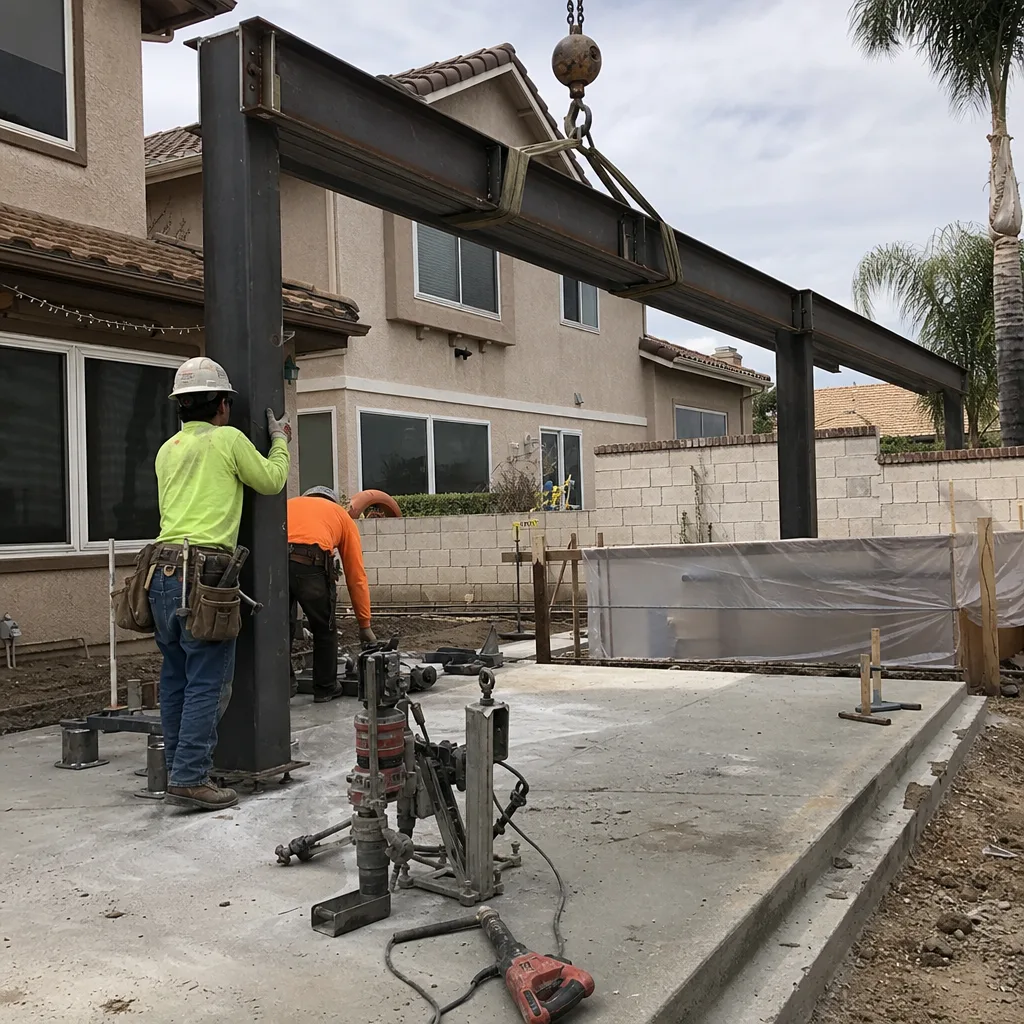
- Water intrusion at panel seams. The factory-applied fluid-applied membrane cracks where the OSB sheathing expands and contracts through Corona’s 40°F seasonal swing. We see this most on south- and west-facing walls where thermal cycling is sharpest.
- Mini-split refrigerant loss or poor cooling. The line set runs through a factory-built chase with a rubber grommet at the panel penetration. After three to four years of Inland Empire UV exposure, that grommet hardens and leaks, slowly bleeding charge until the compressor locks out.
- Squeaking or movement at the floor-to-foundation connection. The steel bracket or threaded rod assembly loosens as the concrete foundation cures and shrinks. Left alone, this stresses the panel bottom plate and can telegraph cracks into the interior flooring.
- Door or window operation gets stiff. Plant Prefab units ship with European-style tilt-turn hardware that needs precise shim alignment. Foundation settlement, common in Corona’s expansive clay soils near the Santa Ana River wash, throws this alignment off within the first two years.
- Electrical GFCI trips on the kitchen or bathroom circuit. The factory-installed GFCI outlets are spec’d for milder climates. Corona’s heat and occasional humidity spike from the Cleveland National Forest airflow can push them past their trip threshold, especially on units with the 2019-2020 electrical package.
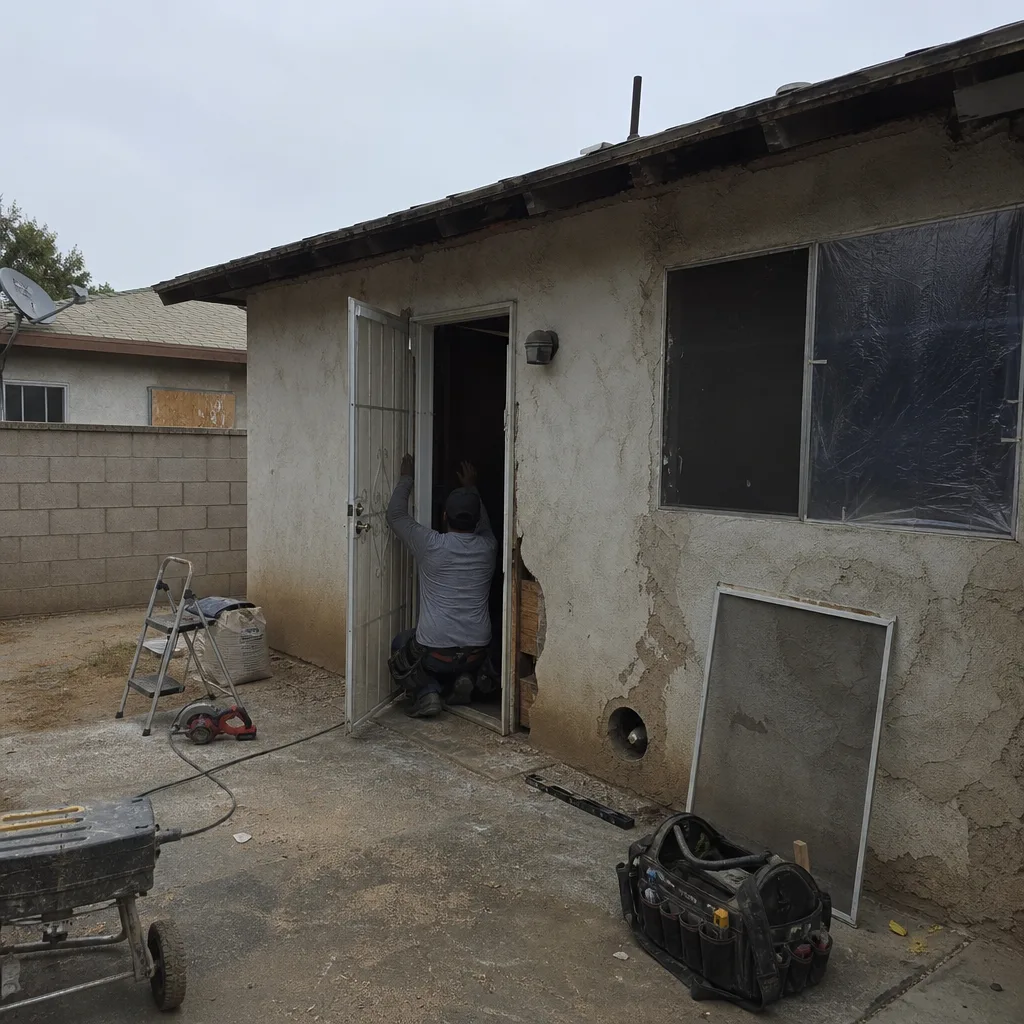 Before
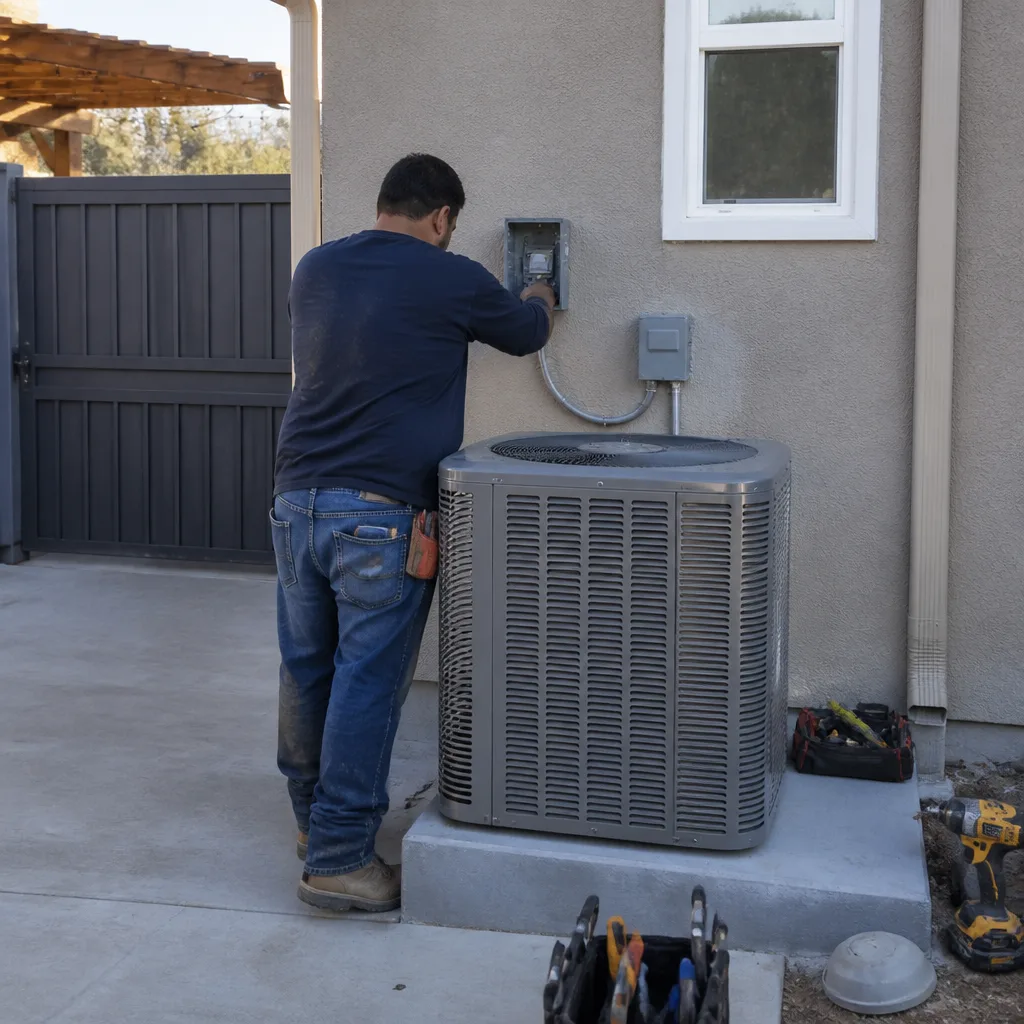 After
AfterReplacement Cost & What’s Included
In Corona, Plant Prefab component work breaks down as follows: panel seam repair and re-flashing, $2,800-$4,200; mini-split line set grommet replacement with refrigerant recharge, $1,800-$3,100; foundation connection re-torque and shim adjustment, $1,200-$2,400; window or door hardware realignment, $650-$1,400; GFCI upgrade to commercial-grade weather-resistant outlets, $340-$680. The range reflects access difficulty, whether we need to match discontinued parts from earlier production runs, and whether the repair requires a partial panel removal. Every job ships with a written scope, a photo record of the condition we found, and the 365-Day Done Right Promise backed in writing under Haven Standard Clause 3. Under Clause 1, the price you sign is the price you pay. No change orders, no door-side surprises.
DIY or Call Us?
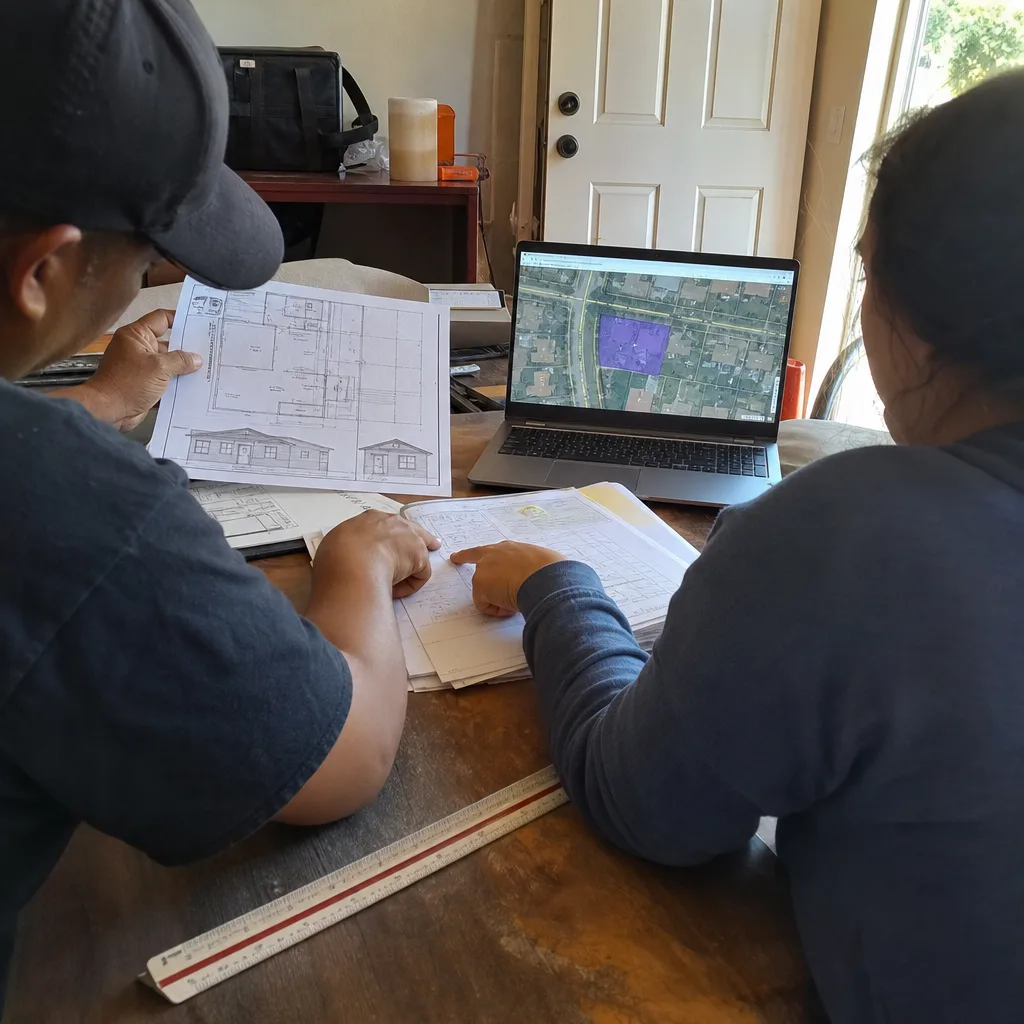
Here’s where the line sits. You can safely check the model plate, photograph any stains for our review, and confirm whether your mini-split is still blowing air, just not cold. What you should not do: remove a structural panel to chase a leak, torque the foundation connection bolts without knowing the spec, or handle refrigerant. The panel seams are structural; break the factory seal without the right gasket and you’ve converted a $400 repair into a $4,000 panel replacement. The foundation bolts run to 85 ft-lbs on pre-2021 units, 110 ft-lbs on post-2021, and over-torquing strips the embed. If you’re unsure which revision you have, call us. We’ll walk you through reading the plate over the phone, no charge. For the actual repair, we bring the parts, the torque wrench, and the documentation. Call (951) 476-3715 and we’ll schedule a visit, or email us photos if you want a rough range before we drive out.
FAQs
Expect the fluid-applied membrane to need inspection at year five and likely refresh at year seven to nine. The mini-split grommet typically fails between year three and five in our UV and heat. We document condition at every visit so you know where you stand, not guess. Call (951) 476-3715 for a free condition check.
Sometimes, if the breach is under six inches and the OSB beneath is dry. We cut back to sound substrate, apply compatible flashing tape, and re-coat. If the OSB is swollen or the membrane is cracking system-wide, partial re-flashing is the honest call. We show you the photo evidence before you decide. Call (951) 476-3715 for an exact quote.
Foundation re-torque and door realignment: half day. Panel seam work: one to two days, depending on how many seams and whether we need to order a matching panel skin. Mini-split grommet: two to three hours, including pressure testing and recharge. We give you a written schedule with the quote, per Haven Standard Clause 1.
We carry the common failure items: both foundation connection styles, flashing tape and primer, the upgraded GFCI outlets, and grommet kits for standard mini-split line set diameters. Panel skins and window modules are factory-ordered to your revision number, typically three to five business days. We’ll tell you before we schedule whether your part is on the truck or en route. Call (951) 476-3715 to confirm availability for your serial number.
Ellery ADU Studio Corona is an independent service provider. We are not affiliated with, endorsed by, or a warranty agent for Plant Prefab. We specify and coordinate Plant Prefab systems alongside Abodu, Cover, Dvele, Mighty Buildings, Boxabl, Tuff Shed, and James Hardie under our single-contract design-build model.
Since 2015, we’ve designed, permitted, and built more than 900 ADUs, every one with a written price before work started and a documented photo record when work was complete. Nadia Ellery, our owner, grew up in Santa Monica helping her uncle reroof bungalows two blocks from the pier, which is probably why she has never been able to walk past a badly flashed eave without saying something. She studied construction technology at Santa Monica College before moving into design-build work, and over the past several years she and our crew have completed ADU projects across Corona, including a detached studio on a tight lot near Green River Road that required three separate variance conversations with the city before the permit cleared. Tell me the lot dimensions and I will tell you what fits, and what it will actually cost.
Ready to get your Plant Prefab ADU back to spec? Call (951) 476-3715 to schedule your free estimate. A live person answers 24/7. If you already have a written estimate in hand, ask about our Free Second Opinion. We’ll review the scope, the parts specified, and the price, and tell you straight whether it’s fair.
Written by Nadia Ellery, Owner, Ellery ADU Studio Corona at Ellery ADU Studio Corona, serving Corona and nearby areas.