
Boxabl Junior ADU Conversion: The Corona Owner’s Guide
Boxabl-compatible junior ADU conversion in Corona typically runs $85,000-$140,000 all-in, covering drawings through final inspection, with permit submission usually within 4-6 weeks of contract signing. We stock the full Boxabl specification set and coordinate directly with their logistics team for delivery sequencing. Most Corona owners discover their Boxabl unit needs conversion-specific adaptation when the city flags the foundation tie-down plan or the utility stub locations don’t align with Corona’s standard setback requirements on the first plan check.
Which Boxabl Models This Applies To
We specify and coordinate Boxabl Casita units for junior ADU conversion, which is the model line currently available for residential delivery in California. The Casita ships as a 19.5′ × 19.5′ × 9.5′ module, and identifying the correct conversion specification starts with your Boxabl order number, which encodes the production batch and the structural connection kit revision.
The 2023-2024 Casita batches use a 4-inch slab-on-grade foundation tie-down pattern with post-tension cable brackets at 8-foot centers. Earlier 2022 batches used a 6-foot center pattern that Corona’s building department no longer accepts for new permits, though grandfathered installs remain valid. We verify this against your Boxabl delivery documentation before we draw the foundation plan, not after.
For Boxabl specifically, we use the OEM structural engineering letter for permit submission rather than attempting to replicate it with a local engineer, which saves Corona clients roughly $3,200-$4,800 in redundant engineering fees. Aftermarket foundation adaptations exist, but we’ve found they trigger extended plan-check cycles with Corona’s third-party engineering reviewer. The Haven Standard, Clause 3, specifies that we use manufacturer documentation where it exists and disclose where it doesn’t.
Signs Your Boxabl Junior ADU Conversion Is Failing
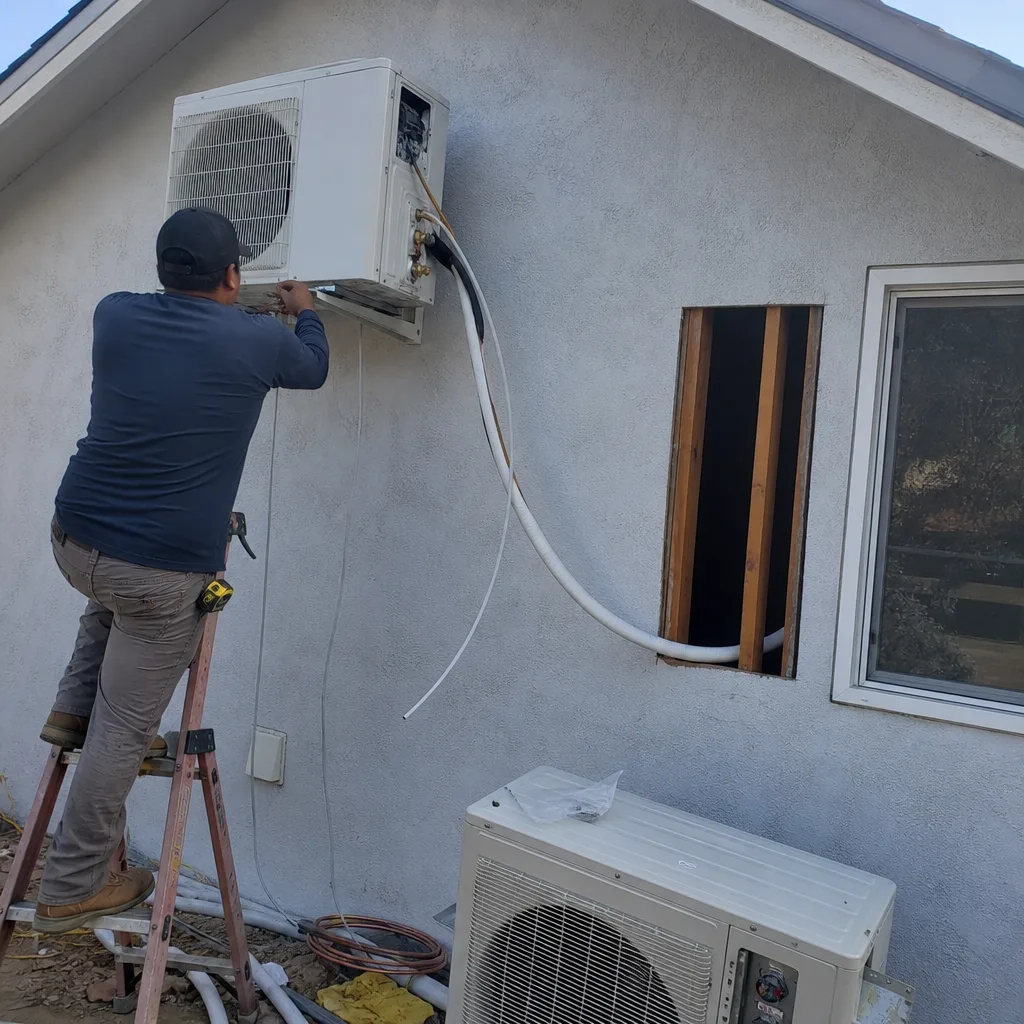
- Foundation anchor bolts misaligned with the slab pour. The Boxabl module arrives with pre-welded anchor plates that must hit bolt locations within 1/4-inch tolerance. If your slab contractor used a generic ADU foundation detail, the bolts won’t line up, and you’ll discover this when the crane operator refuses to set the unit. We see this most often in Corona’s Sierra del Oro and Dos Lagos areas, where homeowners hired separate slab and module contractors.
- Utility stub locations conflict with existing main lines. Boxabl stubs water, gas, and electrical through the floor at fixed points. In Corona’s older neighborhoods near Grand Boulevard, the main sewer lateral runs shallow and conflicts with the Casita’s proposed electrical stub location. This doesn’t surface until the trench is open and the inspector is on site.
- Roof drainage directed onto the primary dwelling. The Casita’s flat roof with internal drains requires positive slope to a discharge point. On tight Corona lots under 6,000 square feet, the default drainage path often violates the city’s surface water discharge ordinance, which prohibits concentrated flow across property lines. We catch this in the site plan phase; retrofits require crane re-sequencing.
- Interior finish gaps at module seams. The Casita’s fold-to-ship construction leaves visible seam lines in the ceiling and floor. In a junior ADU conversion where the unit connects to existing living space, these seams telegraph as shadow lines that read as construction defects. We specify a finish overlay package that eliminates this before move-in, not as a change order after.
- HVAC capacity undersized for Corona’s August heat load. Boxabl’s standard mini-split specification is rated for 95°F ambient. Corona sees 20-25 days annually above 100°F, and the south-facing wall orientation common on local lots pushes the cooling load past the unit’s sensible capacity. The result is a unit that runs continuously and never reaches setpoint during heat waves.
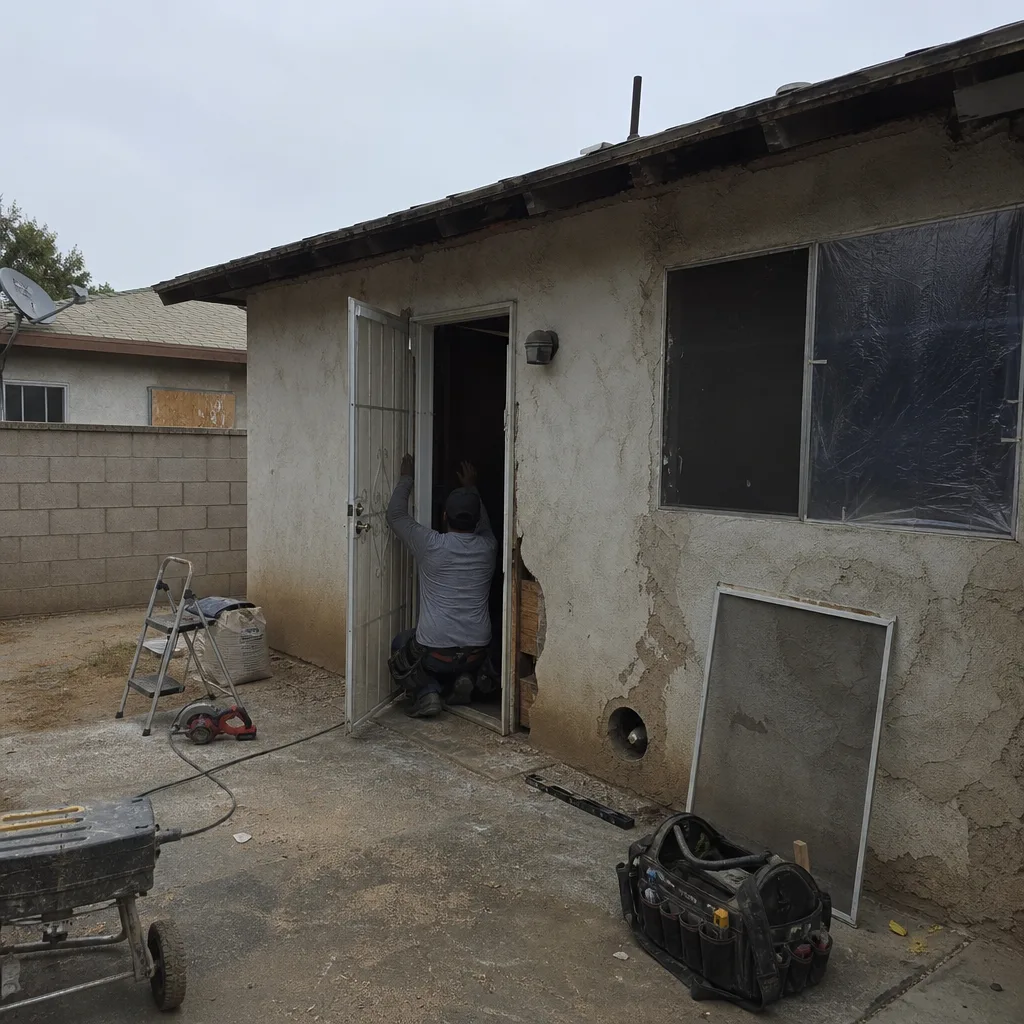 Before
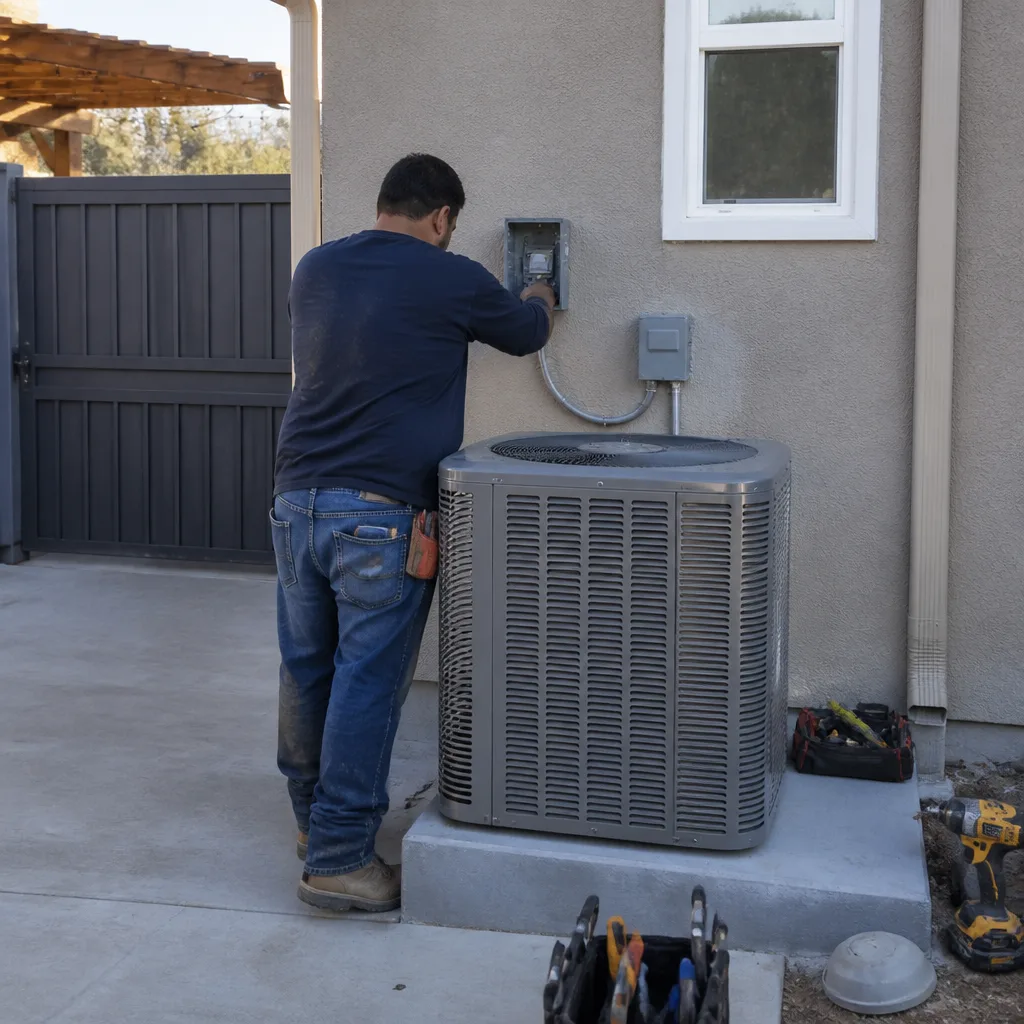 After
AfterReplacement Cost & What’s Included
Boxabl junior ADU conversion in Corona runs $85,000-$140,000 all-in, with the range driven by three factors: whether the existing primary residence needs electrical service upgrade to support the ADU load, whether the lot requires retaining or grading work to achieve the 4-inch minimum slab elevation above finished grade, and whether the city determines the project triggers parkland dedication fees, which apply to some Corona parcels over a certain size threshold.
That price includes the full permit set, Boxabl coordination calls, foundation and utility rough, module set and connection, finish overlay at seams, and final inspection. Under Haven Standard Clause 1, the written price is fixed at contract signing; no change orders for conditions we could have identified in the initial site visit. Our 365-Day Done Right Promise covers any Boxabl-connection detail that fails due to installation sequencing, documented with photos at each milestone.
DIY or Call Us?
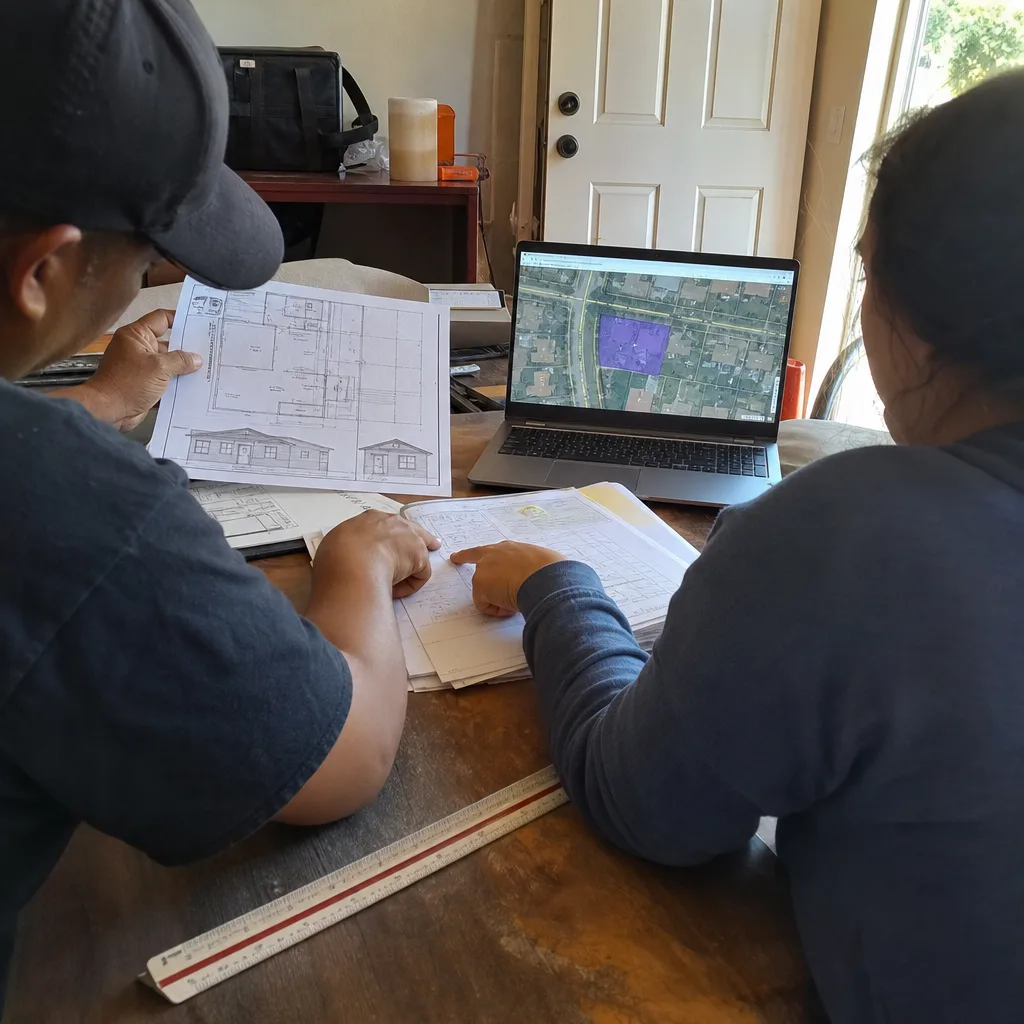
An owner can safely verify their Boxabl order number and download the manufacturer’s installation manual from Boxabl’s client portal, which is worth doing before any conversation with a contractor. You can also confirm your lot’s zoning designation on Corona’s online property lookup tool and check whether your parcel falls under the parkland dedication threshold.
Where DIY goes wrong is the interface work: the foundation anchor tolerance, the utility stub coordination with existing lines, and the finish seam treatment where the module meets your existing structure. These require a single contract covering both design and build, because the designer needs to answer to the builder and vice versa. Boxabl modules are precision-built; the site work must match that precision, and Corona’s inspectors know the difference. Ellery ADU Studio Corona is an independent service provider, not affiliated with Boxabl. Call (951) 476-3715 to schedule your free estimate.
FAQs
The steel frame and insulated panels are rated for 50+ years, but the exterior finish and roof membrane typically need attention at 15-20 years in Corona’s high-UV, high-heat environment. The thermal expansion cycling between 40°F winter nights and 105°F summer days stresses sealant joints more aggressively than in coastal California. Call (951) 476-3715 for an exact quote on a maintenance specification, estimates are free.
Foundation anchor misalignment beyond 1/4-inch cannot be field-corrected; the Boxabl module’s welded connection plates don’t accommodate slotted or oversized holes. We’ve seen one Corona homeowner attempt epoxy-set retrofit anchors, which the city rejected and which we then had to core out and replace. The cost of the do-over exceeded the original foundation scope. Call (951) 476-3715 for an exact quote, estimates are free.
Typically 14-18 weeks in Corona: 4-6 weeks for permit, 2 weeks for site prep and foundation, 1 day for module set, 4-6 weeks for utility connection and finish, and 2-3 weeks for final inspection scheduling. Boxabl’s delivery queue is separate and varies; we coordinate our construction schedule to match their confirmed ship date, not the other way around. Call (951) 476-3715 to check current timing.
We don’t stock Boxabl modules, they ship factory-direct, but we maintain the full specification set, engineering letters, and connection hardware kit on file for Corona permit submission. Our crews have set six Casita units in Corona and nearby Riverside County since 2022, including a tight lot near Green River Road that required three separate variance conversations with the city before the permit cleared. Tell me the lot dimensions and I will tell you what fits, and what it will actually cost. Call (951) 476-3715 for an exact quote, estimates are free.
Written by Nadia Ellery, Owner, Ellery ADU Studio Corona at Ellery ADU Studio Corona, serving Corona and nearby areas.