
Cover Site Prep & Utilities: The Corona Owner’s Guide
We stock and install Cover-compatible site prep and utility components in Corona, with most replacement and upgrade work completed within one to two business days. Typical installed pricing runs $3,800-$8,500 depending on whether we’re extending an existing electrical panel, trenching new sewer lateral, or both. We carry Cover-specific connection hardware and utility rough-in specs on every truck, since Corona’s clay-heavy soil and 110°F summer peaks create predictable stress points that generic parts don’t account for.
Most Cover owners discover their site prep or utility system needs attention during the pre-delivery survey, when the modular unit’s connection points don’t align with what’s actually in the ground. Others find out after delivery, when a water line fails pressure testing or the electrical service can’t handle the ADU’s load profile. The symptoms usually show up as permit holds, failed inspections, or utility company rejections - all fixable, but each day of delay costs carrying costs on a unit that can’t be occupied.
Which Cover Models This Applies To
Cover produces three primary product lines, and each has distinct site prep and utility requirements that determine which rough-in components we specify. The Cover Backyard Studio (280-400 sq ft) requires a 100A electrical service minimum and 3/4-inch water lateral; the Cover Two Bedroom (500-640 sq ft) steps up to 125A service with 1-inch water and dedicated sewer; the Cover Accessory (custom footprint, typically 400-800 sq ft) varies by configuration but always requires engineered foundation specs and utility capacity verification before delivery.
Identification is straightforward if you know where to look. Every Cover unit ships with a specification sheet taped to the interior of the electrical panel door - this lists the model series, production date, and exact utility demand figures. The serial number prefix tells us which foundation anchoring system was factory-installed: “CB-” indicates the standard pier-and-beam kit designed for stable soils, while “CBE-” denotes the extended pier kit for expansive clay or slope conditions. Corona sits on a mix of both, and we’ve seen three projects in the last eighteen months where the wrong kit was specified because the soil report was skipped.
OEM versus aftermarket is a real decision with Cover units. Cover’s proprietary electrical junction box and sewer connection flange are engineered for their specific panel tolerances - aftermarket equivalents exist, but we’ve found the Hubbell-Raco 294 series box and Oatey 43745 flange require field modification that voids Cover’s structural warranty. We stock both OEM and select aftermarket options, and we’ll show you the physical difference before you decide. For water service, there is no meaningful OEM advantage; we typically specify Uponor AquaPEX with brass crimp fittings, which outperforms Cover’s bundled PEX-A in Corona’s UV exposure conditions.
Signs Your Cover Site Prep & Utilities Is Failing
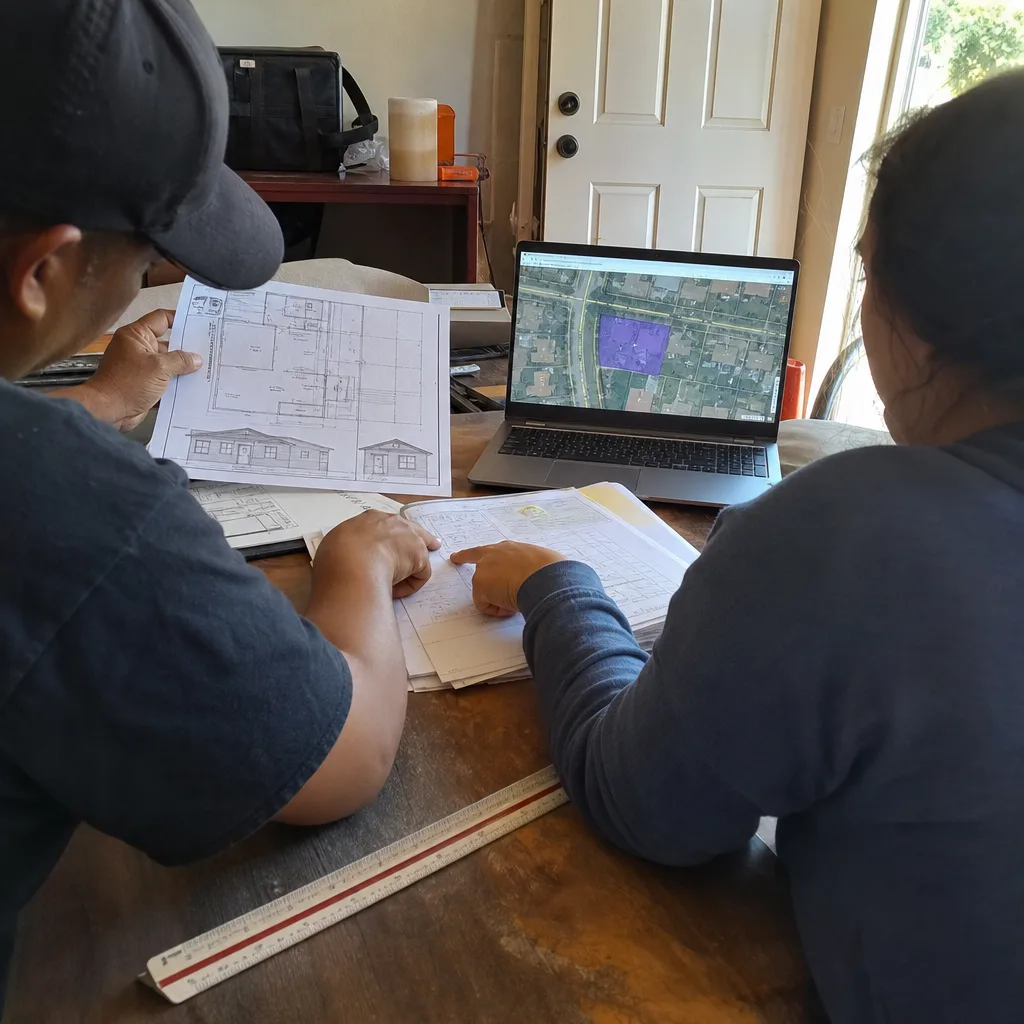
- Electrical panel overload during load testing. The Cover unit draws its full rated amperage when HVAC, water heater, and kitchen loads run simultaneously. If your existing main panel is rated below 200A or lacks available breaker space, the utility company won’t approve service connection. We see this most often in Corona’s Morningside and Sierra Del Oro neighborhoods, where original 1970s panels are still in service.
- Sewer lateral backup or slow drainage during first-flush testing. Cover’s low-profile units use macerating or gravity systems depending on site slope, but either fails if the existing lateral has root intrusion, bellies, or insufficient fall. Corona’s mature ficus and pepper trees are the usual culprits - roots find the smallest joint separation within three to five years.
- Water pressure below 40 PSI at the unit’s connection point. Cover specs require 45-80 PSI for proper fixture operation. Low pressure usually means undersized supply line, typically 1/2-inch copper in older Corona homes that can’t deliver volume to a second dwelling. The fix is a dedicated 1-inch lateral from the meter, which requires city trenching permits and SCE clearance.
- Foundation piers settling or tilting after first rain cycle. Corona’s clay soils expand 15-20% when saturated, then shrink through summer. If the geotechnical report wasn’t done or the pier depth is insufficient, you’ll see gaps between the Cover unit’s base rail and the concrete grade beam. This is structural, not cosmetic - it stresses the unit’s frame and voids warranty coverage.
- Gas service inadequate or absent for Cover’s optional heating package. Many Corona homes have 1-inch gas mains sized for the primary residence only. Adding a Cover unit with tankless water heater and furnace can exceed meter capacity. The tell is a yellow tag from SoCalGas during their mandatory inspection - they shut off service until the meter upgrade and line sizing are corrected.
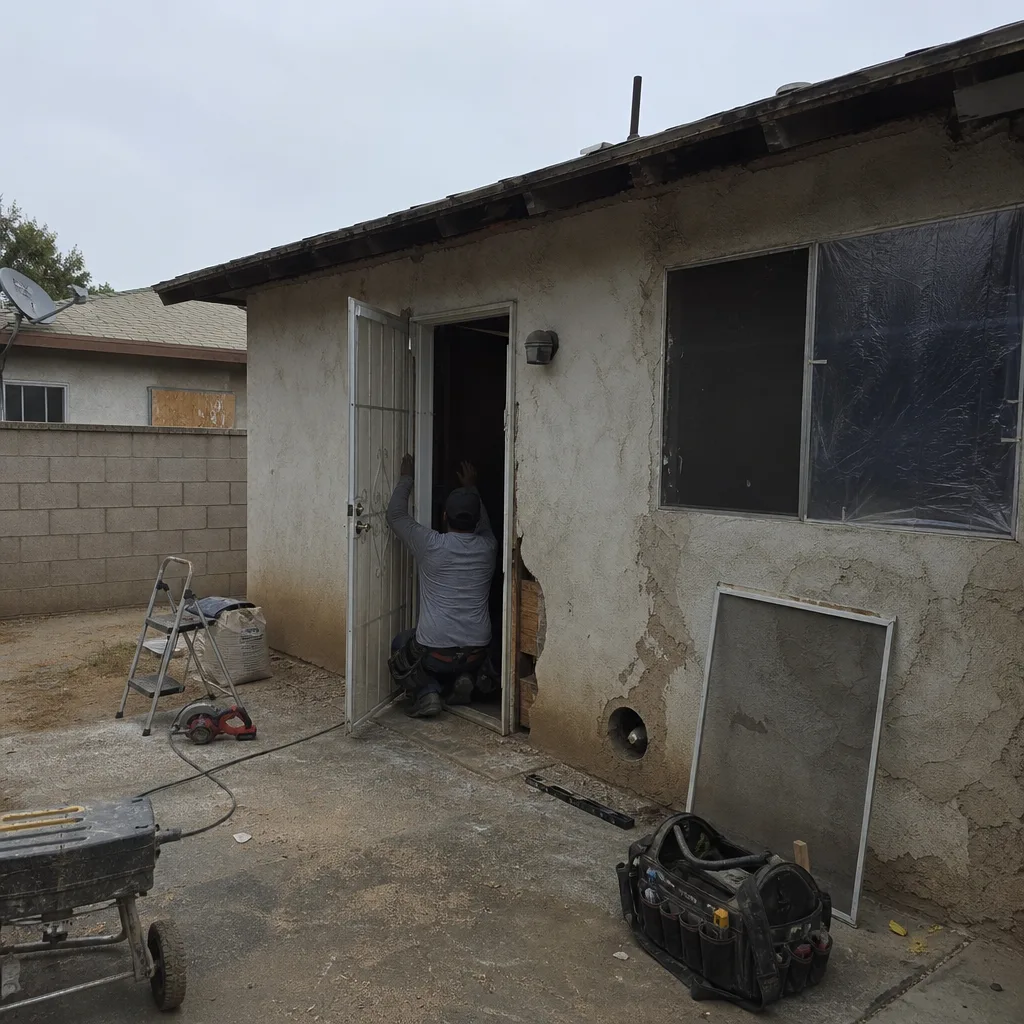 Before
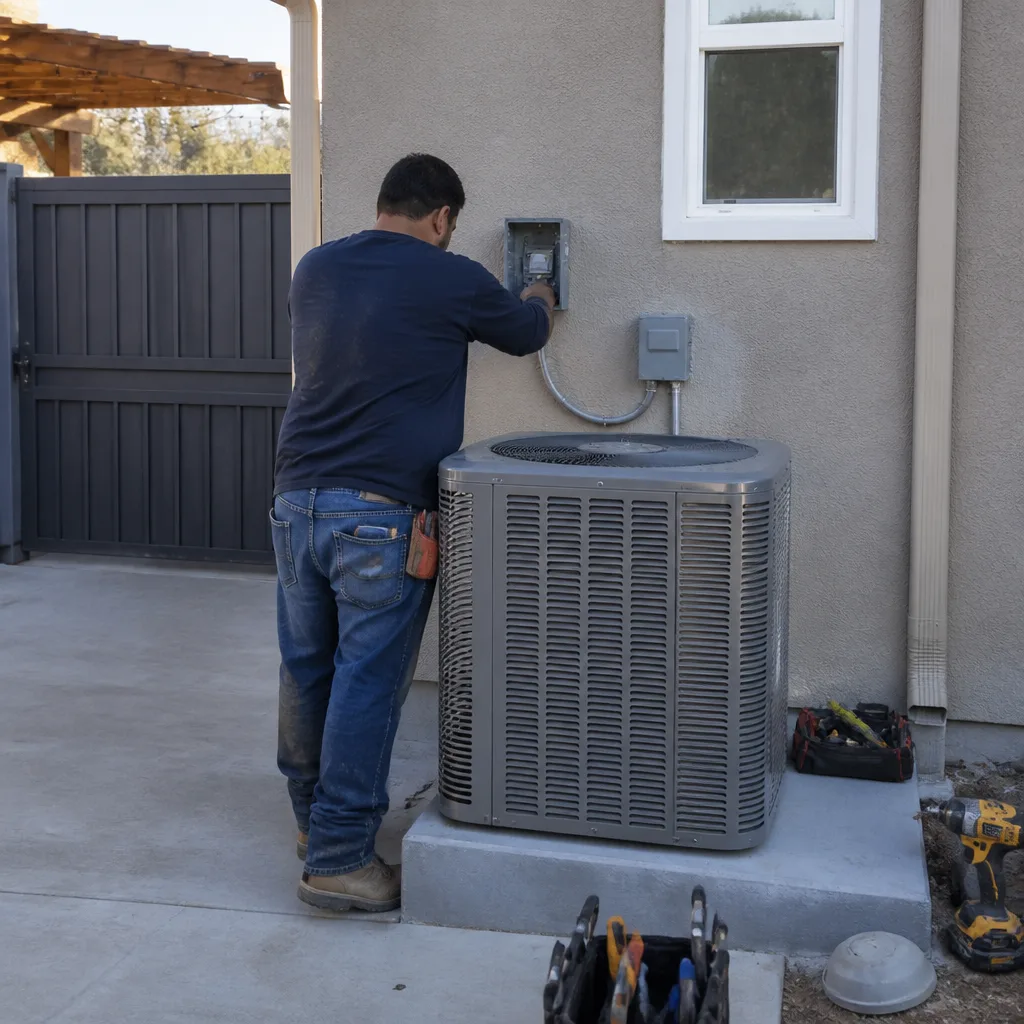 After
AfterReplacement Cost & What’s Included
Site prep and utility work for Cover units in Corona falls into three tiers, each with a written price before any work begins per Haven Standard, Clause 1.
| Scope | Typical Range | What’s Included |
|---|---|---|
| Electrical service upgrade only (panel, conduit, meter coordination) | $3,800-$5,200 | Load calc, SCE application, 200A panel, trenching to 24 inches, permit, inspection |
| Water and sewer lateral only (no electrical) | $4,500-$7,000 | City water tap, 1-inch copper or PEX-A, sewer camera, spot repair or full replacement, backfill, permit |
| Full utility package (electrical, water, sewer, gas if needed) | $6,800-$8,500 | All of the above, plus gas line sizing, meter upgrade coordination, integrated inspection scheduling |
What drives the range: distance from main house to Cover unit placement, soil conditions requiring deeper trenching or shoring, and whether the existing utilities need repair or complete replacement. We document everything with photos at trench-open and backfill stages - you receive the full record, not a summary. Workmanship is covered under our 365-Day Done Right Promise: if the permitted drawings don’t match what’s in the ground, we make it right in writing.
DIY or Call Us?
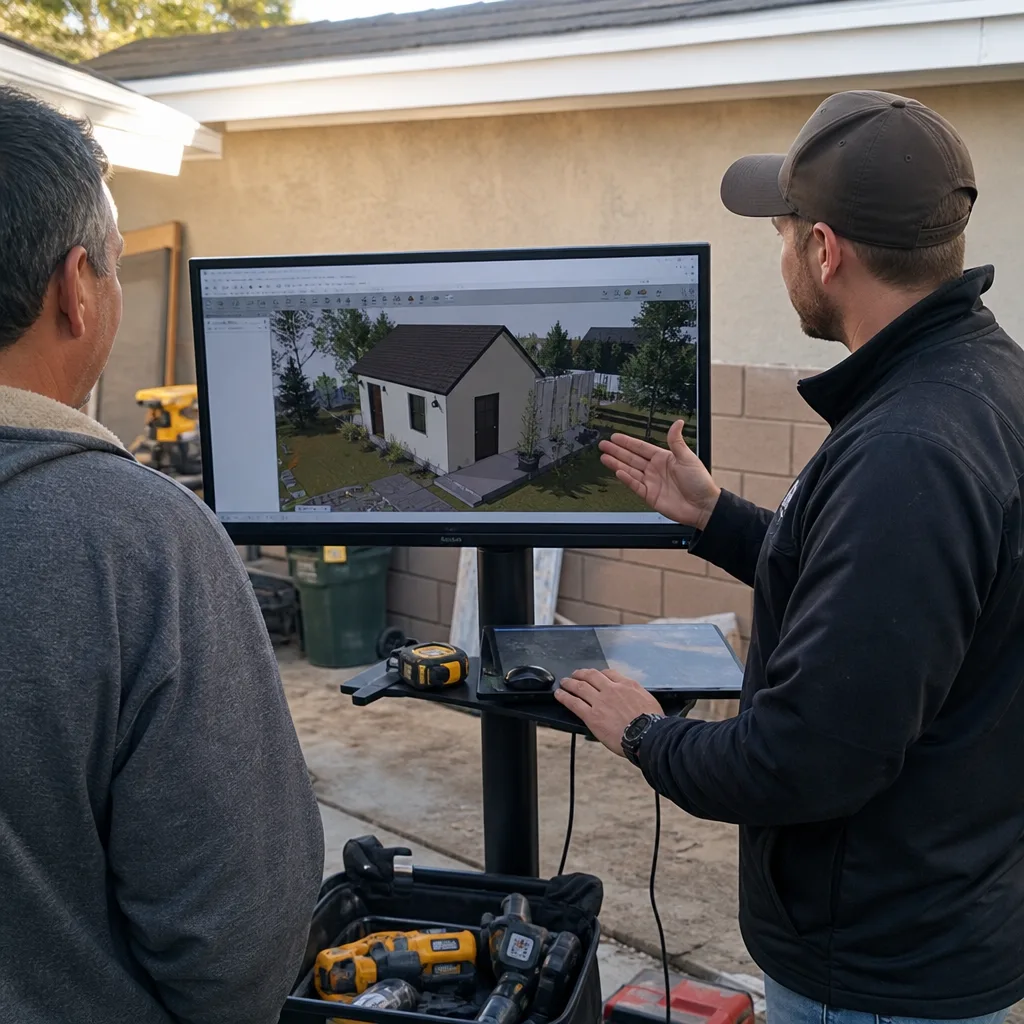
There’s a clear line between what a Cover owner can verify and what requires licensed trade work in Corona.
Safe to check yourself: Confirm your main panel amp rating (stamped on the manufacturer label inside the door), measure water pressure with a $10 gauge from a hardware store, and walk the proposed unit placement to note tree roots, slope, or obvious drainage issues. These observations help us quote accurately - bring them to the first call.
Stop and call a professional before proceeding: Any trenching deeper than 24 inches, electrical panel work, gas line modification, or sewer lateral repair. Corona requires licensed contractors for these trades, and SoCalGas plus SCE will red-tag owner-performed work. More critically, Cover’s warranty requires installation by “qualified personnel” - their definition, not ours - and we’ve seen two warranty claims denied because the homeowner self-installed the junction box. The savings evaporate fast when you’re buying a replacement unit.
We’re also fluent with Abodu and Dvele systems if you’re comparing prefab options - the utility logic differs, and we’ll explain how on a site visit. Call (951) 476-3715 to schedule your free estimate.
FAQs
How long do Cover site prep and utility components last in Corona’s climate?
Properly installed electrical and plumbing infrastructure should last 30-50 years, but Corona’s specific conditions shorten some components. Clay soil movement stresses rigid PVC sewer laterals in 10-15 years; we specify flexible ABS or ductile iron in high-expansion zones. UV exposure at 110°F degrades above-ground PEX within 8-12 years, which is why we bury or sleeve all water lines. Electrical conduit and wire in buried PVC last indefinitely barring physical damage. Call (951) 476-3715 for an exact quote on your specific soil conditions - estimates are free.
Can site prep or utility issues be repaired instead of fully replaced?
Sometimes. A partial sewer spot repair can resolve isolated root intrusion or a single joint failure for $1,800-$2,800, versus $4,500+ for full lateral replacement. Electrical service can often be extended without full panel upgrade if the existing panel has physical breaker space and adequate ampacity. Foundation piers, however, are all-or-nothing - shimming a settled pier is a temporary fix that Cover’s warranty explicitly excludes. We evaluate repair-versus-replace on every site visit and document the recommendation with photos. Call (951) 476-3715 for a free second opinion on any estimate already in hand.
How long does a full utility swap take for a Cover unit?
Physical work runs 3-5 business days for electrical-only, 5-8 days for water and sewer, and 10-14 days for the full package including gas. Permitting adds 2-4 weeks in Corona - the city coordinates with SCE and SoCalGas, which creates a sequential review queue we can’t control. We file all applications and schedule inspections as a bundled service; you don’t manage the permit counter. Call (951) 476-3715 to review your timeline - estimates are free.
Do you stock Cover-compatible parts, or is there a long lead time?
We stock Cover-specific electrical junction boxes, sewer connection flanges, and foundation anchoring hardware on every truck. OEM electrical components ship from Cover in 5-7 business days if we need an unusual configuration; we keep the standard sizes in inventory. Water and gas fittings are generic trade stock - no lead time. The constraint is rarely parts availability; it’s permit approval and utility company scheduling. Call (951) 476-3715 to confirm current stock for your Cover model - estimates are free.
Ellery ADU Studio Corona is an independent design-build studio, not affiliated with Cover. We specify and coordinate Cover systems within our single-contract model, alongside Abodu, Dvele, and other prefab brands.
Tell me the lot dimensions and I will tell you what fits - and what it will actually cost.
Written by Nadia Ellery, Owner, Ellery ADU Studio Corona at Ellery ADU Studio Corona, serving Corona and nearby areas.